Dumbbell Prone Rear Delt Swing
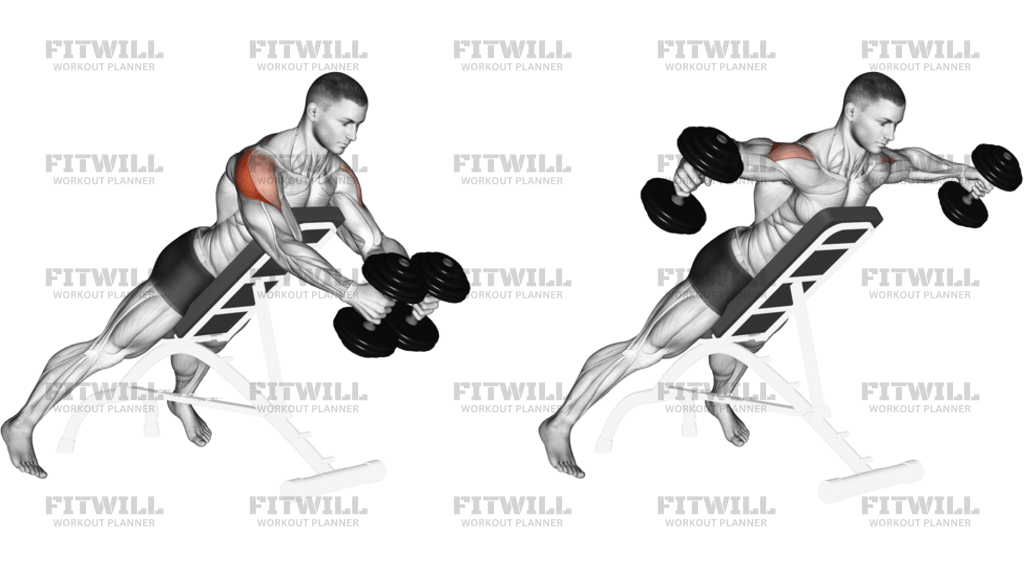
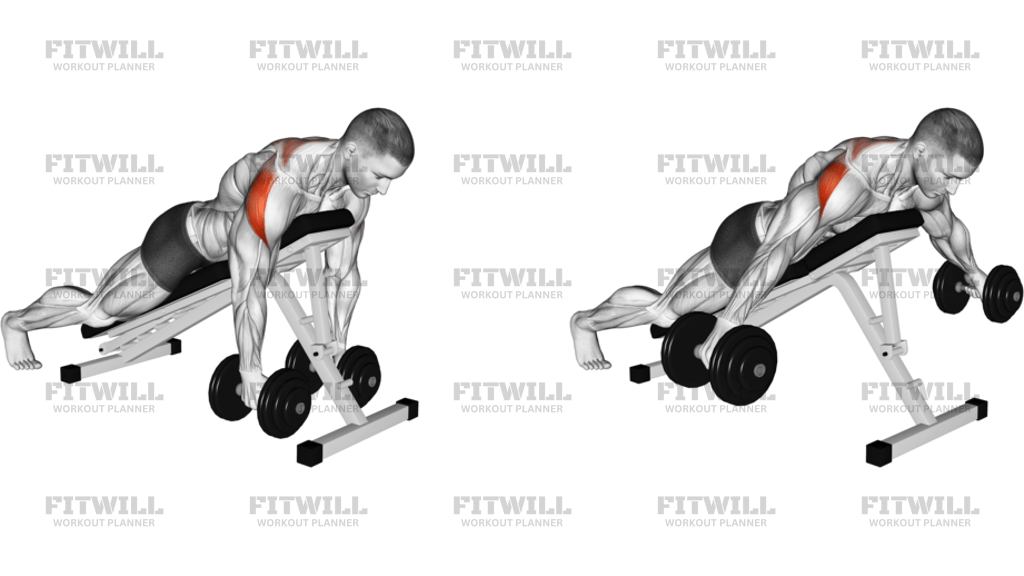
Dumbbell Prone Rear Delt Swing is a chest-supported rear-shoulder exercise performed on an incline bench with a dumbbell in each hand. The image shows the lifter lying face down with the chest on the pad, arms hanging toward the floor, and the weights traveling out and slightly back in a wide arc. That setup takes the lower back out of the lift and puts the focus on the rear delts and upper-back stabilizers.
This movement is useful when you want more rear-shoulder volume without turning the set into a standing swing or a trap-dominant shrug. The Deltoids do the main work, while the Trapezius, Rhomboids, and Triceps Brachii help control the shoulder blades and keep the arms from drifting into a loose, momentum-driven path. Because the torso is supported, the quality of the rep depends more on shoulder position and tempo than on whole-body effort.
The setup matters. Lie chest-down on an incline bench high enough that your shoulders can hang freely off the top edge, then plant your feet behind you for balance. Let the dumbbells start under the shoulders with a soft elbow bend and neutral wrists. From there, raise the arms in a controlled arc until they line up with or just slightly below the upper back, then lower them back to a dead hang without bouncing off the bottom.
This exercise is a good accessory choice for lifters who need rear-delt development, better shoulder balance, or extra upper-back work after presses and rows. It can fit into pull days, shoulder days, or prehab-style sessions because the bench support keeps the motion strict and repeatable. The biggest mistake is turning the lift into a jerky heave with the torso or using too much weight and shrugging the dumbbells instead of sweeping them outward.
Use a load that lets you keep the chest glued to the pad, the neck long, and the arms moving on the same path each rep. If the shoulders feel pinchy, shorten the top range and keep the elbows slightly bent instead of forcing a high finish. Done well, Dumbbell Prone Rear Delt Swing is a clean way to train rear-shoulder control with less cheating than a free-standing rear-delt raise.
[ Workout Log & Planner ]
Put your next workout in Fitwill
Keep your plan and training log ready when you are.


Instructions
- Set an incline bench to a moderate angle and lie chest-down with your sternum supported near the top edge.
- Plant your feet on the floor behind you and let both dumbbells hang straight down from your shoulders with a soft bend in the elbows.
- Keep your neck long, ribs lightly down, and wrists stacked so the dumbbells stay under control before the first rep.
- Begin by lifting the dumbbells out and slightly back in a wide arc, leading with your elbows rather than your hands.
- Raise the weights until your upper arms reach shoulder height or just below it without shrugging the shoulders toward your ears.
- Squeeze the rear delts for a brief moment at the top while keeping your chest anchored to the bench.
- Lower the dumbbells slowly back to the hang, letting the shoulders open under control instead of dropping the weights.
- Inhale on the way down, exhale as you lift, and reset your shoulders before the next repetition.
Tips & Tricks
- A slightly lighter dumbbell than you expect is usually better here; once the traps take over, the rear delts stop being the limiter.
- Keep the elbows softly bent and fixed at roughly the same angle so the movement stays in the shoulder joint instead of turning into a row.
- If the bench is too low, your shoulders will be crowded; raise the incline enough that the arms can hang freely below the chest pad.
- Do not yank the weights upward from the bottom. The first inch should feel smooth, not like a swing from dead stop.
- Finish when the upper arms are in line with the torso. Going higher usually turns the top into a shrug.
- Keep the chest pressed into the pad so the lower back does not start helping with the lift.
- Use a slow return to keep tension on the rear delts instead of letting the dumbbells fall and rebound.
- If one shoulder rises earlier than the other, lower the load and match both sides to the same arc.
Frequently Asked Questions
What muscles does Dumbbell Prone Rear Delt Swing work?
It mainly targets the rear delts, with the upper back and traps helping control the shoulder blades.
Can beginners perform this exercise?
Yes. Beginners usually do best with very light dumbbells so they can keep the chest on the bench and learn the arc without shrugging.
How high should the dumbbells come up on the bench?
Stop when your upper arms reach shoulder level or slightly below it. If you have to twist, shrug, or swing harder to get higher, the range is too big.
Should the elbows stay straight or bent?
Keep a small bend in the elbows and hold that angle steady. Locking the arms turns it into a different raise, while changing the bend too much makes it easier to cheat.
Why use an incline bench instead of standing?
The bench removes most of the body swing and lets the rear delts work against a cleaner line of pull. It is also easier to keep the torso still through the whole set.
What grip should I use on the dumbbells?
A neutral grip at the bottom is the simplest option, then let the wrists stay aligned as the arms lift. The goal is to keep the dumbbells stable, not to twist them aggressively.
Why do I feel this more in my traps than my rear delts?
Usually the weights are too heavy or the top range is too high. Lower the load, keep the shoulders down, and stop the rep when the upper arms are level with the torso.
Can I replace this with cable rear-delt flyes?
Yes. Cable rear-delt flyes are a good substitute if you want constant tension, but the chest-supported dumbbell version is often easier to keep strict.