Dumbbell Bent Arm Lateral Raise
Dumbbell Bent Arm Lateral Raise is a standing shoulder isolation exercise that uses a pair of dumbbells to train the side delts with a short lever arm. The bent-elbow position changes the feel of the raise compared with a straight-arm lateral raise: you still lift the upper arms out to the sides, but the load stays closer to the shoulders and the movement usually feels easier to control at light to moderate weights.
The main target is the deltoids, especially the lateral head, with the upper traps, rotator cuff, and upper back helping keep the shoulder blades organized. In anatomy terms, the primary work is on the Deltoids, while Trapezius, Rhomboids, and Triceps brachii assist with control. The goal is not to swing the bells higher, but to keep the shoulders level, the wrists quiet, and the elbows tracking smoothly through the same arc every rep.
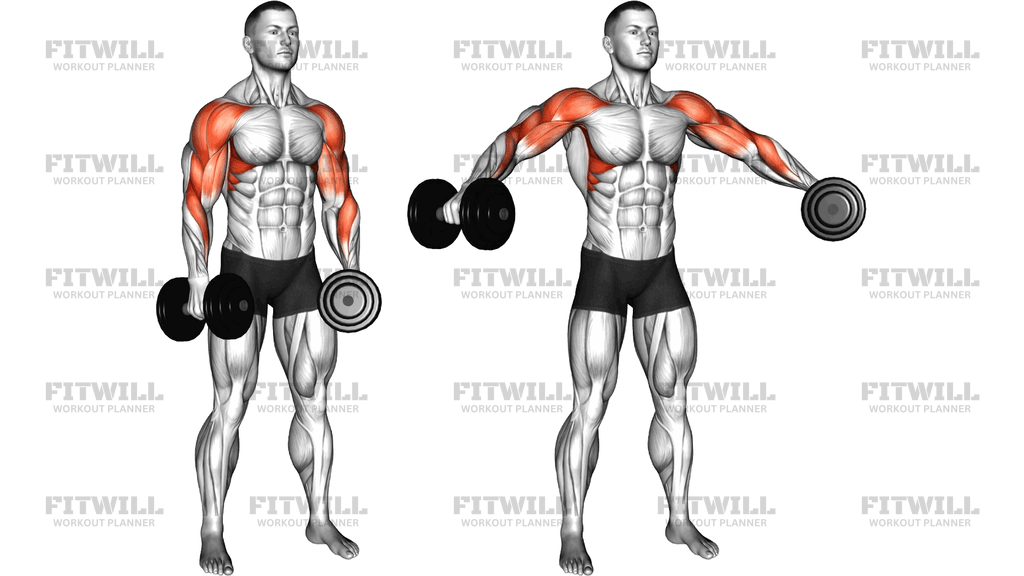
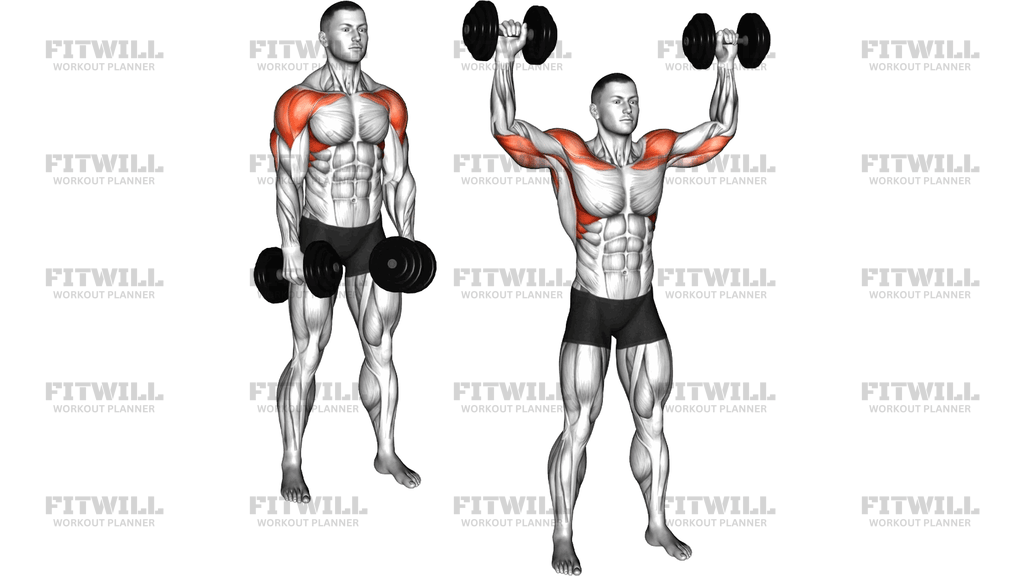
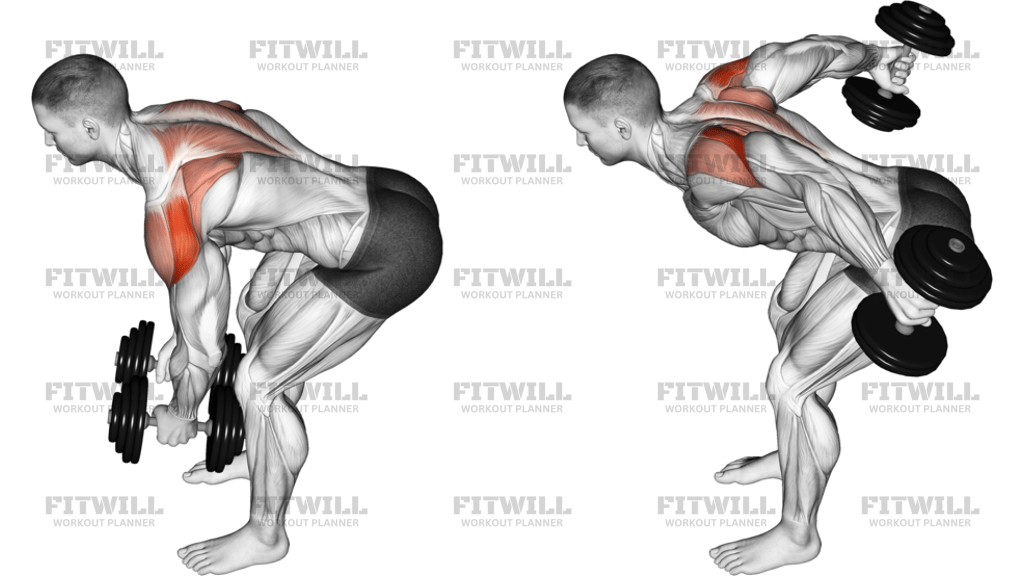
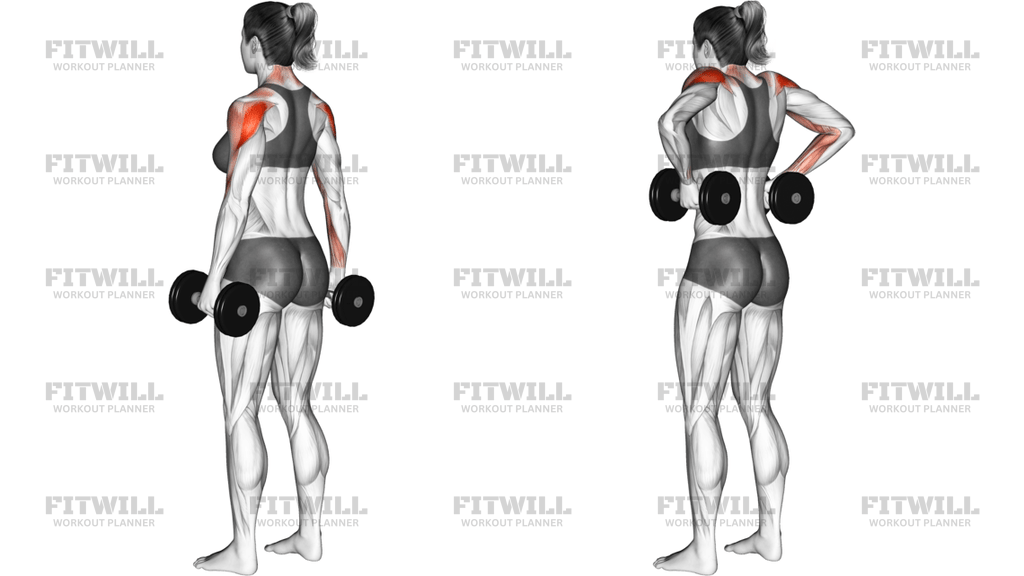
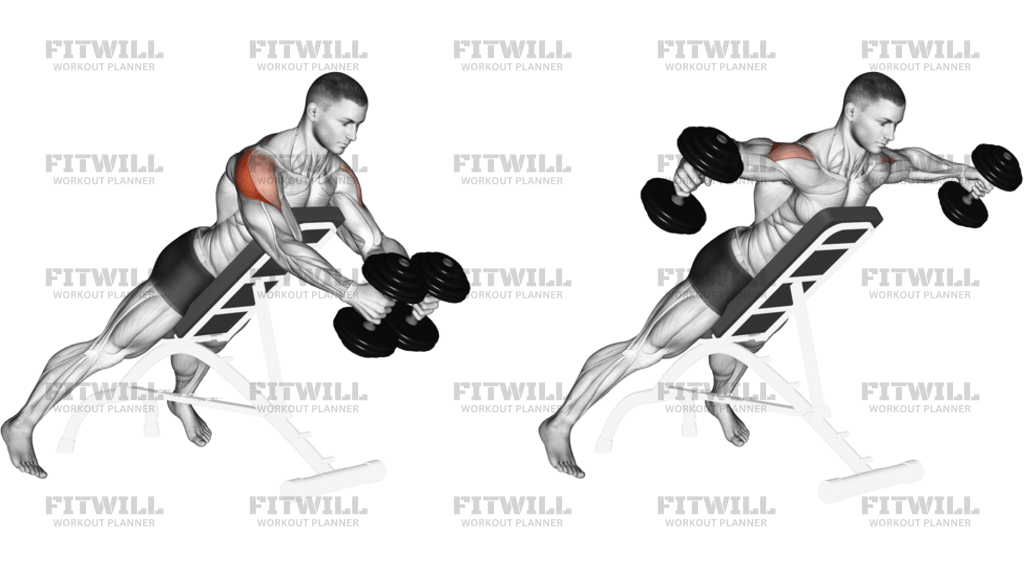
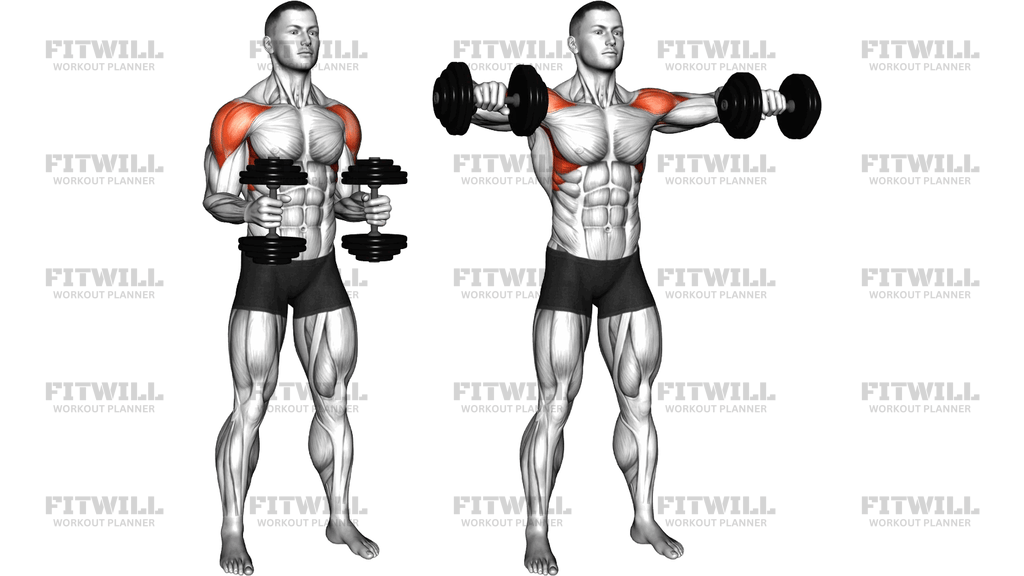
Set up standing with the feet about hip width apart and the dumbbells hanging by the sides, palms facing in. The image shows a slightly bent elbow throughout the movement, with the forearms staying below the upper arms and the hands ending near shoulder height. That bent-arm shape matters because it keeps tension on the side of the shoulder without forcing a huge range of motion or a dramatic torso lean.
Each repetition should look clean and repeatable. Start with the ribs stacked over the pelvis, brace lightly, and lift the upper arms out and slightly forward until the elbows reach about shoulder level. Pause briefly without shrugging, then lower the dumbbells under control until they return near the thighs. If the torso rocks, the neck tightens, or the shoulders roll up toward the ears, the load is too heavy or the range is too ambitious.
This exercise works well as accessory shoulder work, a warm-up pattern before pressing, or a moderate-rep isolation movement when you want direct delt tension without much body fatigue. It is usually suitable for beginners if the weight stays light and the elbows remain softly bent instead of locked. Use it when you want clean shoulder volume, controlled lateral raise mechanics, and a way to train the delts without turning the set into a full-body swing.
[ Workout Log & Planner ]
Put your next workout in Fitwill
Keep your plan and training log ready when you are.


Instructions
- Stand tall with your feet about hip width apart and hold a dumbbell in each hand at your sides, palms facing in.
- Keep a soft bend in both elbows and let the dumbbells hang just in front of the thighs, not behind the body.
- Stack your ribs over your pelvis, set your shoulders down, and brace lightly before the first rep.
- Lift both upper arms out to the sides and slightly forward in a wide arc until your elbows reach about shoulder height.
- Keep the elbows softly bent and let the forearms stay below the upper arms as the dumbbells rise.
- Pause for a moment at the top without shrugging or leaning back.
- Lower the dumbbells slowly along the same path until they return near the thighs.
- Reset your posture and repeat for the planned number of reps.
Tips & Tricks
- Choose a lighter pair than you would use for a straight-arm lateral raise; the bent arm changes the leverage but still punishes sloppy reps.
- Think about moving your elbows out and up, not about flinging the dumbbells with your hands.
- Stop the raise around shoulder height; going higher usually turns the rep into a trap-dominant shrug.
- Keep the neck long and the shoulders away from the ears so the upper traps do not take over early.
- A small forward angle in the arms is fine and often feels better than lifting perfectly out to the sides.
- Maintain the same elbow bend from start to finish instead of straightening the arms as fatigue builds.
- Lower the dumbbells in two to three seconds to keep tension on the side delts and reduce swinging.
- If you feel pinching at the top, reduce the range slightly and keep the hands just below shoulder level.
- Use a neutral grip or a slight thumb-up angle if that feels smoother in the shoulder joint.
Frequently Asked Questions
What muscle does Dumbbell Bent Arm Lateral Raise target most?
The side delts are the main target, with the upper traps helping stabilize the movement.
Why keep the elbows bent during this lateral raise?
The bent elbow shortens the lever and makes the lift easier to control while still loading the shoulders.
How high should the dumbbells travel?
Raise them until the elbows are about level with the shoulders, then lower under control.
Should my wrists or hands lead the movement?
No. Keep the wrists quiet and let the elbows drive the raise so the shoulders do the work.
Can I use this exercise if I am new to shoulder training?
Yes, as long as you start light and keep the torso still instead of swinging the dumbbells.
What is the biggest form mistake with this movement?
Shrugging the shoulders up or leaning back to get the dumbbells higher usually means the load is too heavy.
Is a slight forward angle okay?
Yes. A small forward path often feels smoother than lifting perfectly out to the sides.
Where does this fit in a workout?
It works well as accessory shoulder work, a warm-up before pressing, or a controlled higher-rep delt set.