Barbell Pin Chest Press
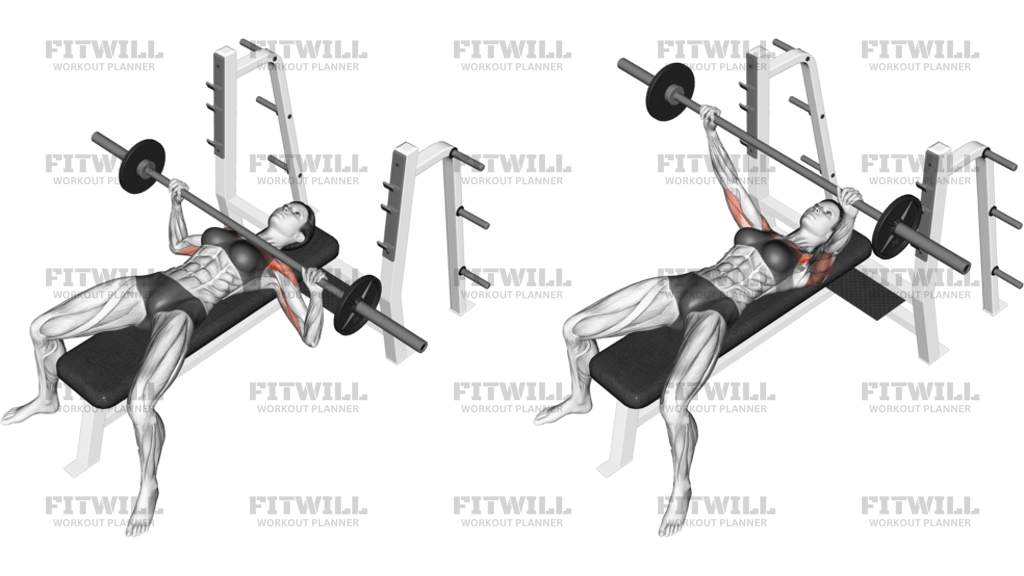
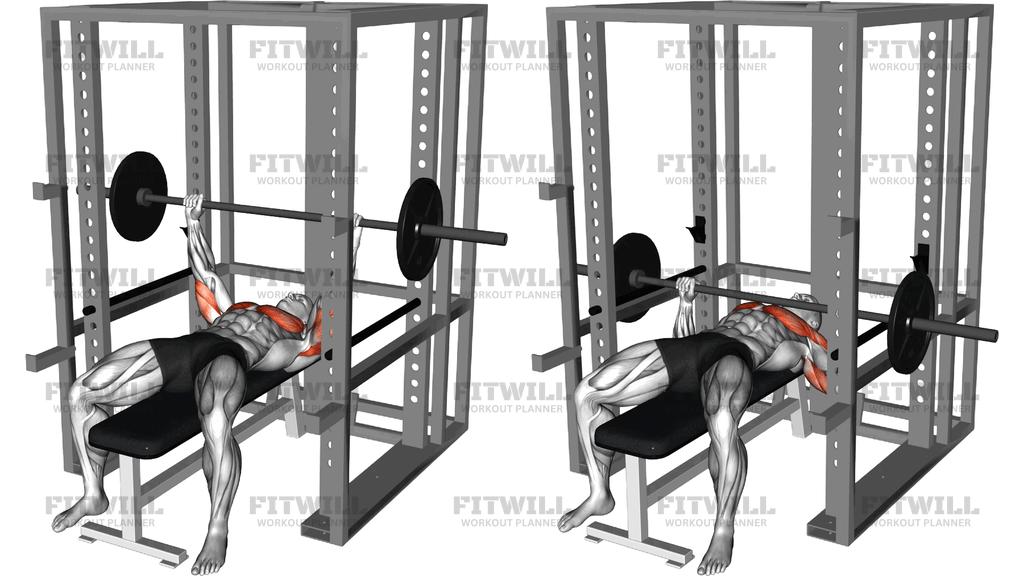
Barbell Pin Chest Press is a dead-stop bench press variation performed in a power rack with the bar resting on pins or safeties at the bottom of each rep. The image shows a flat bench placed inside the rack so the bar can travel from a pinned start position to full elbow extension and back to the same fixed stopping point. That setup removes the bounce and stretch reflex you get from a normal bench press, so every rep has to start from a still bar.
Because the bar begins on the pins, the exercise places a strong demand on the chest, triceps, and front shoulders while also asking the upper back to keep the shoulder blades pinned to the bench. The lower position is usually the hardest part, which makes this a useful choice when you want to build pressing strength off the chest, tighten your setup, or practice a cleaner bar path without relying on momentum. The rack also makes the start and finish of each rep easier to repeat because the pins define the bottom position.
The setup matters more here than on a regular bench press. The bench should be centered under the bar, the pins should be even on both sides, and your eyes should line up under the bar before you begin. Plant your feet, squeeze your shoulder blades together and slightly down, and keep your chest lifted without over-arching your lower back. A stable base lets the bar leave the pins smoothly instead of wobbling out of the bottom.
During each repetition, press the bar up and slightly back until the elbows lock out over the shoulders, then lower it under control until it settles dead stop on the pins again. Do not bounce the bar off the safeties or let your shoulders roll forward at the bottom. A short pause on the pins is part of the lift, so the rep should feel deliberate from start to finish. Use a load that lets you keep the bar path, wrist position, and scapular position consistent for every rep.
This variation fits well in strength-focused sessions, accessory bench work, or as a technical press when you want to clean up your bottom-end drive. It is also helpful if the normal bench press feels too elastic or if you want a more controlled pressing option inside a rack. Beginners can use it with light loads, but the bar has to be set up correctly and the pins must be at a height that matches the rep you want to perform.
[ Workout Log & Planner ]
Put your next workout in Fitwill
Keep your plan and training log ready when you are.


Instructions
- Set a flat bench inside a rack so the bar can rest on the pins at the bottom of the press, and make sure both safeties are level.
- Lie on the bench with your eyes under the bar, feet flat on the floor, and your shoulder blades squeezed together and pinned to the pad.
- Take a slightly wider than shoulder-width overhand grip, stack your wrists over your elbows, and keep your forearms vertical from the bottom position.
- Unrack or position the bar so it starts resting motionless on the pins just above the chest or lower sternum line.
- Take a breath into your torso and brace before each rep so your chest and upper back stay tight against the bench.
- Press the bar straight up first, then slightly back toward the shoulders until the elbows reach full extension over the shoulder line.
- Lower the bar under control until it settles back onto the pins without bouncing, losing upper-back tension, or letting the shoulders roll forward.
- Pause briefly on the pins, reset your brace, and repeat for the planned number of reps before safely racking the bar.
Tips & Tricks
- Set the pins at the exact bottom position you want to train; too low turns the rep into an awkward stretch, and too high shortens the press unnaturally.
- Keep your shoulder blades locked back and down the whole set so the chest stays high and the shoulders do not drift forward on the pins.
- Let the bar come to a complete dead stop on the safeties before driving again; touching and rebounding defeats the purpose of the lift.
- Stack the wrists over the elbows at the bottom so the bar stays over the forearms instead of bending the wrists backward.
- Use leg drive to keep your torso stable, but do not turn the rep into a hip bridge or slide your body toward the rack.
- If the bar touches the pins unevenly, reduce the load and check bench placement before adding weight.
- Keep the descent controlled and match both sides of the bar so one end does not drop before the other.
- Expect the first inch off the pins to feel harder than a normal bench press; choose a load that respects that dead-start demand.
Frequently Asked Questions
What muscles does the Barbell Pin Chest Press train most?
It mainly trains the chest, triceps, and front shoulders, with the upper back stabilizing the bench setup.
How is this different from a regular barbell bench press?
The bar starts from a dead stop on the pins, so you cannot use a bounce or stretch reflex to help the press.
Where should the bar touch the pins?
Set the safeties so the bar rests at the bottom of your press, usually around the lower chest or lower sternum line shown in the image.
Should the bar bounce off the safeties?
No. Let it settle on the pins, keep tension, and press again from a full stop.
Can beginners use the pin chest press?
Yes, but only with a light load and a carefully set bench and pin height, because the dead stop is less forgiving than a normal bench press.
What is the biggest form mistake on this exercise?
Letting the shoulders roll forward or bouncing the bar off the pins usually turns the lift into a sloppy press instead of a controlled strength movement.
Do I need a spotter for barbell pin chest press?
A spotter is still a good idea for heavy sets, but the rack pins add safety because the bar has a fixed bottom stop.
What variation is this most similar to?
It is closest to a paused bench press, but the bar starts fully supported on the pins instead of hovering over the chest.