Bodyweight Single Leg Kas Glute Bridge
Bodyweight Single Leg Kas Glute Bridge is a bench-supported unilateral bridge that keeps constant tension on the working side while the other leg stays lifted. It is a bodyweight strength exercise that trains the glutes first, with the hamstrings and deep core helping keep the pelvis steady and the torso organized. Because only one leg drives the lift, the movement exposes side-to-side differences very quickly and rewards clean positioning over raw effort.
The setup matters more here than on a standard two-leg bridge. Place your upper back on the edge of a sturdy bench, plant one foot flat on the floor, and keep the other leg lifted so the working side has to do the work on its own. Your planted foot should be far enough away that the shin can stay close to vertical at the top, and your ribs should stay stacked rather than flared as you press.
This variation is usually performed with a shorter, more controlled range than a full hip thrust. The goal is to drive the hips up by squeezing the glute, not by arching the low back or bouncing off the bottom. A brief pause near the top makes the exercise feel much more like a KAS-style bridge, where the muscle stays under tension and the pelvis stays level instead of rocking side to side.
For most lifters, this is a useful accessory after squats, deadlifts, running, or lower-body machine work, because it targets glute strength without needing external load. It also works well in warm-ups and activation blocks when you want to wake up one side at a time and clean up pelvic control before heavier lifts. Beginners can use it too, but the bench setup should feel stable before they start chasing repetitions.
The main coaching idea is to keep the motion smooth, deliberate, and repeatable. If the low back starts taking over, the bench is too high, the foot is too far away, or the range has gotten too big. Keep the neck relaxed, the torso quiet, and the top position crisp so each rep feels like a glute-driven bridge instead of a momentum-based swing.
Fitwill
Log Workouts, Track Progress & Build Strength.
Achieve more with Fitwill: explore over 9600 exercises with images and videos, access built-in and custom workouts, perfect for both gym and home sessions, and see real results.
Start your journey. Download today!




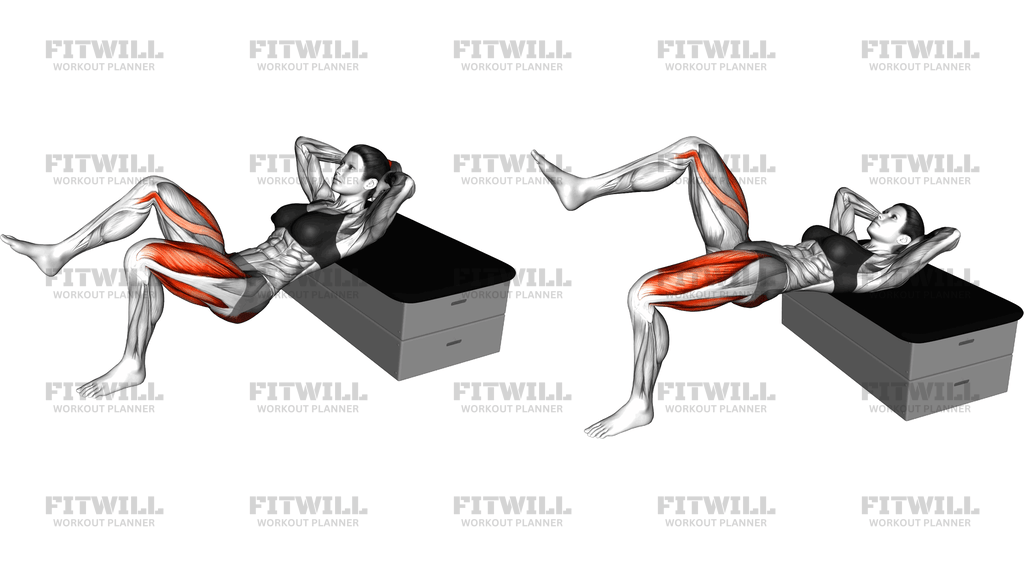
Instructions
- Sit in front of a flat bench and lie back so your upper back and shoulder blades rest on the edge, not your neck.
- Plant one foot flat on the floor and bend that knee; lift the other leg so it stays off the ground and out of the way.
- Slide the planted foot until your shin is close to vertical when your hips are at the top of the rep.
- Brace your abs, keep your ribs down, and lightly tuck your pelvis before you start the first rep.
- Press through the planted heel and midfoot to raise your hips until your torso and planted thigh form a strong line.
- Squeeze the glute hard at the top without flaring your ribs or twisting your pelvis.
- Lower your hips a short, controlled distance and keep tension on the working side instead of collapsing to the bottom.
- Exhale as you drive up, inhale as you lower, and keep the raised leg quiet throughout the set.
- After the last rep, lower your hips to the floor, bring the free leg down, and sit up before switching sides.
Tips & Tricks
- If you feel this mostly in your lower back, shorten the range and keep the top position below the point where your ribs flare.
- A shin that is too far forward usually turns the set into more hamstring work; slide the foot a little closer until the glute takes over.
- Keep the lifted leg bent and quiet instead of swinging it for balance; extra motion makes the pelvis rotate.
- Think about driving the floor away with the planted heel while keeping both hip points level to the ceiling.
- A one-second squeeze at the top makes this feel much more like a KAS-style bridge than a fast hip swing.
- Use a lower bench if your shoulders slide or your neck starts working harder than your glute.
- Stop the set before the pelvis starts dropping on one side, because that usually means the working glute has already fatigued.
- Bare feet or flat shoes usually give better floor contact than soft running shoes for this bridge variation.
- Keep your chin gently tucked so the bench supports your upper back instead of your neck.
- If the planted foot cramps, check that the heel stays grounded and the knee tracks over the toes instead of collapsing inward.
Frequently Asked Questions
What muscles does Bodyweight Single Leg Kas Glute Bridge work?
It mainly trains the glutes on the working side, with the hamstrings and deep core helping keep the pelvis level and the torso stable.
Where should my upper back sit on the bench for Bodyweight Single Leg Kas Glute Bridge?
Your upper back and shoulder blades should rest on the bench edge, with your neck free and relaxed. If the bench is too high, the movement usually turns into a low-back arch instead of a glute bridge.
How far from the bench should my planted foot be?
Place the foot so the shin is close to vertical near the top of the rep. If the foot is too far away, you usually feel more hamstring; too close can make the bridge feel cramped and unstable.
Should the free leg stay straight or bent?
For this version, keep the free leg bent and lifted so it stays quiet while the working side does the lifting. That makes the exercise more stable and keeps tension on the glute.
Can beginners do Bodyweight Single Leg Kas Glute Bridge?
Yes, but the bench-supported version is a little more demanding than a two-leg bridge. Beginners often do better starting with a floor single-leg bridge or using a smaller range on the bench.
Why does my lower back take over at the top?
That usually means you are lifting too high and finishing with spinal extension instead of hip extension. Stop the rep when the glute is fully squeezed and keep your ribs down.
How do I make Bodyweight Single Leg Kas Glute Bridge feel more like a glute exercise?
Keep a slight posterior pelvic tilt, press through the heel, and hold a short pause at the top. That combination keeps tension where you want it instead of letting momentum take over.
What is the easiest way to progress this movement?
Add a longer pause at the top first, then slow the lowering phase. If that is still easy, increase the range only as long as your pelvis stays level and your low back stays quiet.