Band Assisted Muscle-Up
Band Assisted Muscle-Up is a powerful straight-bar progression that links a pull-up, transition, and dip into one continuous upper-body skill. The band reduces the demand at the hardest part of the rep, letting you practice the movement pattern with enough assistance to keep the pull explosive, the turnover clean, and the top position controlled. It is especially useful for lifters building toward an unassisted muscle-up, athletes training upper-body power, or anyone who wants a demanding pull-and-press combination without losing form.
The exercise places a big demand on the lats, upper back, chest, shoulders, triceps, and trunk even though the motion is driven by technique more than brute force. That is why the setup matters so much. A centered band, a stable overhand grip, and a tight body line keep the assistance predictable; if the band drifts or the torso swings, the rep turns into a chaotic pull instead of a clean transition over the bar.
In the pull phase, the goal is to bring the bar toward your lower chest rather than reaching for height with flared elbows. As you rise, lean your chest forward over the bar, let the elbows travel around and above the bar, and press hard until the arms lock out in a tall support. The descent should reverse those same positions under control so you keep the shoulders organized and do not drop straight back to a dead hang.
Band Assisted Muscle-Up is usually best as a low-rep strength or skill movement, not a high-rep conditioning drill. Use it when you are fresh enough to stay crisp, because fatigue makes the transition sloppy and increases stress on the shoulders and wrists. If the band is too strong, it can bounce you through the top; if it is too light, you may miss the turnover and turn the rep into a fast pull-up. The best version looks smooth, repeatable, and deliberate from the first hang to the final reset. Using the band to rehearse the exact pull, turnover, and support sequence builds the timing you need for a cleaner unassisted muscle-up later.
Fitwill
Log Workouts, Track Progress & Build Strength.
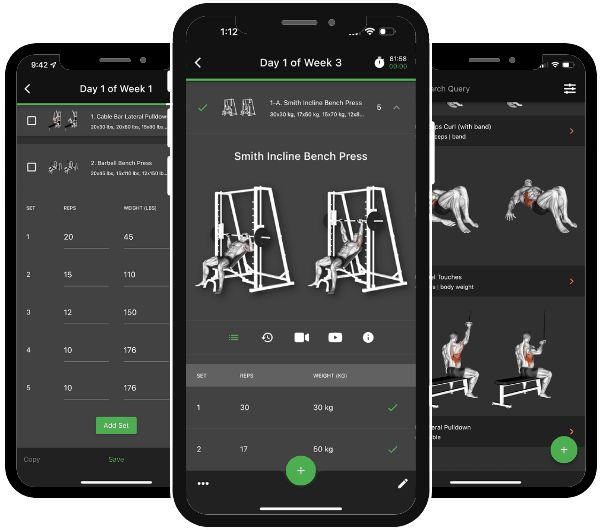
Achieve more with Fitwill: explore over 5000 exercises with images and videos, access built-in and custom workouts, perfect for both gym and home sessions, and see real results.
Start your journey. Download today!


Instructions
- Loop a long resistance band over the pull-up bar and place one foot or knee in the hanging loop so the band stays centered under your body.
- Grip the bar slightly wider than shoulder-width with an overhand grip, then hang with straight arms and active shoulders.
- Set your ribs down, squeeze your legs together, and start from a still dead hang instead of swinging.
- Pull the bar toward your lower chest as you drive your elbows down and back with the band assisting the first half of the rep.
- Keep the bar close to your body and continue pulling until your chest rises to bar height.
- As your chest reaches the bar, lean forward and turn your elbows over and around the bar to enter the transition.
- Press the bar straight down until your arms are fully locked out in a tall support above the bar.
- Lower back through the same path with control, then return to the hang and reset before the next repetition.
Tips & Tricks
- Choose the lightest band that still gets you smoothly over the bar; too much assistance can make the top position feel unstable.
- Keep the band centered under your hips or the same foot every rep so the body does not twist during the pull.
- Pull the bar to your lower chest, not your chin; if the bar stays high and away from you, the turnover gets messy.
- Think about bringing your chest over the bar early, then pressing down, instead of trying to finish with a giant pull-up.
- Keep your elbows close on the way up so the transition stays tight and your shoulders do not flare back behind you.
- Lock out hard at the top with your shoulders stacked over the bar before you start the descent.
- Lower slowly through the turnover instead of dropping straight to the hang; the eccentric teaches the muscle-up path.
- End the set when you need a big kip, because sloppy reps build bad muscle-up timing fast.
Frequently Asked Questions
What muscles does the Band Assisted Muscle-Up work?
The Band Assisted Muscle-Up heavily involves the lats, upper back, chest, shoulders, triceps, and core. The band reduces the hardest part of the transition so you can train the full pull-to-support pattern.
Where should the band sit on a Band Assisted Muscle-Up?
Loop the band over the bar and keep it centered under the same foot or knee each rep. If the band sits off-center, the body twists and the turnover becomes much harder.
Do I need a false grip for a Band Assisted Muscle-Up?
On a straight bar, most lifters use a firm overhand grip slightly wider than shoulder-width. A false grip is more common on rings, but it is not necessary for this version.
Why do I get stuck during the transition?
Usually the bar is too far away, the chest never gets over the bar, or the band is too light for your current strength. Focus on keeping the bar close and turning the elbows over quickly.
Can beginners do the Band Assisted Muscle-Up?
Yes, if they already have solid pull-up strength and can support themselves above the bar. If not, start with banded chest-to-bar pull-ups and straight-bar support holds first.
Should I kip on the Band Assisted Muscle-Up?
A small controlled leg drive can help, but big swings usually hide weak transition mechanics. Keep the rep as strict as possible until the turnover feels consistent.
What is the safest way to lower from the top?
Reverse the rep through the transition and keep the shoulders active as you return to the hang. Dropping straight down can jar the shoulders and make the next rep sloppy.
How many reps should I do?
Most people get better results with low reps, usually 1-5 clean reps per set. Stop before the swing increases or the transition breaks down.