Wide Glute Pulse Bridge
Wide Glute Pulse Bridge is a bodyweight floor exercise that keeps the glutes under tension by using a wide-foot bridge and short top-end pulses. It is useful when you want a simple way to train hip extension without loading the spine, and the wide stance shifts attention toward the outer glutes as well as the main hip extensors.
The setup matters more than the pulse itself. Lie on your back with your knees bent, feet flat, and heels planted a little wider than hip width. Turn the toes slightly out, let the arms rest by your sides, and keep the ribs down before you lift. From that position, the pelvis can stay stacked instead of tipping forward into a low-back arch.
A clean rep starts by driving through the heels and outer midfoot until the hips reach a strong bridge. At the top, the knees should stay open and track in line with the toes, not cave inward. The pulse is a small movement at the top of the bridge, usually only a few inches, so the glutes keep working instead of the set turning into a bigger but sloppier hip raise.
Because the range is short, quality comes from tension, not momentum. Exhale as you lift or pulse, inhale as you lower slightly, and keep the neck and jaw relaxed. If the hamstrings take over, the lower back feels cramped, or the knees wobble, the set is getting too fast or the feet are in the wrong place.
Use this exercise for glute activation, accessory work, or higher-rep lower-body circuits when you want controlled burn rather than heavy loading. It fits well before squats, lunges, running, or conditioning sessions, and it is also a practical choice for beginners who need a low-complexity bridge pattern before moving to loaded hip thrust variations.
[ Workout Log & Planner ]
Put your next workout in Fitwill
Keep your plan and training log ready when you are.


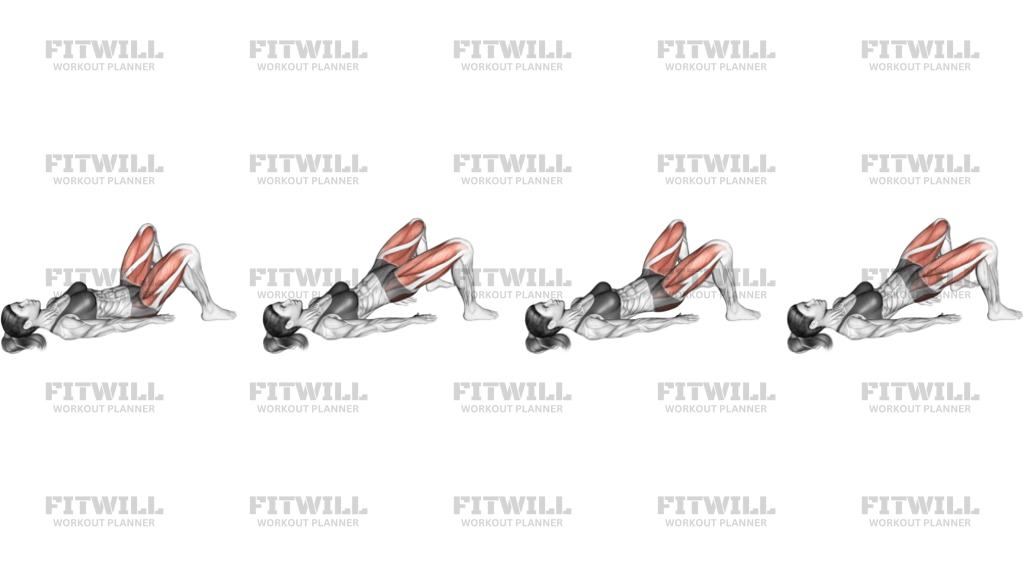
Instructions
- Lie on your back with your knees bent, feet flat, and heels set a little wider than hip width.
- Turn your toes slightly out and rest your arms on the floor by your sides.
- Press your lower ribs down and lightly tuck the pelvis so your low back stays long.
- Drive through your heels and outer midfoot to lift your hips into a strong bridge.
- Stop when your shoulders, hips, and knees are roughly in one line without over-arching.
- Keep your knees open and tracking over your toes as you hold the bridge.
- Pulse the hips up and down only a few inches at the top of the rep.
- Breathe out on the lift or pulse, then inhale as you lower under control.
- Lower the hips back to the floor with tension still in the glutes, then repeat.
Tips & Tricks
- Set the feet wide enough that the knees can stay open without feeling forced.
- Keep the pulse small; if the hips are dropping a lot, it has turned into a full bridge.
- Think about pushing the floor apart with your feet to keep the knees from collapsing inward.
- Finish each pulse with the glutes, not by arching the lower back higher.
- If the hamstrings cramp, bring the heels a little closer to the hips and re-tuck the pelvis.
- Keep your chin slightly tucked so the neck does not help drive the movement.
- Use a slower rhythm when the set gets hard so the bridge stays smooth and controlled.
- Stop the set when the hips no longer stay level or the knees start drifting inward.
Frequently Asked Questions
What muscles does Wide Glute Pulse Bridge work?
It mainly trains the glutes, with the hamstrings and core helping hold the bridge position.
Why are the feet set wider than a regular bridge?
The wider stance helps keep the knees open and shifts more tension toward the outer glutes during the pulse.
How high should I lift my hips?
Lift until the torso and thighs are close to a straight line, but stop before the low back takes over.
What should the pulse look like at the top?
The pulse should be short and controlled, only a few inches, with the hips staying under constant tension.
Can I do this if my lower back feels it more than my glutes?
Yes, but reduce the height, tuck the pelvis slightly more, and keep the ribs down so the bridge does not turn into a back arch.
Is this a good beginner glute exercise?
Yes. It is simple to learn, uses bodyweight only, and gives clear feedback if the hips or knees drift out of position.
What is the most common form mistake?
The most common mistake is pulsing too high and letting the movement come from the lower back instead of the glutes.
Where does this fit in a workout?
It works well as a warmup activation drill, an accessory glute movement, or a higher-rep finisher.