Celebratory Knee Drives
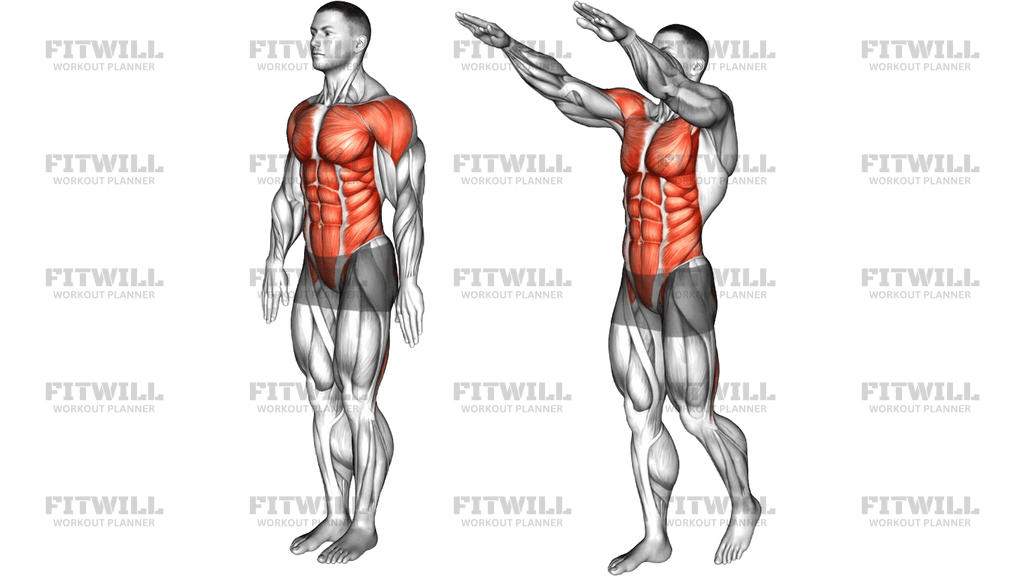
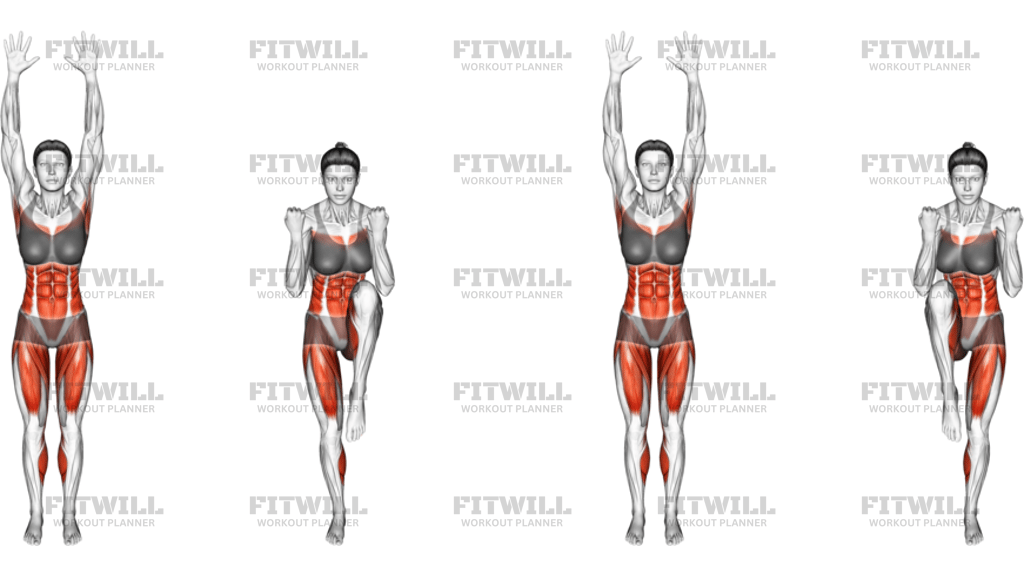
Celebratory Knee Drives is a standing body-weight plyometric drill built around an alternating knee lift and an upward, celebratory arm reach. It looks simple, but the quality comes from how cleanly you shift weight, brace the trunk, and snap the knee up without leaning back or letting the torso twist. Because the movement is rhythmic and upright, it is often used to warm up the hips, wake up the core, and build coordination before faster running or more demanding lower-body work.
The drill emphasizes the hip flexors, lower abs, glutes, calves, and the stabilizing muscles that keep you tall on one leg. The shoulders and upper back also help because the arms stay active overhead or near the shoulders as the knees switch. That makes Celebratory Knee Drives useful when you want a light plyometric option that still asks the trunk and hips to work together instead of just marching in place.
The setup matters because the exercise starts from a narrow, athletic stance with the feet under the hips and the ribs stacked over the pelvis. A tall posture gives the knee room to rise without collapsing the low back, and it also keeps the landing foot stable when the working leg comes back down. If you rush the start, the rep turns into a sloppy high-knee bounce; if you set up well, the drill feels springy and controlled.
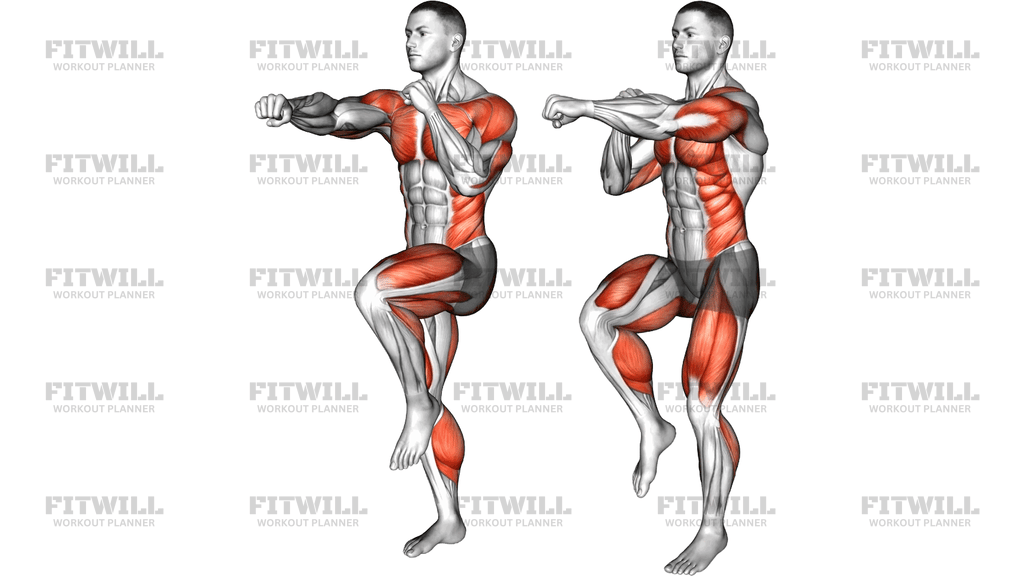
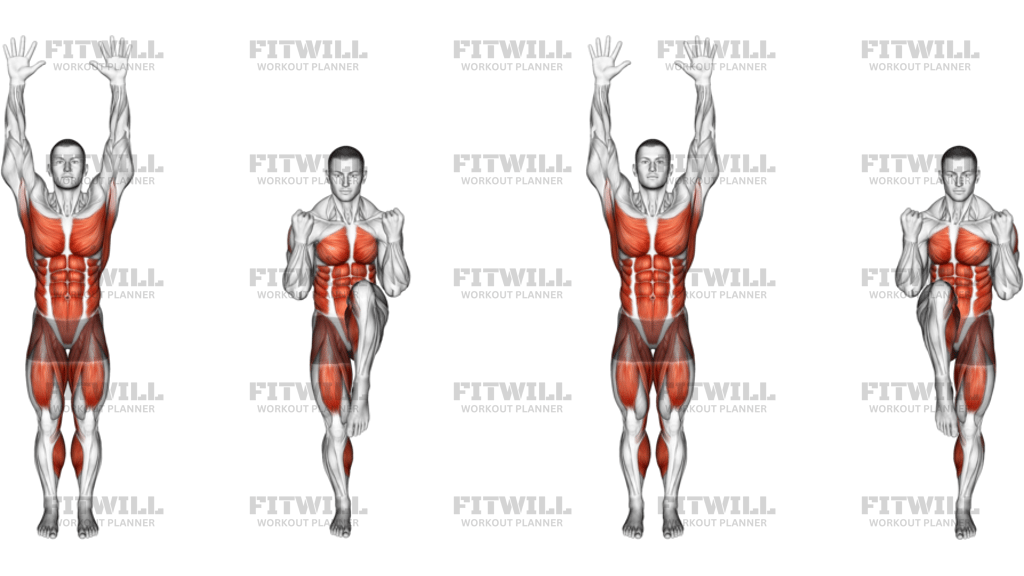
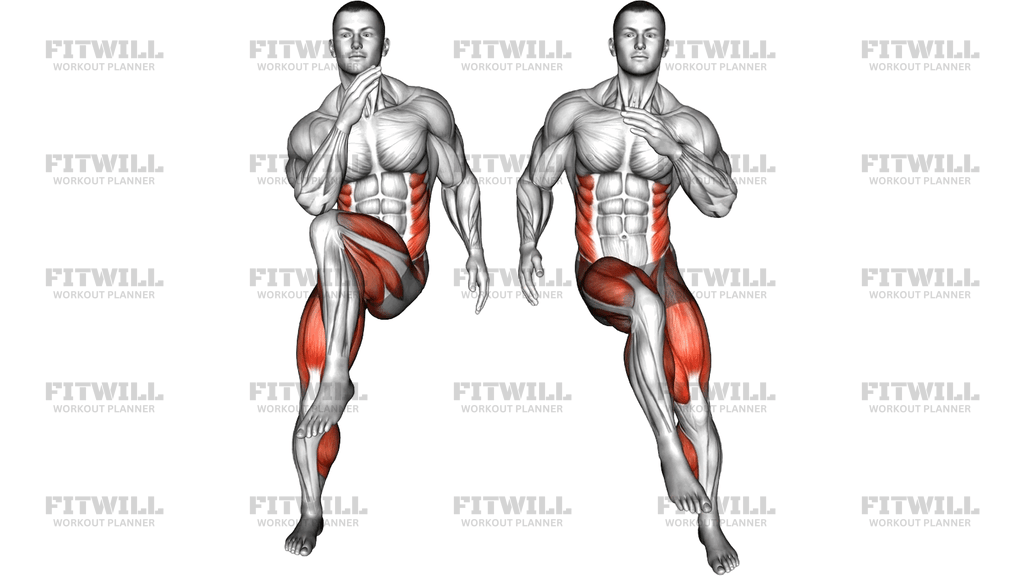
Drive one knee upward toward hip height while the opposite foot stays grounded and the standing leg stays tall. Keep the torso upright, the chest open, and the supporting heel quiet as you transfer weight. On the return, place the lifted foot back down softly and immediately switch sides, keeping the tempo crisp but not frantic. The goal is an athletic, repeatable pattern where each rep looks almost identical.
This is a useful choice for warm-ups, movement prep, conditioning circuits, and coordination work, especially when you want a low-equipment drill that still challenges balance and trunk control. It can also serve as an easier alternative to higher-impact skipping or bounding. Treat it as a speed and posture exercise rather than a max-effort strength movement, and stop the set if the knee lift turns into a hop or the shoulders start swinging wildly.
[ Workout Log & Planner ]
Put your next workout in Fitwill
Keep your plan and training log ready when you are.


Instructions
- Stand tall with your feet about hip-width apart, ribs stacked over your pelvis, and your arms reaching overhead or held in a celebratory guard position near your shoulders.
- Shift your weight to one foot and make the standing leg soft but stable, with the whole foot rooted to the floor.
- Brace lightly through your midsection so your chest stays lifted and your low back does not arch as the knee comes up.
- Drive the opposite knee up toward hip height with a quick, clean lift while the torso stays upright.
- At the top, keep the lifted thigh high for a brief moment instead of leaning backward to fake extra range.
- Lower the lifted foot back to the floor under control and absorb the landing quietly through the foot and ankle.
- Immediately switch sides and repeat the same knee drive with the same posture and rhythm.
- Breathe out on each knee drive and inhale as the foot returns to the floor.
- Finish the set by settling both feet under you and resetting your posture before the next round.
Tips & Tricks
- Keep the standing foot fully planted; if the heel pops up early, the drill turns into a bounce instead of a controlled knee drive.
- Raise the knee only as high as you can without arching your lower back or flaring the ribs.
- Use the arms to reinforce rhythm, not to yank your body upward or throw your balance off to one side.
- Think of each rep as a quick snap up and a soft reset down, not a slow marching step.
- If your hips start drifting side to side, shorten the knee height and tighten the stance.
- Land quietly on the returning foot so the exercise stays springy instead of noisy and jarring.
- Keep the neck long and the gaze forward; looking down usually collapses the chest and shortens the knee lift.
- For conditioning, move faster; for coordination, slow the tempo enough that every switch looks identical.
Frequently Asked Questions
What muscles do Celebratory Knee Drives work?
They mainly train the hip flexors, lower abs, glutes, calves, and the stabilizers that keep you balanced on one leg.
Is Celebratory Knee Drives a cardio drill or a strength exercise?
It is mostly a coordination and conditioning drill. The main challenge is keeping the posture crisp while you move quickly from side to side.
How high should the knee come up?
Aim for roughly hip height if you can do it without leaning back or losing balance. If your trunk starts to arch, lower the target a little.
Should my arms stay overhead the whole time?
They should stay active and organized, but they can move into a strong celebratory guard near the shoulders if that helps you keep rhythm and balance.
What is the most common mistake in Celebratory Knee Drives?
The usual error is turning the drill into a sloppy hop with the torso swinging around. Keep the standing foot planted and let the knee drive stay clean.
Can beginners do this movement?
Yes. Beginners should use a slower tempo and smaller knee height at first so they can keep the posture tall and the landing quiet.
How can I make Celebratory Knee Drives harder?
Increase the pace, hold the top position a little longer, or extend the arm reach more aggressively while still keeping the torso stacked.
Is this a good warm-up before running or jumping?
Yes. It is a useful warm-up because it rehearses single-leg balance, hip drive, and upright posture without needing equipment.