Burpee Twist
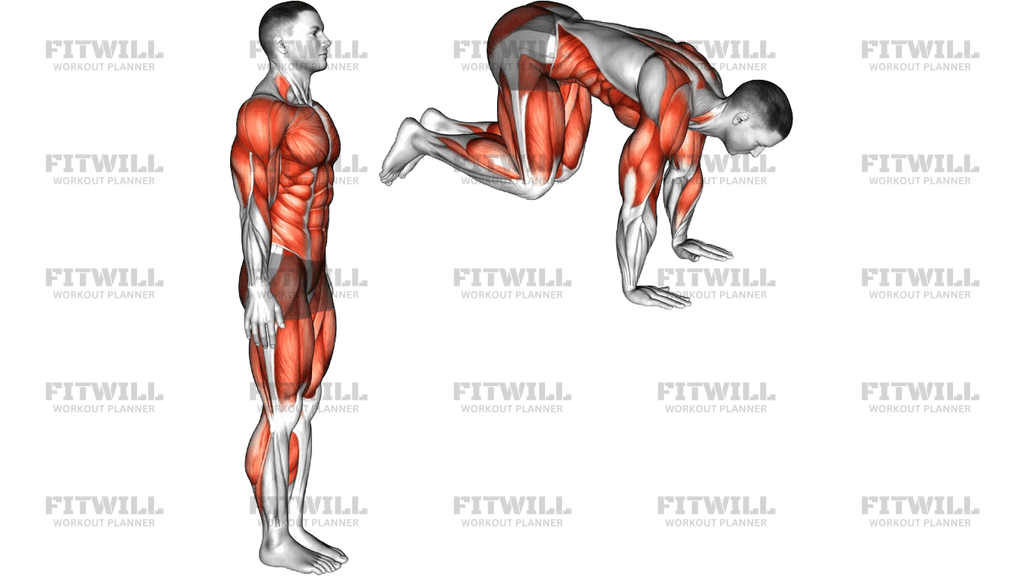
Burpee Twist is a bodyweight plyometric drill that blends a burpee with a quick rotational finish. It is built for conditioning, coordination, and trunk control, so the value comes from crisp position changes rather than from chasing speed alone. The movement raises heart rate quickly while also demanding that you keep your midsection organized as you move from standing to floor and back again.
The setup matters because the exercise starts with a fast drop to the floor and ends with an explosive rise to standing. If your feet are too narrow, your hips are too low, or your hands land too far in front of you, the burpee turns into a sloppy jump-in and jump-out instead of a clean, repeatable drill. A good rep starts from an athletic stance, a tall chest, and a brace that stays firm as the hands touch down.
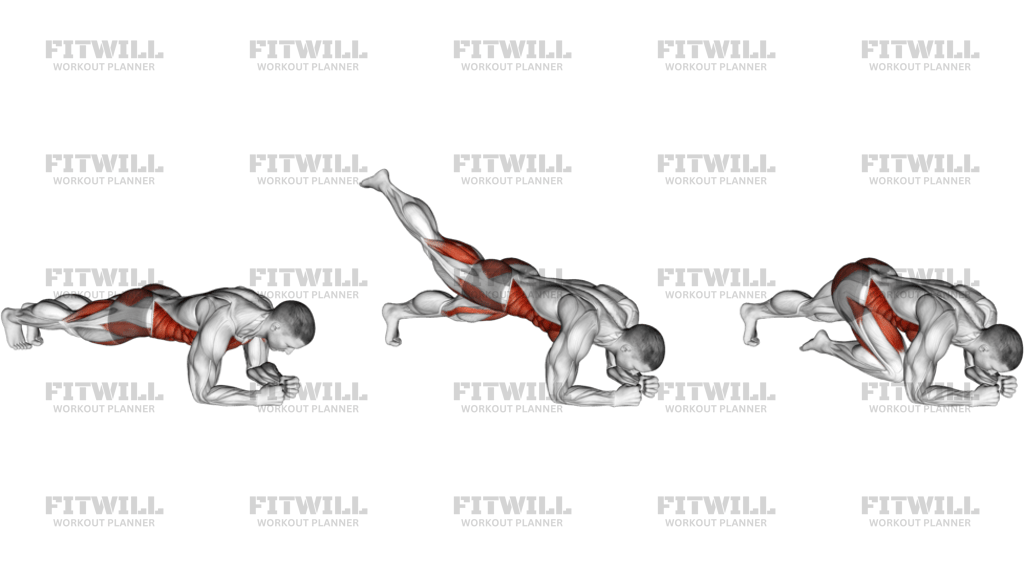
From there, the rep flows through a squat, a jump or step back to plank, a controlled return to the feet, and a powerful stand-up with the twist or turn at the top. The torso should rotate as part of the finish, not as a loose spin that throws you off balance. Keep the hands and feet moving deliberately enough that you can always own the landing and reset the next rep.
This exercise is useful in athletic conditioning sessions, metabolic finishers, core-focused circuits, and warmups that need a more dynamic pattern. It trains the body to absorb force, transfer weight, and reorient quickly without losing posture. The best sets leave you breathing hard but still able to keep your shoulders stacked, your knees tracking cleanly, and your landing under control.
Because the movement is fast and repetitive, quality drops when fatigue gets ahead of coordination. Reduce pace before you reduce shape. If the twist makes you unstable, shorten the jump, step back instead of hopping, or keep the rotation smaller until your timing is consistent. Burpee Twist should feel springy and organized, not rushed and collapsing at the hips or shoulders.
[ Workout Log & Planner ]
Put your next workout in Fitwill
Keep your plan and training log ready when you are.


Instructions
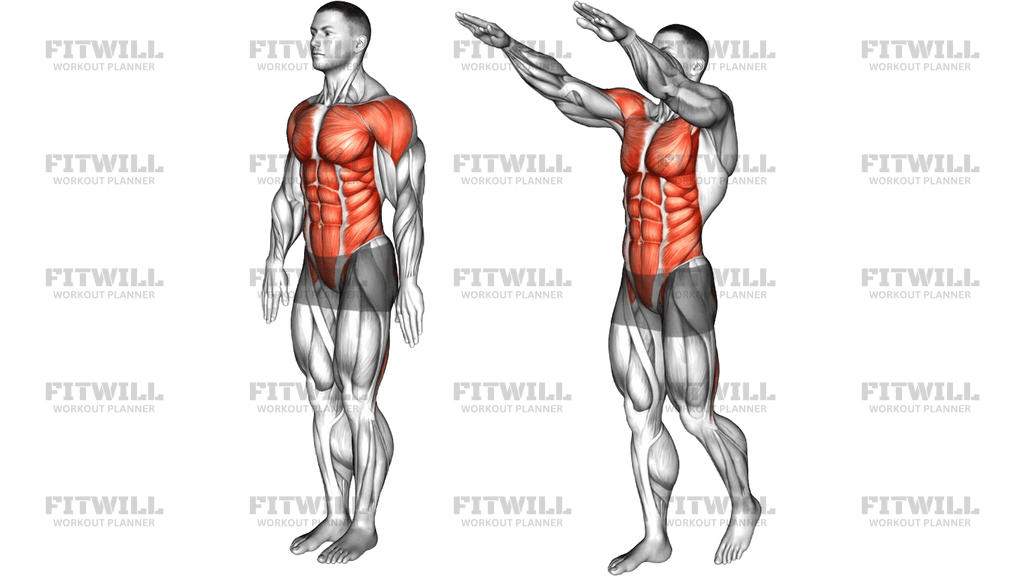
- Stand tall with your feet about hip-width apart, then soften your knees and hinge into an athletic stance.
- Brace your midsection, keep your chest up, and reach both hands toward the floor in front of your feet.
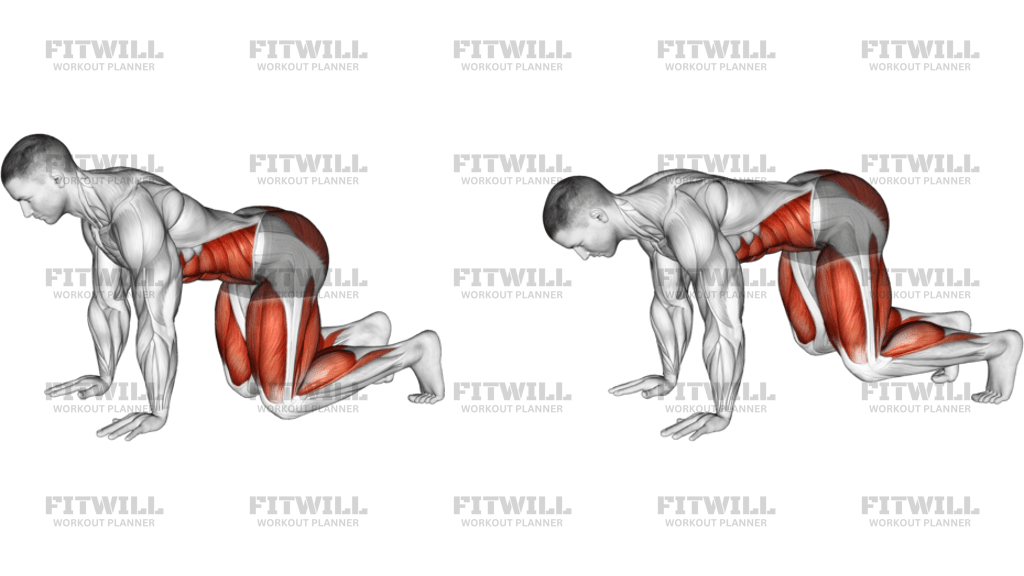
- Plant your palms on the floor and jump or step your feet back into a high plank with your shoulders over your wrists.
- Hold the plank briefly so your hips stay level, your glutes stay tight, and your lower back does not sag.
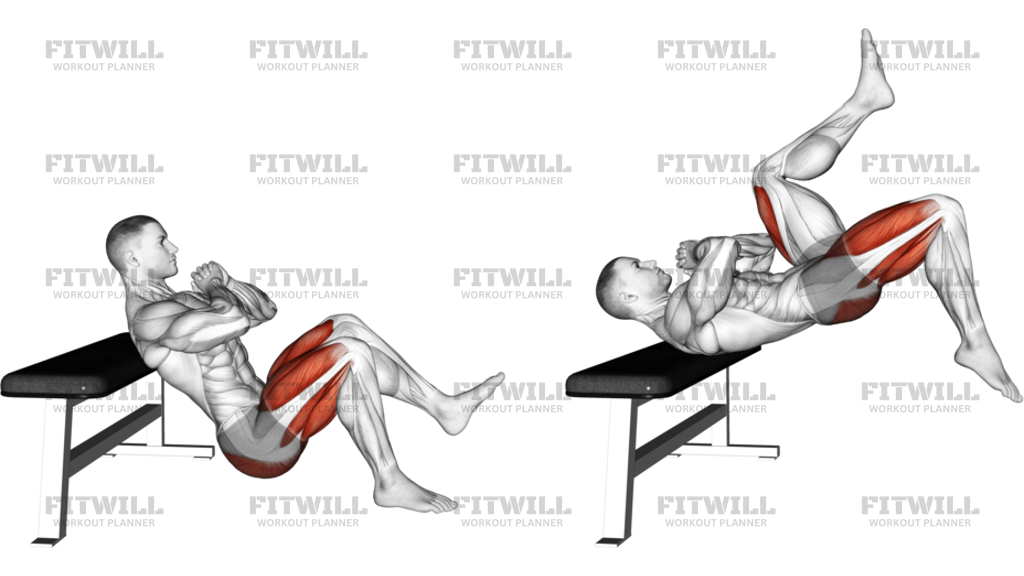
- Jump or step your feet back underneath you and land in a low squat with your weight centered through both feet.
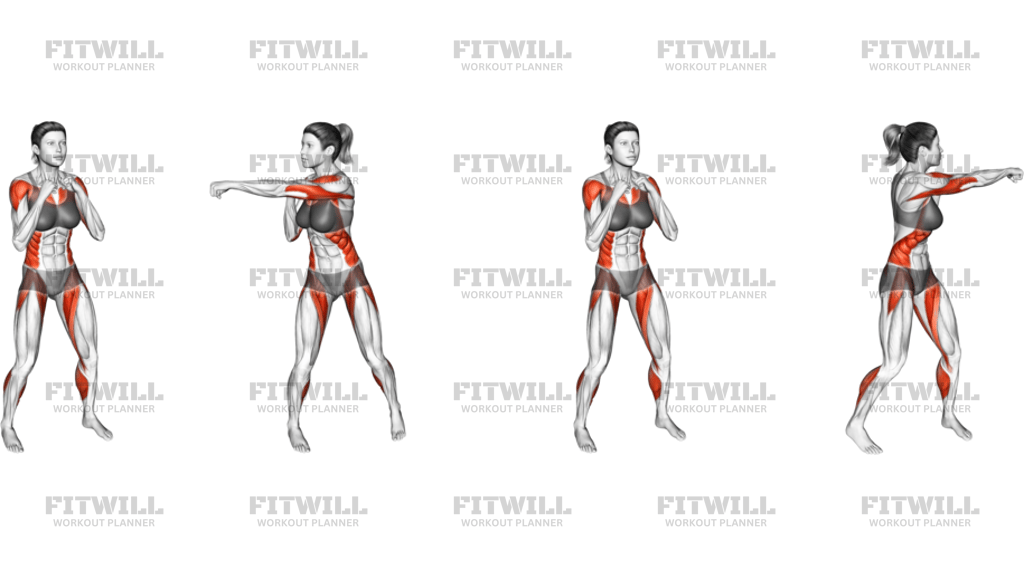
- Drive up to standing and add the twist or turn at the top of the rep as you explode off the floor.
- Land softly with bent knees, re-stabilize your stance, and reset your gaze before starting the next repetition.
- Breathe out on the drive up and inhale as you lower back toward the floor.
- Continue for the planned number of reps, keeping every landing quiet and controlled.
Tips & Tricks
- Keep your hands just outside your feet on the floor so you can jump back without overreaching through the shoulders.
- Land the plank with your shoulders stacked over your wrists instead of drifting into a long, loose position.
- Think about snapping the feet back under the hips rather than sliding them forward slowly.
- If the twist at the top throws off your balance, make the rotation smaller and cleaner before you chase height.
- Keep your chest lifted as you rise so the rep finishes with extension, not a bent-over scramble.
- Use a quiet landing on every jump; loud feet usually mean the knees and hips are taking too much impact.
- Step the feet back instead of jumping them if your lower back or wrists start to feel stressed.
- Hold the core firm through the plank and the turn so the twist comes from the torso, not from the low back.
- Stop the set when the turn gets sloppy or your hips start dropping in the plank.
Frequently Asked Questions
What does Burpee Twist train most?
It mainly trains conditioning, coordination, and core control while the body moves quickly between standing, plank, and a rotational finish.
Is Burpee Twist a good beginner exercise?
Yes, if the pace stays controlled. Beginners can step back to plank and use a small twist at the top before building up to a jumpier version.
How should my hands and feet land during the burpee?
Place your hands close enough to your feet that you can jump back without reaching, and land your feet softly under your hips or just outside them.
Where should the twist happen?
The twist belongs at the top of the rep when you stand up, not while you are collapsing through the plank or swinging your hips around the floor.
Can I step instead of jump?
Yes. Stepping back and stepping in keeps the movement lower impact while still training the same floor-to-stand pattern.
Why do my wrists or lower back get tired first?
Usually the plank position is too long, the hands are too far forward, or the hips are sagging when you move back to the floor.
What is a common mistake in this exercise?
Rushing the rep and losing shape is the biggest issue. The burpee twist should look crisp, with a controlled plank and a balanced finish.
How can I make Burpee Twist harder?
Increase the pace only after the landing, plank, and twist stay clean. You can also add more height to the finish or shorten the rest between reps.