Plyometric Agility Drill
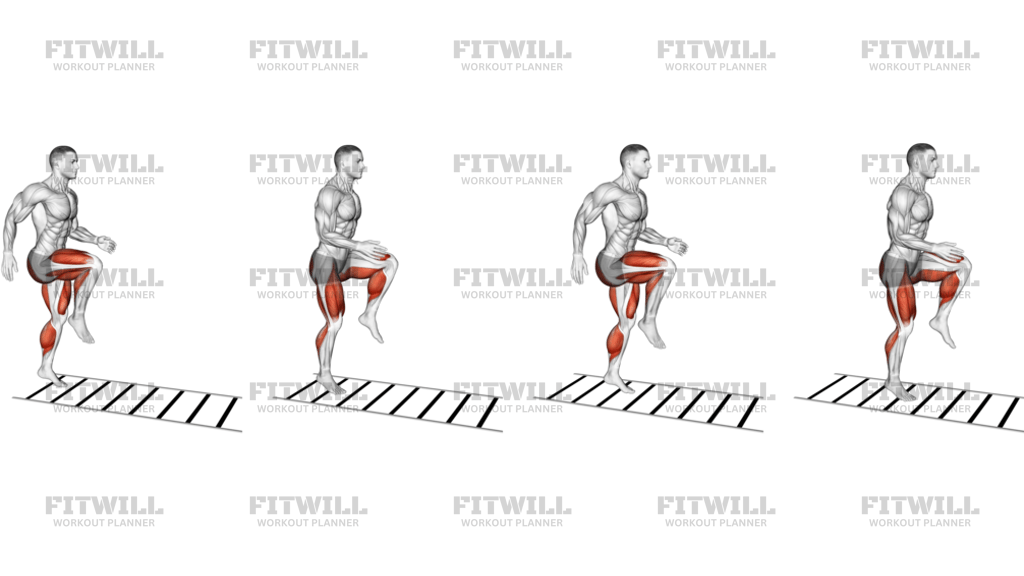
Plyometric Agility Drill is a bodyweight quick-feet drill performed through an agility ladder or a similar marked lane. It trains rapid foot placement, coordination, rhythm, and the ability to keep the torso organized while the legs move fast. The goal is not to jump high or cover a lot of distance. The goal is to place each foot cleanly, keep the contacts light, and stay tall enough that the drill looks fast without becoming sloppy.
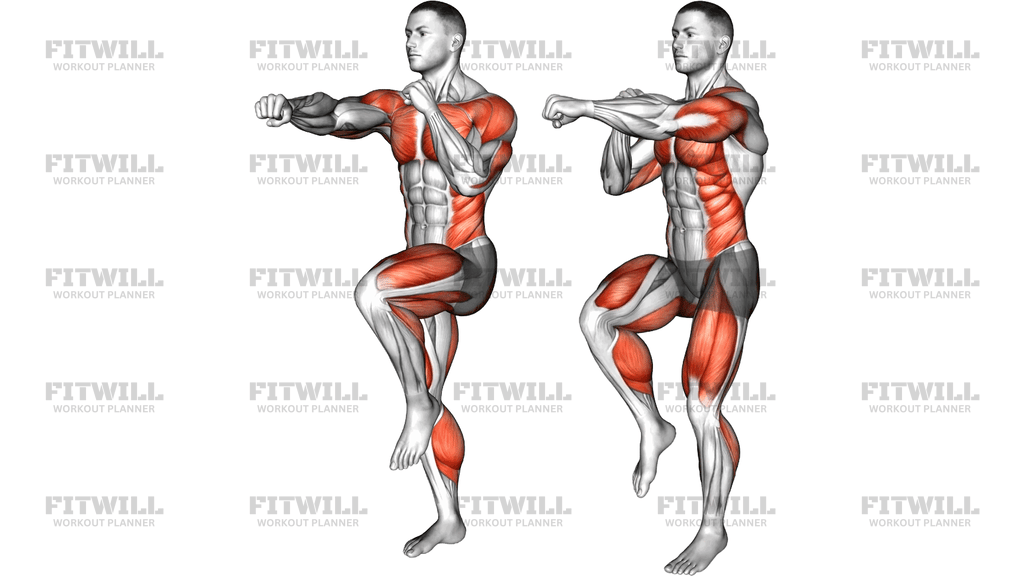
The ladder matters because it gives you a clear target for foot placement and timing. Stand in front of the first square with enough room to move forward in a straight line, then keep the hips level and the chest stacked over the pelvis as you step through each opening. In the image, the athlete is moving with one knee driven up while the supporting foot stays light, which is the kind of posture you want throughout the drill: springy, upright, and controlled rather than hunched or reaching.
Each rep should feel quick from the floor up. Drive one knee forward, land the working foot in the next square, and immediately prepare the opposite foot for the following step. Use the arms for rhythm, but do not let them swing so hard that they twist the torso. The feet should land under the body with short ground contact, soft ankles, and enough stiffness through the trunk to keep the line of travel straight.
This drill fits well in a warm-up, speed session, conditioning circuit, or sport-prep block where you want to sharpen foot speed and coordination without heavy loading. It is also useful when teaching athletes how to keep balance during rapid changes of support. If the contacts get noisy, the knees collapse inward, or the upper body starts bobbing side to side, slow the pace and clean up the pattern before adding more speed.
Treat the drill like a technical sprint pattern rather than a cardio exercise done at random pace. Use crisp, repeatable steps, reset between runs, and stop the set before fatigue turns the footwork into shuffling. On a good set, the ladder guides the rhythm, the knees track cleanly, and the movement stays athletic from the first square to the last.
[ Workout Log & Planner ]
Put your next workout in Fitwill
Keep your plan and training log ready when you are.


Instructions
- Stand at the start of an agility ladder or marked lane with your feet hip-width, torso tall, and arms bent at your sides.
- Set your eyes forward, soften your knees, and shift into a light athletic stance before the first step.
- Drive one knee up and place that foot into the first open square with a quick, quiet contact.
- Bring the opposite foot through immediately and step into the next square without pausing between contacts.
- Keep your hips level and your chest stacked over your pelvis as you travel down the ladder.
- Let your arms pump naturally for rhythm, but keep the shoulders relaxed and the trunk from twisting.
- Land under your body on the balls of your feet, then spring back out of the floor for the next step.
- Maintain a steady breathing pattern and finish the lane before you slow down or lose precision.
- Walk back to the start, reset your posture, and repeat for the planned number of runs.
Tips & Tricks
- Think quick and quiet, not high and hard; the best reps sound light on the floor.
- Keep each foot landing inside the center of the ladder square instead of reaching for the far edge.
- If your torso leans forward or your hips bounce, shorten the step and reduce the pace.
- Use the arms as a timing cue, but avoid crossing them across your body and rotating the trunk.
- Stay on the forefoot with a soft ankle so the heel can kiss the floor only if you need balance.
- Watch the knees as you step; they should track straight instead of collapsing inward on landings.
- Start with one simple pattern, then progress to faster runs or a more complex foot sequence.
- Stop the set when foot placement gets sloppy, because bad contacts teach bad timing.
Frequently Asked Questions
What does Plyometric Agility Drill train most?
It primarily trains foot speed, coordination, rhythm, and the ability to stay organized while moving quickly through a ladder.
Do I need an agility ladder for this drill?
A ladder is ideal, but taped squares, floor markers, or chalk lines can work if they create the same foot-placement target.
Should I stay on my toes the whole time?
Stay light on the forefoot, but let the heel settle only as much as you need for balance between quick contacts.
What are the most common mistakes in ladder drills?
Reaching too far, stomping the floor, leaning the torso forward, and letting the knees cave inward are the biggest form breaks.
Is this exercise good for beginners?
Yes, if beginners start with a slow pace, simple foot pattern, and enough recovery to keep the steps precise.
What muscles work during the drill?
The calves, quads, glutes, hip flexors, and core all contribute, with the trunk stabilizers helping keep the upper body steady.
How fast should I move through the ladder?
Fast enough to stay springy and rhythmic, but not so fast that you miss the squares or lose control of your posture.
Can I make this drill harder without adding weight?
Yes. Increase speed, use more complex patterns, or add direction changes only after your basic foot placement stays clean.