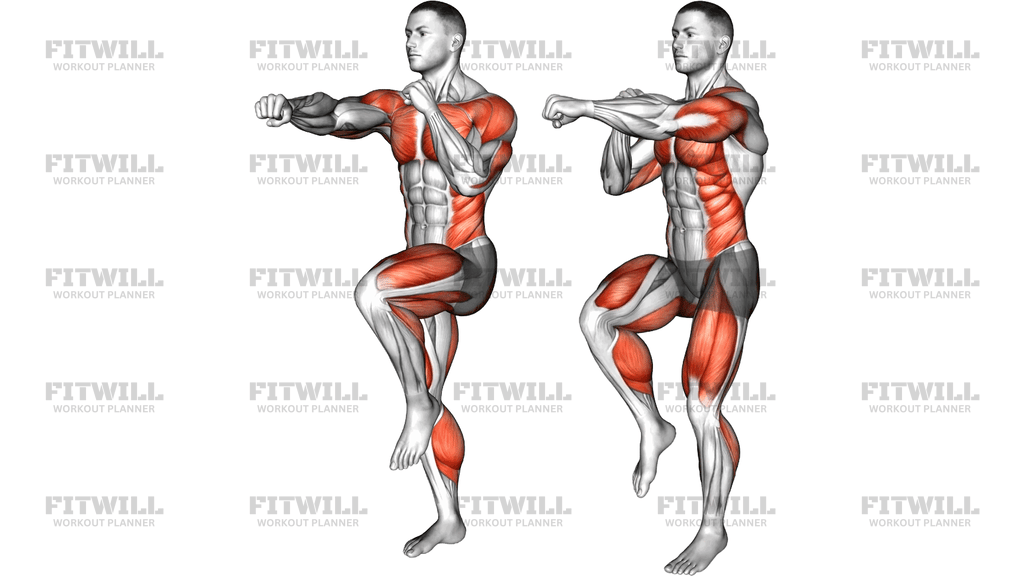
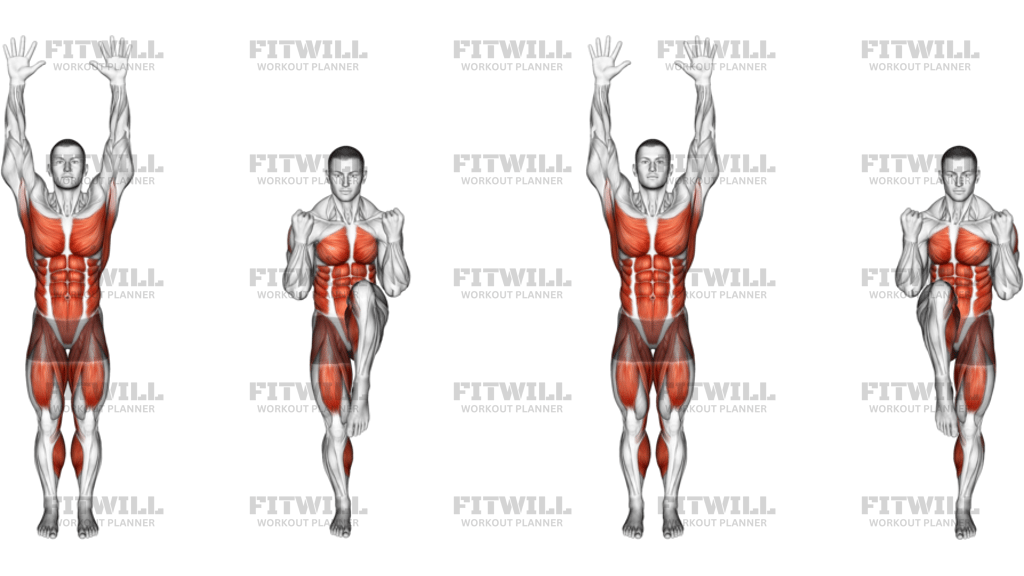
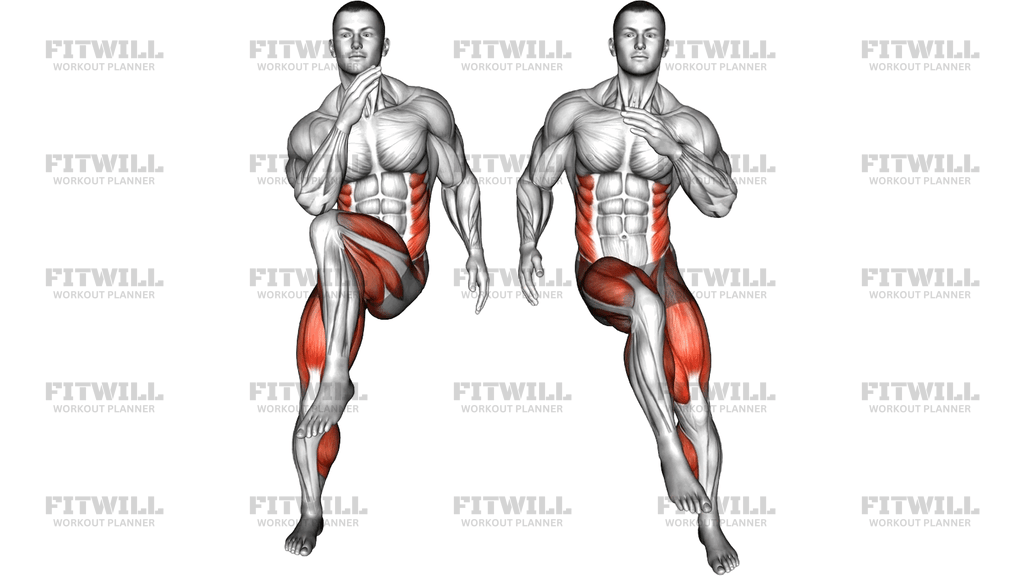
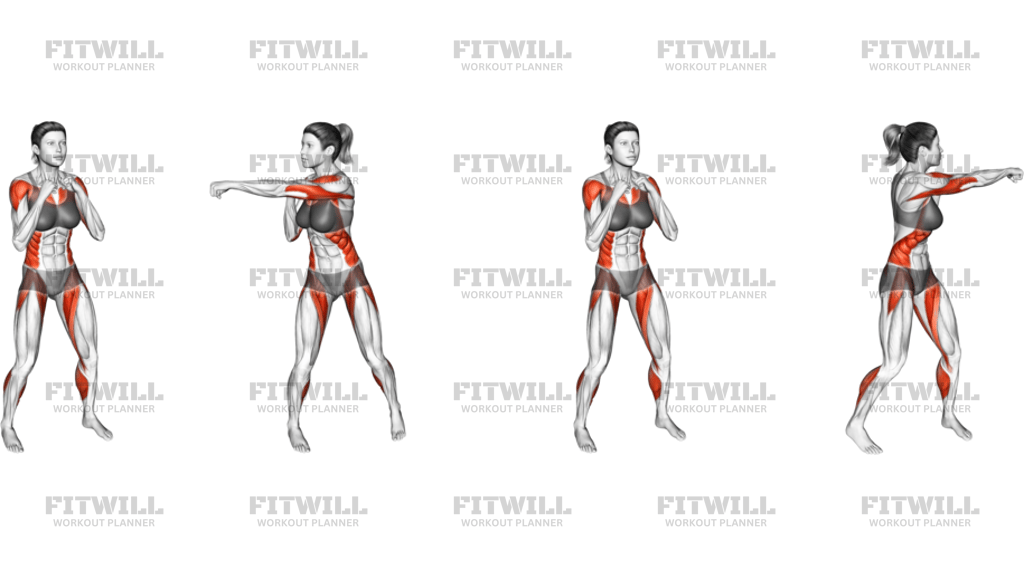
Single Leg Balance Cross Punch
Single Leg Balance Cross Punch is a bodyweight balance and coordination drill that pairs a single-leg stance with a cross-body punch. It is useful when you want to train control, rhythm, and posture without adding external load. The drill looks simple, but its value comes from keeping the standing side organized while the punching side moves quickly and cleanly.
This movement challenges the ankle, hip, trunk, and shoulder to work together. The standing leg has to keep the foot planted, the knee tracking cleanly, and the pelvis level while the upper body creates a crisp punch across the center line. That makes Single Leg Balance Cross Punch a practical choice for warm-ups, athletic prep, and accessory work for runners, court-sport athletes, or anyone building better single-leg control.
Set up by standing on one foot with a soft bend in the knee and the other knee lifted or lightly hovering in front of you. Stack your ribs over your hips and hold your hands near your chin in a light boxing guard. Before each rep, feel the tripod of the standing foot and keep the toes relaxed enough to grip the floor without clawing.
Punch across your body with the arm opposite the standing leg, reaching from the shoulder instead of swinging from the torso. Let the trunk rotate only as much as needed to land the punch, then bring the hand back to guard under control. Exhale on the punch, keep the standing hip level, and avoid letting the knee collapse inward or the arch roll off the floor.
Use Single Leg Balance Cross Punch when you want a low-equipment drill that improves balance, coordination, and reactive control. It works best as crisp, repeatable reps rather than a rushed flurry of punches. If the standing foot starts wobbling or the return to guard gets sloppy, shorten the punch and reduce the pace so the drill stays athletic and precise.
[ Workout Log & Planner ]
Put your next workout in Fitwill
Keep your plan and training log ready when you are.


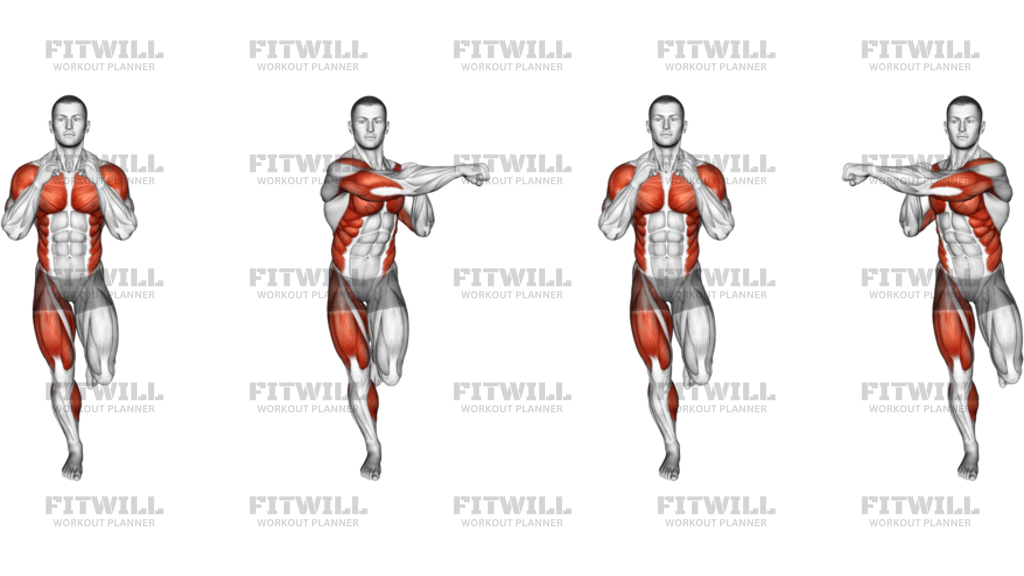
Instructions
- Stand on one foot with the knee slightly bent and the other knee lifted in front of you.
- Stack your ribs over your hips and hold your hands in a boxing guard near your chin.
- Press through the heel, big toe, and little toe of the standing foot so the arch stays active.
- Brace lightly through your midsection without leaning back or shifting the pelvis.
- Punch across your body with the opposite arm and keep the wrist straight as the hand travels forward.
- Let the torso rotate only as far as you can keep the standing hip level and the knee stable.
- Bring the punching hand back to guard under control while keeping your balance on the planted foot.
- Repeat for the planned reps on that side, then switch legs and reset before the next set.
Tips & Tricks
- Keep the standing knee lined up over the second toe; if it dives inward, make the punch shorter and slower.
- Treat the punch like a quick reach from the shoulder, not a big swing from the ribs.
- Keep the free leg quiet instead of kicking it around for counterbalance.
- Pick a fixed point on the wall to stare at so head movement does not add extra wobble.
- Exhale as the punch lands so the trunk stays organized through the hit.
- If the arch starts collapsing, lower the effort and press evenly through the standing foot.
- Use smaller, sharper punches when fatigue makes the shoulders shrug upward.
- Stop the set when the return to guard gets sloppy, because the control on the way back matters too.
Frequently Asked Questions
What does Single Leg Balance Cross Punch work most?
It mainly trains ankle, hip, and core stability, with the shoulders and upper back helping to control the punch.
Is Single Leg Balance Cross Punch good for beginners?
Yes, if you start with small punches, a soft knee bend, and a steady point to focus on. If balance is shaky, lower the speed before adding more reps.
Should the free leg be lifted or just hovered?
Either works. Lifting the knee makes the drill harder, while a light hover helps you learn the balance pattern first.
How much should my torso rotate on the punch?
Only enough to reach across the body without shifting the standing hip or letting the knee cave inward.
Why do I lose balance when I punch?
The punch is usually too big or too fast. Shorten the reach, keep pressure through the standing foot, and bring the hand back to guard under control.
Can I do Single Leg Balance Cross Punch barefoot?
Yes, barefoot can help you feel the tripod foot, as long as the floor is stable and you can keep the knee and arch from collapsing.
What is the biggest mistake with Single Leg Balance Cross Punch?
Turning it into a full-body twist and leaning over the standing leg. The goal is a stable base with controlled rotation on top.
How can I make it harder without equipment?
Slow the return to guard, pause for a second after each punch, or reduce your visual feedback by looking at a fixed target instead of the floor.