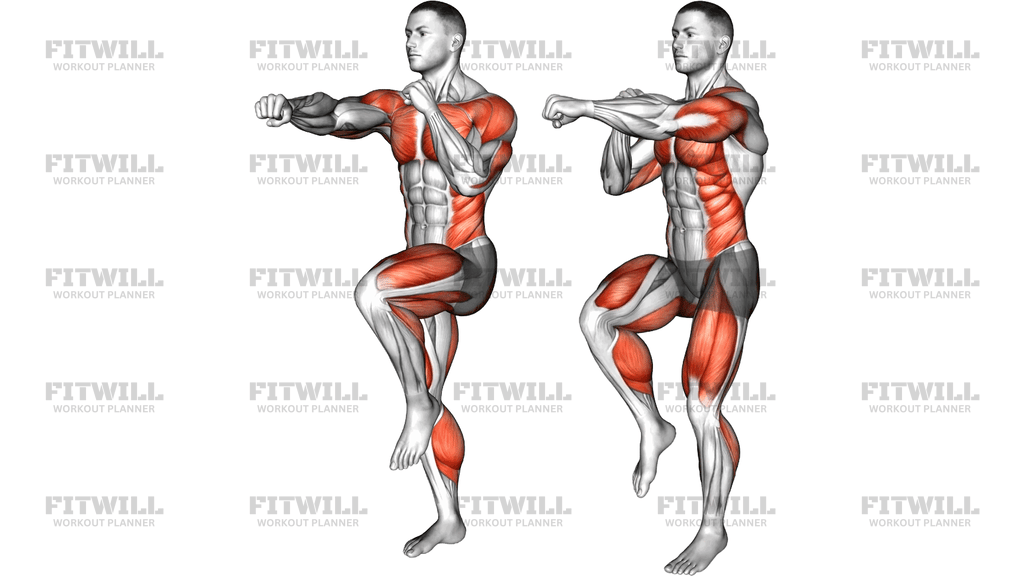
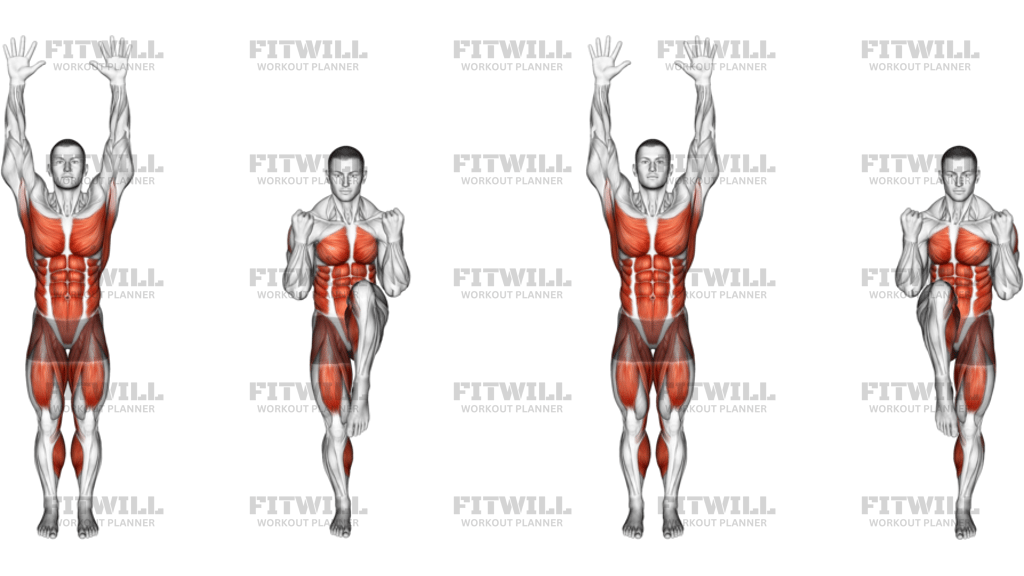
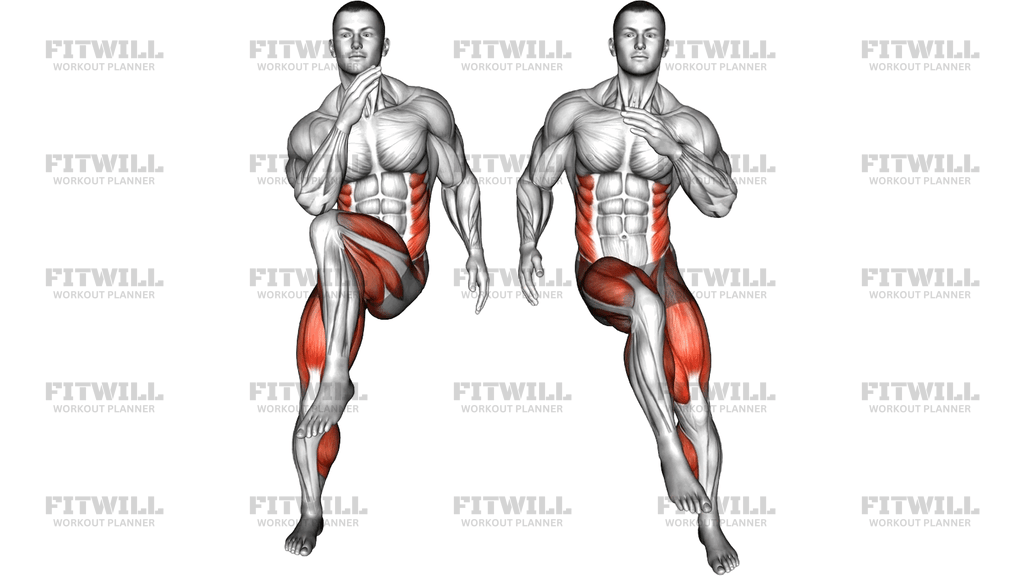
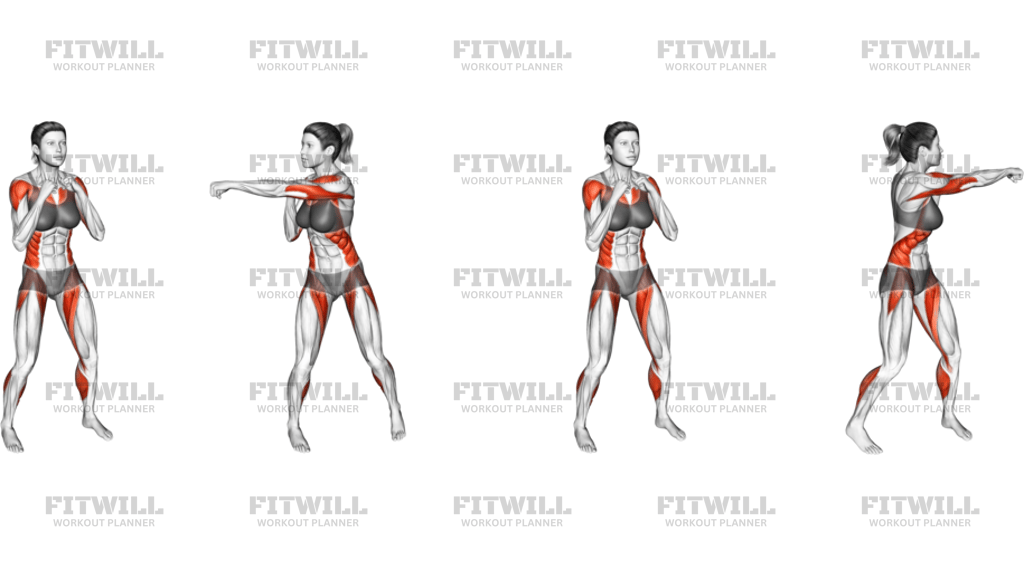
123 Back Drill
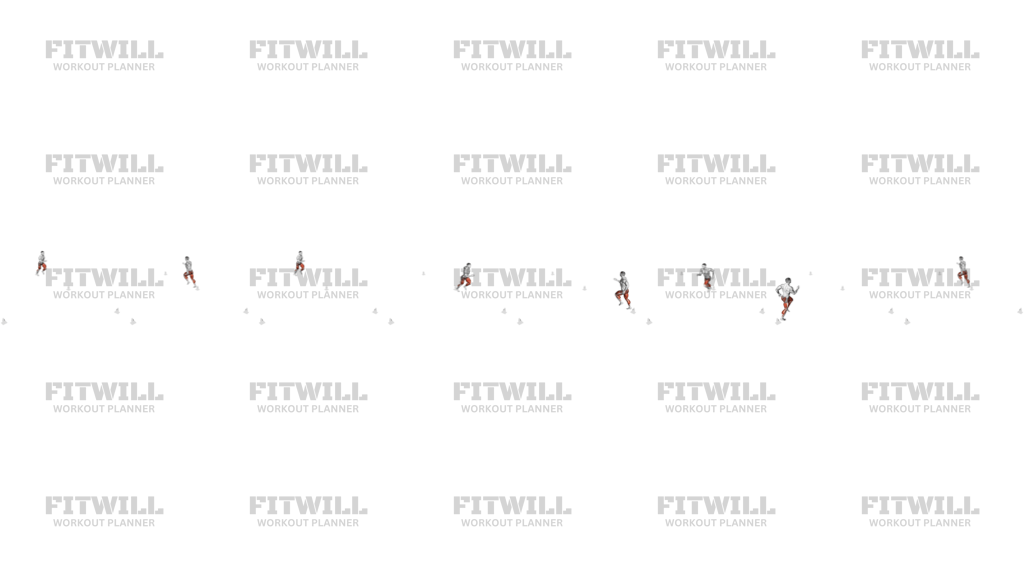
123 Back Drill is a quick-footwork plyometric drill built around short backward steps and clean deceleration. It is usually done with body weight only, often on a straight lane or between floor markers, and the goal is to move backward in a controlled, repeatable pattern rather than to cover distance fast. The drill teaches coordination, foot speed, and balance while forcing the ankles, knees, hips, and trunk to stay organized as you travel in reverse.
Because the movement is small and fast, the setup matters more than it does in many strength exercises. A stable athletic stance, light knee bend, and a clear line or marker sequence keep the pattern crisp. If you start too upright or too close to the markers, the steps become choppy and the upper body starts leaning back. Good setup helps you stay low, react quickly, and place each foot under control.
During each rep, keep your chest tall and eyes forward while the feet work behind you. Use short backward steps, land softly, and let the hips absorb the change of direction instead of locking the knees. If the drill is coached as a 1-2-3 pattern, hit each count with the same rhythm and then reset cleanly. The best reps look smooth and springy, not rushed or noisy.
This drill fits well in a warm-up, speed session, or conditioning block when you want to prime quick feet and backward movement mechanics. It can also be useful for sport work that demands rapid retreats, repositioning, or defensive footwork. Keep the effort high but the volume controlled, because sloppy mechanics show up fast when fatigue builds.
Safety is simple but important: keep the lane clear, use a non-slip surface, and stop the set when your steps get heavy or your torso starts folding. Beginners should start with slower tempo, smaller distances, and fewer repetitions before increasing speed. The goal is clean backward control, not maximal effort at any cost.
[ Workout Log & Planner ]
Put your next workout in Fitwill
Keep your plan and training log ready when you are.


Instructions
- Set three floor markers or cones in a straight line with enough space for three quick backward steps.
- Stand at the front marker in an athletic stance, feet hip-width apart, knees soft, chest up, and eyes forward.
- Shift your weight slightly onto the balls of your feet and keep your arms ready to help the rhythm.
- On the first count, step backward under your hips with a short, quick step.
- Continue the 1-2-3 backward pattern, placing each foot quietly and keeping the steps even.
- Keep your hips low and let the ankles and hips absorb each landing instead of leaning back.
- If you reach the end marker, decelerate under control, plant, and reset without standing upright early.
- Breathe steadily through the drill and keep the same tempo for each repetition or timed interval.
Tips & Tricks
- Use tape, a line, or cones so you are not guessing where each backward step should land.
- Keep the steps short; reaching too far behind you usually makes the drill noisy and slow.
- Stay on a slight forward lean from the ankles so you can move back without sitting into your heels.
- Let the arms counterbalance the feet, but do not swing them so hard that the torso twists.
- Land softly and evenly on both feet instead of slapping the floor with the toes or heels.
- If the pattern is 1-2-3, keep the count rhythmic; the drill should look quick, not frantic.
- Use only as much space as you can control without clipping the markers or crossing your feet.
- Stop the set as soon as your torso starts rocking backward or your steps lose their rhythm.
Frequently Asked Questions
What does 123 Back Drill train?
It trains backward foot speed, coordination, balance, and quick deceleration in an athletic stance.
Is 123 Back Drill the same as backpedaling?
It is a backpedal-style drill, but the 1-2-3 pattern adds a specific rhythm or count that keeps the footwork organized.
Do I need cones or a line for this drill?
A straight line, tape marks, or a few cones work well because they give you clear targets for each backward step.
How low should I stay during the backward steps?
Stay in a shallow athletic bend with your hips loaded, not in a deep squat and not standing tall between steps.
Should my heels touch down during 123 Back Drill?
A light heel touch can happen, but the movement should stay quick and balanced rather than heavy and flat-footed.
Can a beginner do this drill?
Yes, if the steps are small, the tempo is slower, and the setup is simple enough to keep the rhythm clean.
What is the most common mistake with the line or cones?
People often reach too far back for the next marker, which breaks the rhythm and makes the landing noisy.
Where does 123 Back Drill fit in a workout?
It works well in a warm-up, speed prep block, or conditioning circuit before fatigue makes the footwork sloppy.