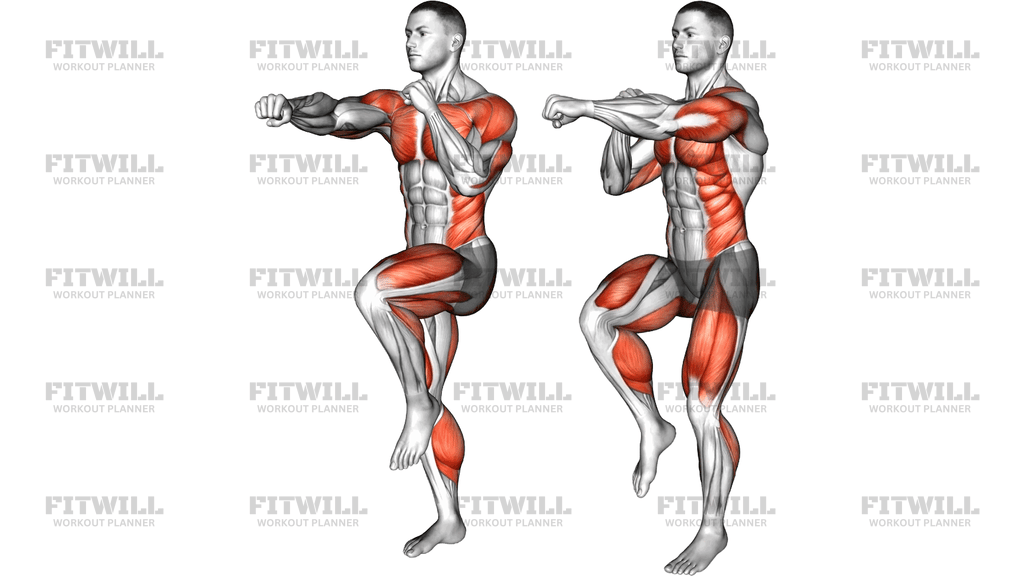
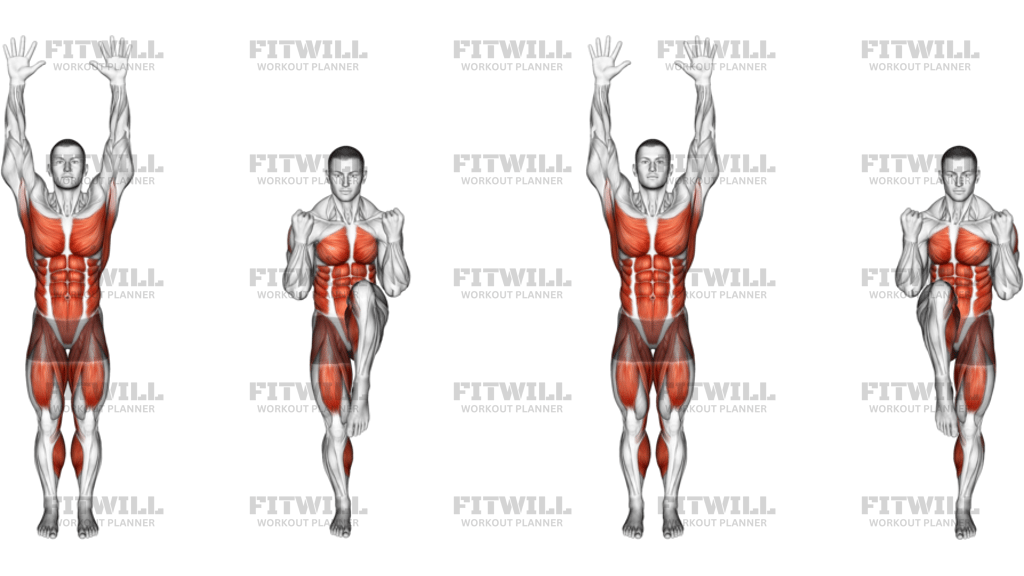
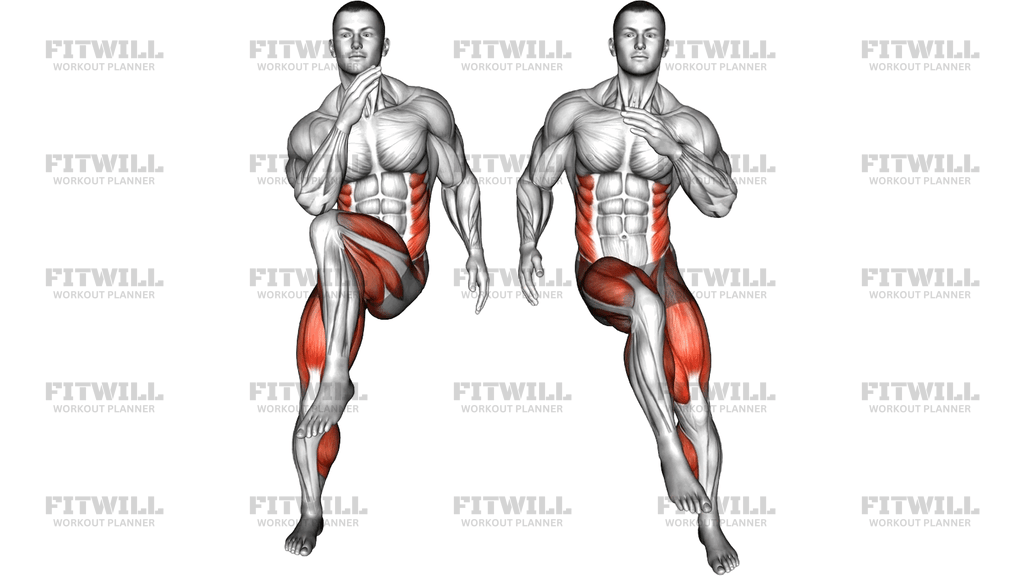
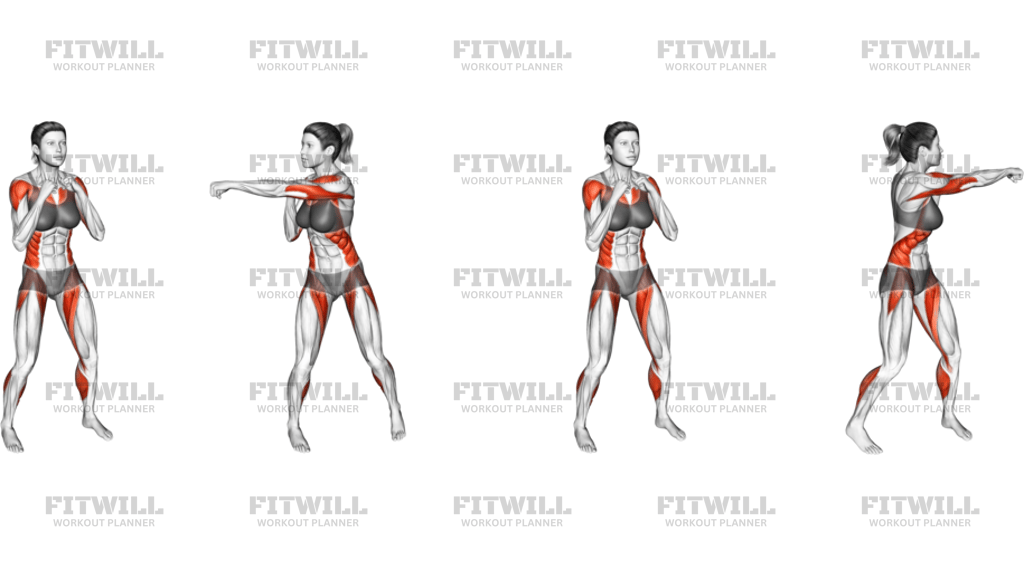
Cone Drill
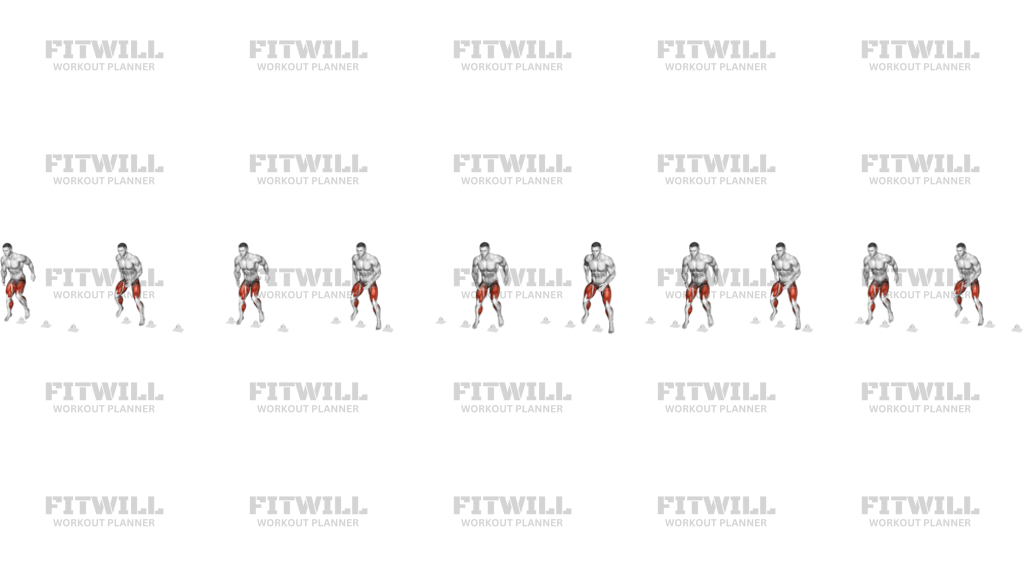
Cone Drill is a bodyweight agility drill built around quick footwork, short accelerations, and clean direction changes around cone markers. The version shown uses an upright athletic stance, rapid steps, and repeated plants so you can practice moving fast without losing balance or posture.
It trains lower-body coordination, ankle stiffness, deceleration, and the ability to re-accelerate after each plant. Because the cones define the travel path, the drill rewards crisp foot placement and a controlled torso more than raw speed. The goal is to stay light, square, and precise while your feet do most of the work.
Set the cones before you start so the spacing matches your ability. If they are too close together, the movement turns into a hop; if they are too far apart, you will reach, lean, and lose rhythm. A good setup lets you stay on the balls of your feet, keep your chest lifted, and turn each step into a clean change of direction.
Use the drill as warm-up work, conditioning, or sport-specific footwork practice. Keep the steps short, plant under control, and reset quickly before each rep. Stop the set if your hips start swinging, your knees cave inward, or you have to stare at your feet to find the next cone.
[ Workout Log & Planner ]
Put your next workout in Fitwill
Keep your plan and training log ready when you are.


Instructions
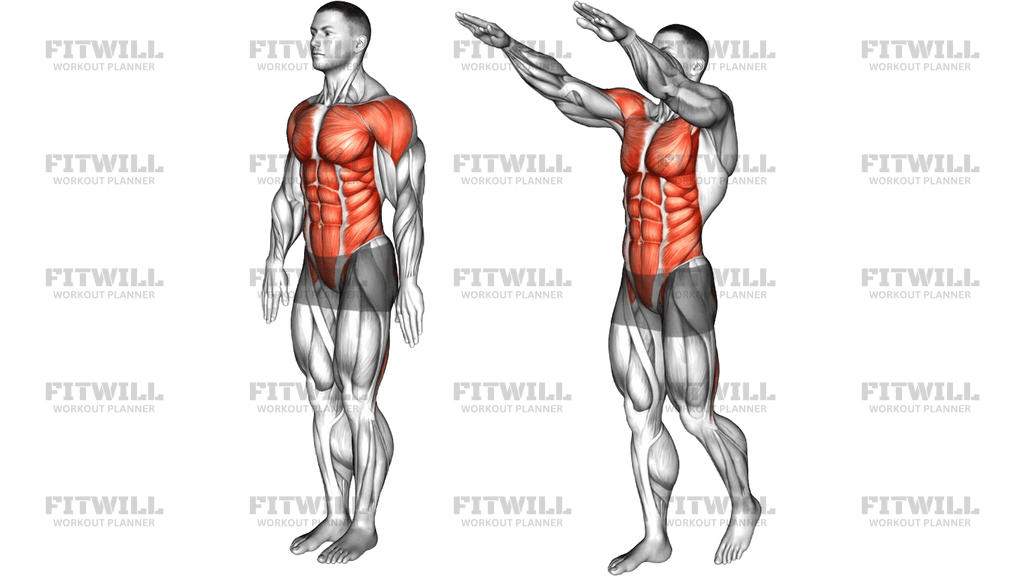
- Set two or three cones on the floor with enough room for one or two quick steps between them, then stand in a light athletic stance just behind the first cone.
- Bend your knees and hips slightly, hinge your chest forward, and keep your weight on the balls of your feet with your arms relaxed at your sides.
- Drive toward the first cone with short, quick steps instead of long strides so you stay balanced and ready to change direction.
- Plant the outside foot just beside the cone, keeping the knee lined up over the toes and the torso tall as you brake.
- Shuffle or cut to the next cone with your hips low and your shoulders square to the direction of travel.
- Tap or pass each cone in sequence, then re-accelerate immediately after every plant to keep the drill snappy.
- Breathe out as you plant and change direction, then use a steady rhythm of breaths as you move through the set.
- Slow to a walk at the end of the interval, reset your stance, and start the next rep only after your footing is organized.
Tips & Tricks
- Start with the cones close enough that you can stay quick; widen the spacing only after every plant stays clean.
- Keep your feet under your hips on each cut, because reaching far outside your base usually causes slips and messy turns.
- Use short ground contacts, but do not bounce off unstable ankles or rush into the next step before you are balanced.
- Lower your hips slightly before each turn so you can brake without folding your chest forward.
- Look one or two cones ahead instead of staring at the cone under your feet so the next change of direction is already planned.
- Keep your shoulders square and your arms active; wild arm swings usually mean the feet are losing rhythm.
- Choose a pace that lets you keep sharp mechanics for the whole interval rather than sprinting the first few reps and crashing later.
- Stop the set if your knees cave inward or your feet begin crossing awkwardly in front of your body.
Frequently Asked Questions
What does Cone Drill train most?
It mainly trains agility, foot speed, deceleration, and quick re-acceleration around the cones.
How far apart should I place the cones?
Start with a spacing that lets you take one or two quick steps between cones without reaching or hopping. Tighten or widen it based on how clean your plants stay.
Should I run, shuffle, or hop between cones?
Use the pattern that matches the drill. For this style, quick steps and controlled shuffles or cuts are better than big hops because they keep you balanced.
Can beginners do a cone drill?
Yes. Beginners should start with fewer cones, slower speed, and enough space to keep each plant stable before trying faster changes of direction.
What should my upper body do during the cone drill?
Keep your chest lifted, shoulders square, and arms active for rhythm. If the torso sways a lot, the feet are probably moving too aggressively.
What is the most common mistake with the cones?
Most people either reach too far for the next cone or stare straight down at their feet, which slows the feet and throws off balance.
How many rounds should I use?
Use short, crisp rounds that let your speed stay sharp. End the set when your footwork becomes sloppy rather than pushing for extra tired reps.
When should I use Cone Drill in a workout?
It fits well in a warm-up, conditioning block, or sport-prep session before heavier lifting or hard interval work.