Figure Run
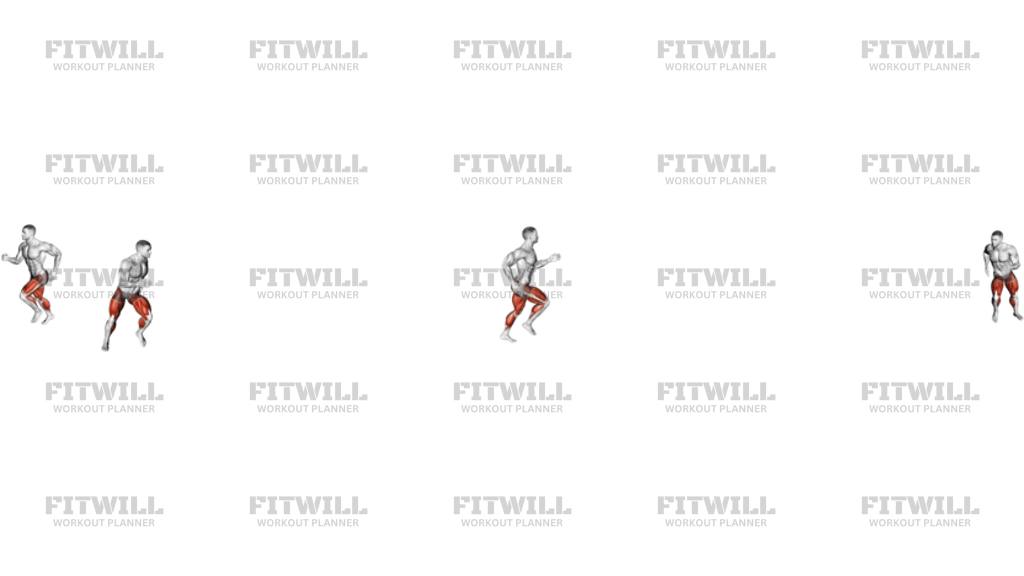
Figure Run is a bodyweight running drill built around a figure-eight path, usually around two markers or cones. It trains foot speed, hip control, balance, and the ability to change direction smoothly while staying light and organized. Because the movement is repeated at pace, it also challenges coordination and conditioning without needing a machine or external load.
The exercise is useful for athletes, warm-ups, and conditioning blocks where you want quicker feet and cleaner deceleration. Although it looks simple, the quality comes from how you enter and exit each turn. A small, controlled course lets you keep your torso tall, your steps quick, and your knees and ankles aligned through each change of direction. When the pattern stays tidy, the drill can wake up the lower body without turning the session into a messy sprint.
Set up two cones several steps apart, then run around them in a continuous figure-eight. Stay on the balls of your feet, lean slightly into each arc, and keep your strides short enough that you can redirect without skidding or crossing wildly. Let the arms pump naturally to help rhythm, but avoid swinging across the body so hard that the shoulders twist you off line. A clean line around the marker matters more than forcing maximum speed on the first pass.
The best reps feel smooth rather than frantic. You should be able to accelerate, arc around the marker, and re-center your balance before the next turn without losing posture. Breathe in a steady rhythm and keep the chest open so the trunk can stabilize the pelvis while the legs do the quick work. If you find yourself leaning back or locking up through the hips, slow the pace and tighten the sequence until each turn feels controlled.
Figure Run works well in warm-up circuits, speed prep, general conditioning, and athletic footwork sessions. It is beginner-friendly when the pace is moderate and the markers are spaced generously, but it still rewards advanced athletes who can stay sharp under fatigue. If the turns get sloppy or the feet get loud, shorten the path or slow the pace before adding more speed. Use it for crisp intervals, then stop the set while the turns are still sharp rather than waiting until the drill breaks down.
[ Workout Log & Planner ]
Put your next workout in Fitwill
Keep your plan and training log ready when you are.


Instructions
- Place two cones or floor markers several steps apart and stand just outside one marker in a light athletic stance.
- Bend your knees slightly, hinge a little at the hips, and stay on the balls of your feet with your arms ready to run.
- Accelerate toward the first marker and run a tight arc around the outside of it instead of cutting directly across the middle.
- As you leave the turn, take two or three quick steps to re-center your path toward the second marker.
- Loop around the second marker in the opposite direction, keeping your hips level and your chest mostly forward.
- Use short, quick steps to redirect under your center of mass instead of reaching out with a long stride.
- Pump your arms naturally to match the rhythm and breathe continuously as you change direction.
- Continue the figure-eight pattern for the planned time or distance, then slow to a walk and step clear of the path.
Tips & Tricks
- Start with the cones farther apart if you keep losing balance in the turns.
- Plant your foot under your hip; reaching outside your base makes the pivot sloppy.
- Lean from the ankles into each curve instead of folding at the waist.
- Shorten the last step before each marker so you can redirect without braking hard.
- Keep the contact quiet; loud foot strikes usually mean you are overstriding.
- Turn your head and eyes toward the next marker early so the line stays smooth.
- Let the arms drive the rhythm, but keep the shoulders level and relaxed.
- Use turf, track, or another smooth surface that will not catch the foot on the cut.
Frequently Asked Questions
What is Figure Run used for?
Figure Run is mainly used for change-of-direction speed, footwork, and conditioning. It also builds coordination because you have to accelerate, turn, and re-center repeatedly.
Do I need cones or markers for Figure Run?
Two markers make the drill much easier to follow, even if they are just floor spots or small cones. They give you a clear path for the figure-eight turns.
How far apart should the markers be?
Start with a wider spacing, about several steps apart, so the turns stay smooth. As your control improves, you can bring them closer to increase the challenge.
Is Figure Run cardio or plyometric work?
It sits in both categories. The drill is fast and repetitive like cardio, but the quick direction changes also make it useful for plyometric and agility prep.
What muscles work most during Figure Run?
The legs do most of the work, especially the calves, quads, glutes, and hamstrings. Your core and hip stabilizers help keep the torso organized through the turns.
What is the biggest mistake in Figure Run?
The most common mistake is taking the turns too wide or crossing the feet so much that you lose rhythm. Keep the steps short and stay under control through each arc.
Can beginners do Figure Run?
Yes, if the pace is moderate and the markers are spaced generously. Beginners should focus on smooth turns and balance before trying to run it hard.
How do I make Figure Run harder?
Tighten the marker spacing, increase the pace, or run it for intervals instead of a few easy passes. You can also make the turns more demanding by keeping the course compact.