Partner Shuffle
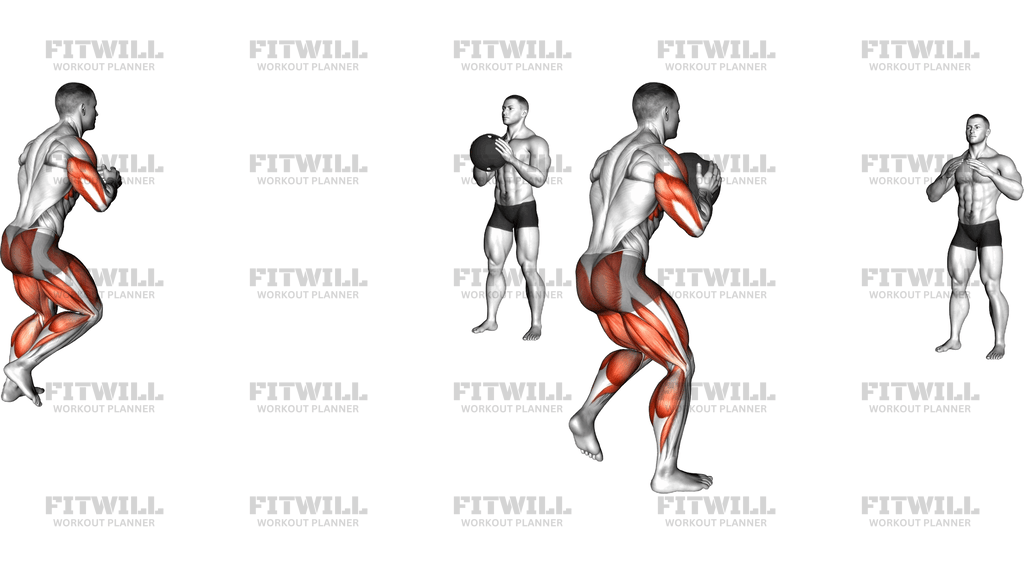
Partner Shuffle is a partner-based agility drill built around quick lateral footwork, a low athletic stance, and a controlled catch-and-pass rhythm. In the image, one athlete stays in a crouched shuffle while facing a partner, receiving and returning a ball at chest height. The purpose is not to move as fast as possible; it is to stay organized while the feet keep working and the hands react on time.
This drill mainly trains lower-body power, foot speed, hip control, and trunk stiffness under changing timing. The quads, glutes, calves, adductors, and core all work to keep the body low and balanced while the upper body manages the ball exchange. If the athlete stands too tall or crosses the feet, the shuffle gets sloppy and the catch becomes harder to control.
The setup matters because the drill only works when both partners can see each other clearly and keep the pass predictable. Start in an athletic quarter-squat with the chest up, hips back, and weight centered over the midfoot. Keep the hands ready in front of the sternum, the elbows soft, and the eyes on the partner so the catch can happen without reaching or leaning.
Each repetition should look crisp: shuffle with short steps, receive the ball softly, absorb the force through the hips and knees, and send the ball back without popping upright. The body should stay square to the partner while the feet travel laterally. Breathing should stay active and rhythmic so the torso remains braced without becoming rigid.
Partner Shuffle is useful in warmups, conditioning circuits, agility blocks, and sport preparation when you want quick feet and clean coordination instead of heavy loading. It also scales well for beginners because the speed, distance, and ball size can all be adjusted. Keep the movement controlled enough that the knees track cleanly, the trunk stays stable, and the partner exchange stays smooth from the first pass to the last.
[ Workout Log & Planner ]
Put your next workout in Fitwill
Keep your plan and training log ready when you are.


Instructions
- Face your partner in an athletic stance with your feet about shoulder-width apart and your hands ready at chest level.
- Sink into a small squat so your hips are back, your chest stays up, and your weight sits over the midfoot.
- Keep your eyes on your partner and hold the ball close enough that you can catch it without reaching forward.
- Shuffle sideways with short, quick steps instead of crossing one foot over the other.
- Catch the ball softly at chest height by bending your elbows and letting the legs absorb the impact.
- Bring the ball back to your sternum, stay low, and keep your shoulders square to your partner.
- Pass or toss the ball back while maintaining the shuffle rhythm and balanced foot pressure.
- Continue for the planned distance, time, or number of exchanges, then stop under control and reset.
Tips & Tricks
- Stay low before the catch so you are not dropping into the squat only after the ball arrives.
- Take short shuffle steps; crossing the feet makes the exchange slower and less stable.
- Keep the ball near the chest instead of letting your arms drift away from your torso.
- Let the hips and knees absorb the catch so the torso does not jerk backward.
- Match the pass tempo to your foot speed; the drill breaks down when the hands rush ahead of the feet.
- Keep your knees tracking in line with your toes so the shuffle stays clean on each side.
- Use a lighter ball if the catch is pulling you off balance or forcing you upright.
- Exhale as you receive and return the ball to keep the trunk tight without bracing too hard.
Frequently Asked Questions
What does the Partner Shuffle train?
It trains lateral agility, quick feet, coordination, and lower-body control while you stay in an athletic stance.
Do I need a medicine ball for Partner Shuffle?
A light ball makes the drill more specific, but the footwork can be practiced without one if you are learning the pattern.
How far apart should partners stand?
Stand close enough that the pass is clean at chest height, usually about one to two arm lengths apart.
What is the most common mistake?
Standing too tall or crossing the feet. Both make the shuffle slower and make the catch harder to control.
Should I stay low the whole time?
Yes. The drill works best when you keep a soft bend in the knees and avoid popping upright between passes.
Is this more of a conditioning drill or a strength exercise?
It is mainly an agility and conditioning drill, with extra demand on the hips, core, and shoulders for control.
Can beginners do Partner Shuffle?
Yes. Start with slower shuffles, a lighter ball, and shorter distances until the timing feels natural.
How do I make it harder?
Increase the speed of the shuffle, extend the working distance, or use a slightly more challenging ball while keeping the same clean mechanics.