Side Lying Hip Adduction Left Side
Side Lying Hip Adduction Left Side is a body-weight exercise that trains the inner thigh and the muscles that keep the pelvis steady while one leg moves across the midline. It looks simple, but the position matters a lot: when the torso is stacked correctly and the top leg is parked forward for support, the working leg can adduct cleanly instead of turning the whole body into the repetition.
Side Lying Hip Adduction Left Side is useful for lifters, runners, and anyone who wants better control around the hips without loading the spine. It gives the left leg a direct adduction challenge while the glutes and core work in the background to keep the pelvis from rolling backward. That makes it a practical accessory movement for lower-body sessions, warm-ups, or controlled rehab-style training when the goal is precision rather than power.
Set up on your left side with the left leg long and straight, the right knee bent in front of you, and the right foot planted on the floor for balance. Keep the left forearm under the shoulder or the head supported on the arm, and stack the ribs and hips so the waist does not collapse. From there, the working leg should move on a short, clean path: lift the left leg a few inches, pause, and lower it under control without letting the pelvis twist.
The quality of the set depends on staying honest with the range. A small lift that keeps the inner thigh doing the work is better than a bigger swing that comes from momentum or hip rotation. If the movement starts feeling like a side-to-side twist, shorten the range, slow the lowering phase, and reset the top leg forward so the pelvis stays quiet.
Side Lying Hip Adduction Left Side is usually a good choice for beginners because it is body-weight based and easy to scale, but the exercise still rewards patience and clean alignment. Use it when you want a low-complexity movement that builds control in the adductors, supports more demanding lower-body work, and helps you notice side-to-side differences in hip control. Keep the motion smooth, breathe steadily, and stop the set when the pelvis starts to roll or the lower back tries to take over.
[ Workout Log & Planner ]
Put your next workout in Fitwill
Keep your plan and training log ready when you are.


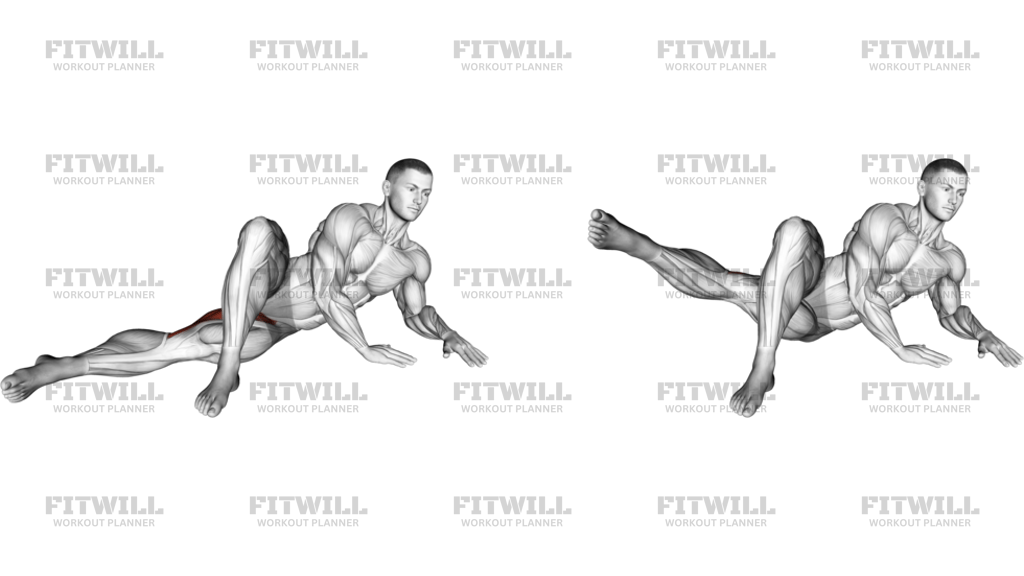
Instructions
- Lie on your left side on a mat with your left leg straight and your right knee bent in front of you, foot flat on the floor for balance.
- Stack your left shoulder, left hip, and left ankle, and place your left forearm under your shoulder or support your head with your lower arm.
- Keep your ribs down and your pelvis stacked so your waist does not sag toward the floor.
- Set your left toes forward or slightly up, then let the left leg rest just off the floor with the knee straight.
- Exhale and lift the left leg a few inches upward using the inside of the thigh, not a swing from the torso.
- Pause for a moment at the top when the pelvis still feels quiet and the leg is fully under control.
- Lower the left leg slowly until it nearly touches the floor, keeping tension instead of dropping it.
- Reset your breath, keep the top knee planted in front of you, and repeat for the planned reps before rolling out carefully.
Tips & Tricks
- Keep the top knee in front of your body; if it drifts backward, the pelvis will twist and the inner thigh will lose tension.
- Lift only a few inches. A small, controlled arc is enough for Side Lying Hip Adduction Left Side.
- Press the left side of your waist gently into the floor so the torso does not rock during the lift.
- Turn the left toes slightly up if the knee keeps drifting forward and the leg stops moving in a clean line.
- Lower slowly until the heel nearly touches the floor, then keep tension instead of relaxing completely.
- If you feel the front of the hip more than the inner thigh, shorten the range and keep the top leg farther forward.
- A folded towel under the head or elbow can help you keep the neck relaxed through the full set.
- Use slow reps and stop before momentum starts to help the leg off the floor.
Frequently Asked Questions
What does Side Lying Hip Adduction Left Side train most?
It mainly trains the left inner thigh, especially the hip adductors, while the glutes and core help keep the pelvis stacked.
Do I need any equipment for Side Lying Hip Adduction Left Side?
No. A mat is enough, although a towel or pad under the elbow can make the side-lying position more comfortable.
Where should my right leg go during Side Lying Hip Adduction Left Side?
Bend the right knee in front of you and plant the foot on the floor so it gives you balance without blocking the left leg’s path.
How high should the left leg lift?
Only high enough to clear the floor while keeping the pelvis stacked. A short, clean lift is better than forcing a big swing.
Why do I feel Side Lying Hip Adduction Left Side in my hip flexor?
That usually means the leg is lifting too far or the pelvis is rolling back. Shorten the range and keep the top knee parked forward.
Is Side Lying Hip Adduction Left Side beginner-friendly?
Yes. It is body-weight based and easy to scale, which makes it a good choice for learning control before adding resistance.
What is the most common mistake with this exercise?
Letting the torso rock or the top leg slide backward, which turns the rep into a twist instead of a clean inner-thigh raise.
How can I make Side Lying Hip Adduction Left Side harder?
Slow the lowering phase, add a light ankle weight, or hold the top position for a brief pause while keeping the pelvis still.