Single Straight Leg Glute Bridge Hold Left Side
Single Straight Leg Glute Bridge Hold (left) is a bodyweight floor exercise that asks one hip to stay lifted while the opposite leg stays long and quiet. The image shows a unilateral bridge hold, not a fast rep pattern, so the goal is to create a steady isometric squeeze through the glute of the working side while the pelvis stays level. That makes it useful when you want hip extension strength, pelvic control, and a clearer glute contraction without loading the spine.
This variation is especially good for teaching the body how to hold a bridged position without twisting, arching, or shifting into the lower back. The planted foot, shoulders, and upper back share the work, but the main challenge is keeping the hips square while one leg remains straight. When the position is correct, you should feel the supporting glute working hard, the hamstring assisting, and the core preventing the ribs from flaring.
Setup matters more here than on a typical bridge because a small adjustment changes the whole feel of the hold. Lie flat on your back, bend the supporting knee, and place the planted foot where you can drive through the heel without letting the knee shoot forward. Keep the non-working leg extended and active so it does not drift out to the side or drop. Before you lift, set the ribs down and lightly brace the abdomen so the pelvis rises from the hips instead of the low back.
At the top, the body should look long from the shoulders through the hips to the extended leg. Hold that line without letting the pelvis rotate, the chin crank forward, or the lower back take over. Short, controlled breaths are better than a breath hold that makes you lose position. If the straight leg starts to bend or the hips sag, reduce the hold time and rebuild the position rather than chasing a bigger lift.
Use this exercise as accessory work, activation, or part of a lower-body warmup when you want one side to work harder and the pelvis to stay organized. It fits well in glute-focused sessions, unilateral leg work, or rehab-style training where control matters more than load. The left-side label tells you which side is the straight-leg variation, so keep the rep quality clean and switch sides only when the program calls for it.
[ Workout Log & Planner ]
Put your next workout in Fitwill
Keep your plan and training log ready when you are.


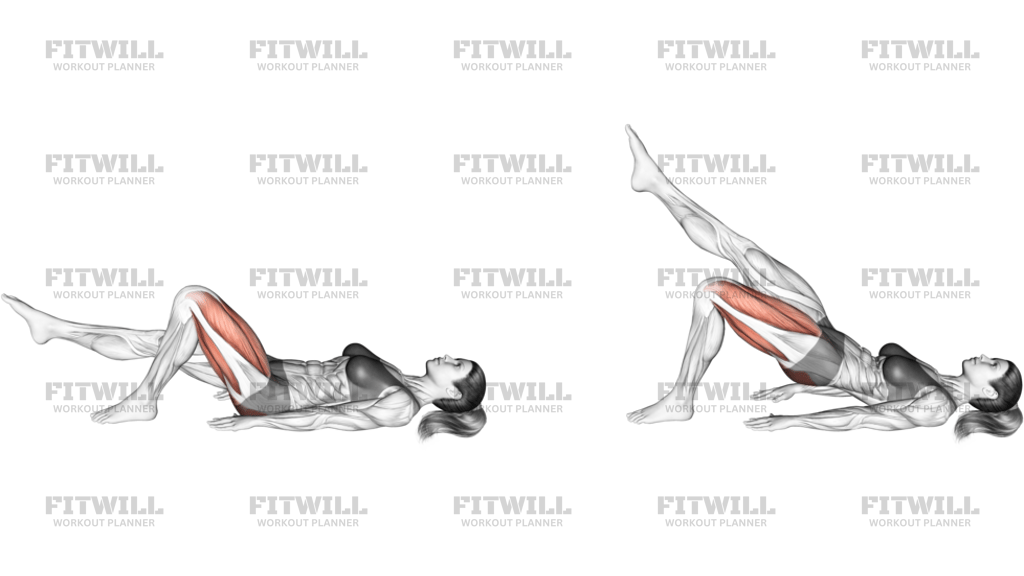
Instructions
- Lie on your back with your shoulders flat on the floor, one knee bent, and the planted foot flat about hip-width from your body.
- Extend the left leg straight and keep it active, with the heel hovering off the floor and the toes relaxed.
- Set your arms alongside your body and stack your ribs over your pelvis before you start the lift.
- Press through the planted heel and squeeze the supporting glute to raise your hips off the floor.
- Lift until your shoulders, hips, and straight leg form a long line without arching your lower back.
- Hold the top position while keeping the pelvis level and the extended leg steady.
- Take short, controlled breaths and keep the neck relaxed as you maintain the hold.
- Lower the hips with control, reset the pelvis, and repeat for the planned time or repetitions.
Tips & Tricks
- Keep the planted heel close enough that the supporting shin is close to vertical at the top.
- Think about driving the floor away with the supporting heel instead of pushing the hips up from the low back.
- Keep the straight leg long and quiet; if the knee bends, the bridge becomes a different variation.
- Hold the pelvis level. If one hip drops, shorten the hold and reset before continuing.
- A smaller, cleaner bridge is better than a high arch that shifts tension into the spine.
- If the hamstring of the planted leg cramps, bring the foot slightly closer to the hips and lower the hold height.
- Use short breaths through the nose or mouth while staying braced through the middle.
- Stop the set when you can no longer keep the extended leg steady or the ribs down.
Frequently Asked Questions
What does the Single Straight Leg Glute Bridge Hold (left) train most?
It mainly trains the glutes of the supporting side, with the hamstrings and core helping keep the pelvis lifted and level.
Which leg should stay straight in the left-side version?
The left leg stays extended and active while the opposite foot stays planted on the floor.
How high should my hips come up?
Lift until your shoulders, hips, and straight leg create a long line. If that requires an arch in your lower back, lower the bridge.
What is the most common mistake with this hold?
People usually let the pelvis twist or the lower back take over. Keep the ribs down and the hips square the whole time.
Can beginners do this exercise safely?
Yes. Start with short holds and a modest hip height so you can keep the planted heel, pelvis, and extended leg under control.
Why keep the free leg straight instead of bent?
Keeping that leg long makes the pelvis work harder to stay level and reduces help from the other side.
What should I do if I feel this mostly in my hamstring?
Bring the planted foot a little closer to your hips, lower the bridge slightly, and squeeze the glute before you hold the top.
How do I progress this movement over time?
Increase the hold time first, then make the top position cleaner and more level before adding any extra challenge.