Lying Toe Tap
Lying Toe Tap is a bodyweight core drill performed on your back to train abdominal control, hip flexor coordination, and pelvic stability. The movement is small on purpose: the goal is not to chase a big range, but to keep the trunk quiet while the legs alternate between a tabletop position and a light toe tap.
This exercise makes the setup matter. When your ribs flare or your low back arches, the hips start doing work the core should be handling. A good starting position lets you keep tension through the lower abs and keeps each rep repeatable. That is why the exercise is usually taught with the knees stacked over the hips, the pelvis tucked just enough to keep the lumbar spine from overextending, and the shoulders relaxed on the floor.
The toe tap itself should feel deliberate and smooth. Lower one leg under control until the toes lightly touch the floor or approach it closely without dumping the pelvis, then bring it back to tabletop before switching sides. The moving leg should stay organized through the hip and knee instead of swinging from the momentum of the whole body. Breathing should stay calm so the brace does not disappear on the way down.
Lying Toe Tap is useful in warm-ups, accessory blocks, and core-focused sessions because it teaches control in a position where many people lose tension. It is also a practical regression for more advanced dead bug or hollow-body variations when you want less complexity but still need trunk discipline. Keep the range honest, keep the lower back quiet, and let the abs and hip flexors work without turning the set into a hip-flexor kick.
[ Workout Log & Planner ]
Put your next workout in Fitwill
Keep your plan and training log ready when you are.


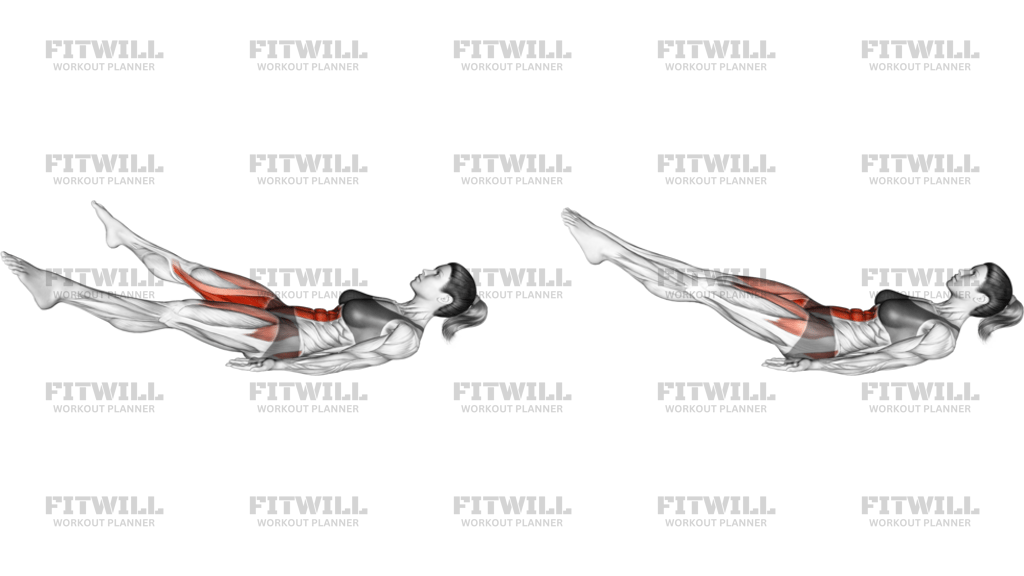
Instructions
- Lie on your back on a mat with your arms by your sides and your knees bent so your thighs are over your hips.
- Press your lower back gently into the floor and keep your ribs down before you start the first rep.
- Lift both feet into a tabletop position with the shins roughly parallel to the floor.
- Draw in a breath and brace your midsection without cramping your neck or shoulders.
- Lower one leg slowly until the toes lightly tap the floor or hover just above it, keeping the opposite leg steady.
- Keep your pelvis from rocking and stop the descent before your low back starts to arch.
- Exhale as you bring the leg back to tabletop under control.
- Alternate sides for the planned repetitions, keeping each tap quiet and precise.
- Finish with both legs back in tabletop and lower them to the floor only when the set is complete.
Tips & Tricks
- If your low back starts to lift, shorten the tap and keep the foot higher off the floor.
- Keep the ribs heavy so the movement comes from the hips and lower abs instead of a rib flare.
- A soft toe touch is enough; do not slam the foot down or use the tap to bounce back up.
- If the hip flexors take over, bend the knees a little more and reduce the lever length.
- Move one leg at a time so the torso stays still and the pelvis does not twist.
- Keep the neck relaxed and look straight up instead of crunching the chin toward the chest.
- Use a slow lowering phase to make the lower abs do the stabilizing work.
- Stop the set when the taps get sloppy, even if you still have repetitions left.
Frequently Asked Questions
What does Lying Toe Tap work most?
It mainly trains the lower abs and deep core while the hip flexors help control the leg motion.
Can beginners perform this exercise?
Yes. Beginners can keep the knees more bent and tap only a short distance while learning to keep the low back down.
Should my lower back stay on the floor the whole time?
Yes. If your low back arches, make the tap smaller or bring the knees closer to tabletop.
Do I tap the heel or the toes to the floor?
Use a light toe tap. The contact should be gentle and controlled, not a hard stomp.
Why do my hip flexors burn during this movement?
They help hold the leg position. If they dominate the set, bend the knees more and shorten the range.
Is Lying Toe Tap the same as a dead bug?
It is a simpler core drill with a similar anti-arching goal, but the leg action is more direct and easier to control.
How can I make it harder?
Slow the lowering phase, pause briefly near the floor, or keep the legs farther from your torso while still protecting your low back.
When should I stop the set?
Stop when the pelvis starts rocking, the ribs flare, or the toe taps stop looking smooth and controlled.