Front Leg Kick
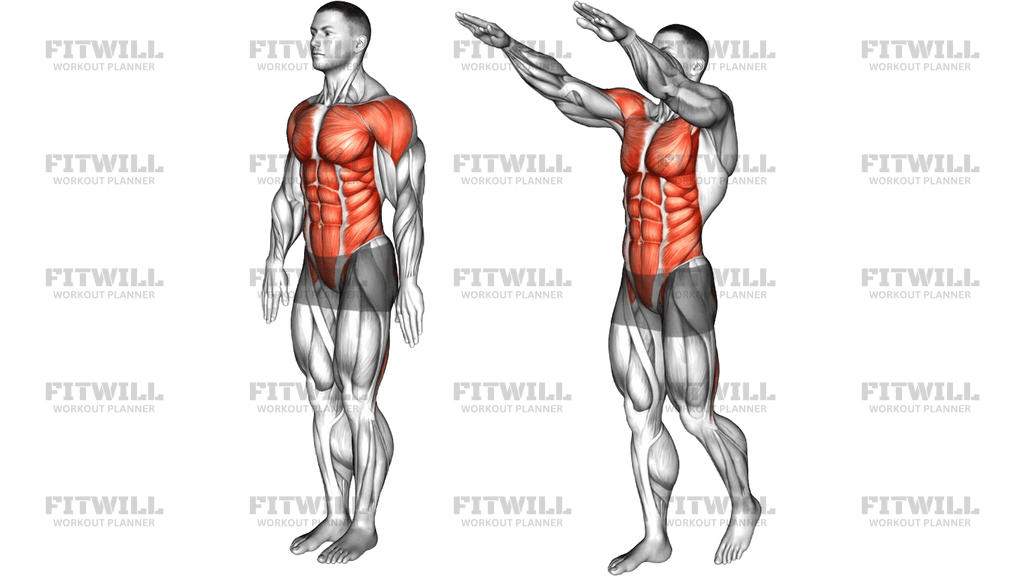
Front Leg Kick is a bodyweight standing drill that teaches you to lift and extend one leg straight in front of the body without losing balance or posture. The movement is simple, but the setup matters: the standing leg has to stay rooted, the torso should remain tall, and the kicking leg should move forward under control rather than snapping from the hip. It is useful as a warm-up, mobility primer, or low-load accessory drill for people who want better front-kick mechanics, hip control, and single-leg stability.
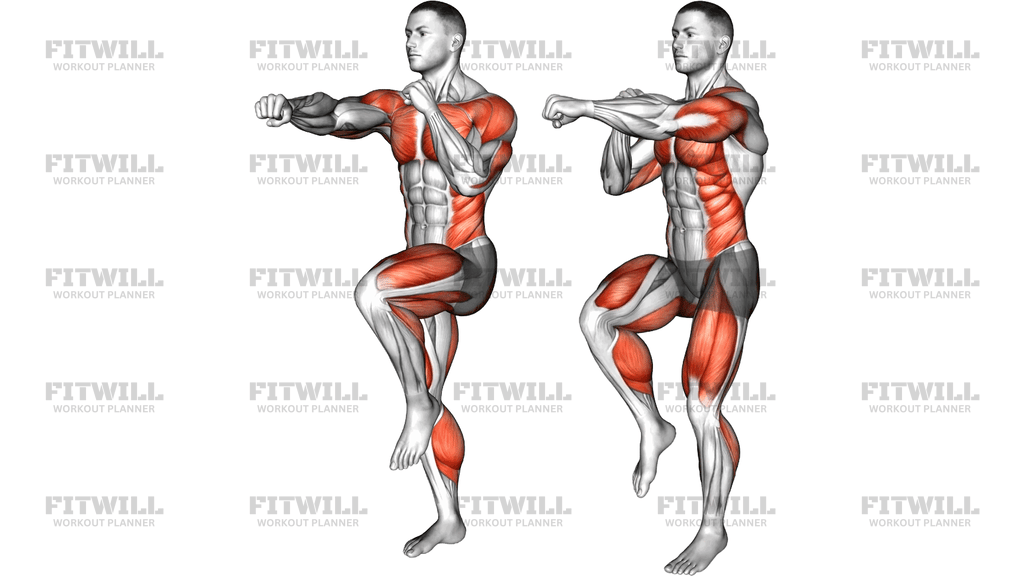
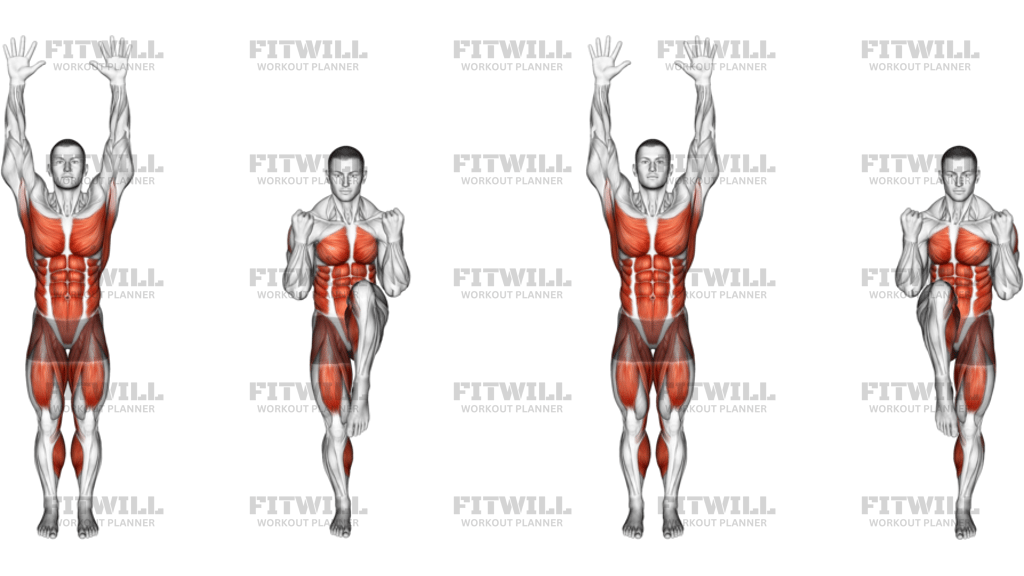
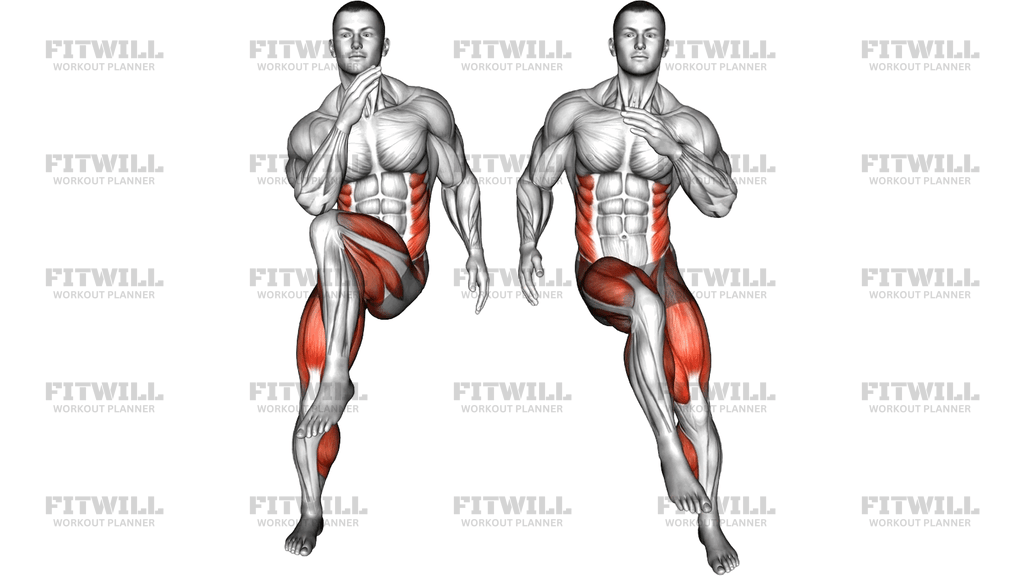
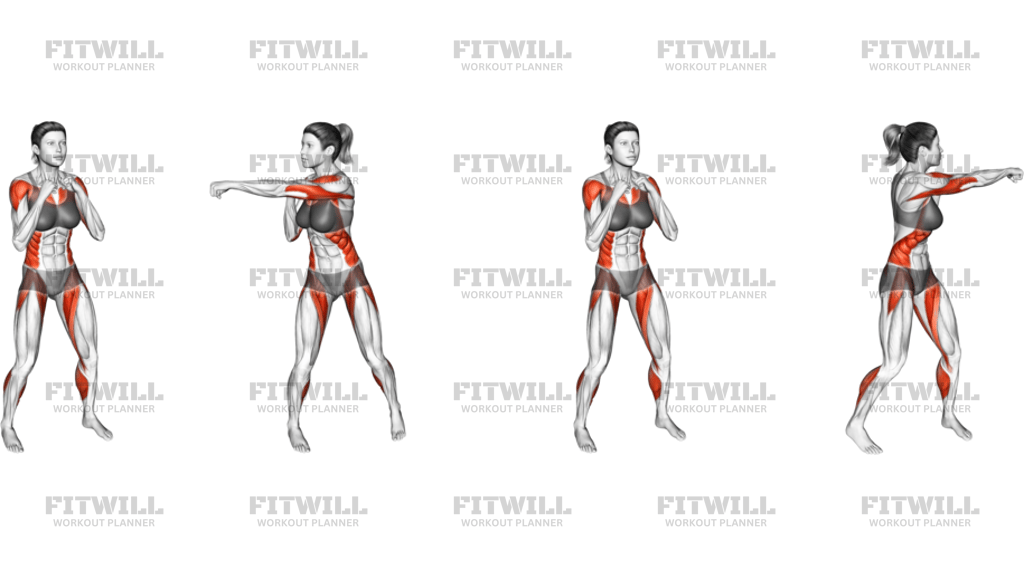
This exercise mainly challenges the quads and hip flexors of the working leg while the standing leg, glutes, calves, and trunk stabilizers keep the body upright. Because the image shows a guard-style hand position and a clean forward leg path, the emphasis should stay on controlled extension, not on height or speed. Front Leg Kick is most effective when the pelvis stays level and the standing knee does not cave inward as the leg rises.
The best reps begin with a quiet setup. Stand tall with your feet under you, brace lightly through the midsection, and prepare to move the kicking leg forward without leaning back or throwing the chest behind the hips. The kick should travel forward in a smooth line, with the knee extending near the top only as far as you can control. If you lose balance, shorten the range and keep the upper body stacked instead of reaching for a bigger kick.
Use Front Leg Kick when you want to wake up the front side of the hips before running, kicking, leg training, or any session that benefits from coordinated single-leg control. It also works well as a low-impact conditioning drill because the repetition pattern is rhythmic and easy to scale. Keep the motion crisp but not ballistic, and do not let the return swing pull you off balance or twist the pelvis.
Safety comes from control and range discipline. A front kick that is too high, too fast, or too forceful tends to shift stress into the lower back and standing knee instead of the working hip and thigh. Aim for repeatable reps, a stable standing foot, and a smooth return to the floor after each kick. If your hip flexors are tight or your balance is limited, reduce the height and use a slower tempo until the movement stays clean.
[ Workout Log & Planner ]
Put your next workout in Fitwill
Keep your plan and training log ready when you are.


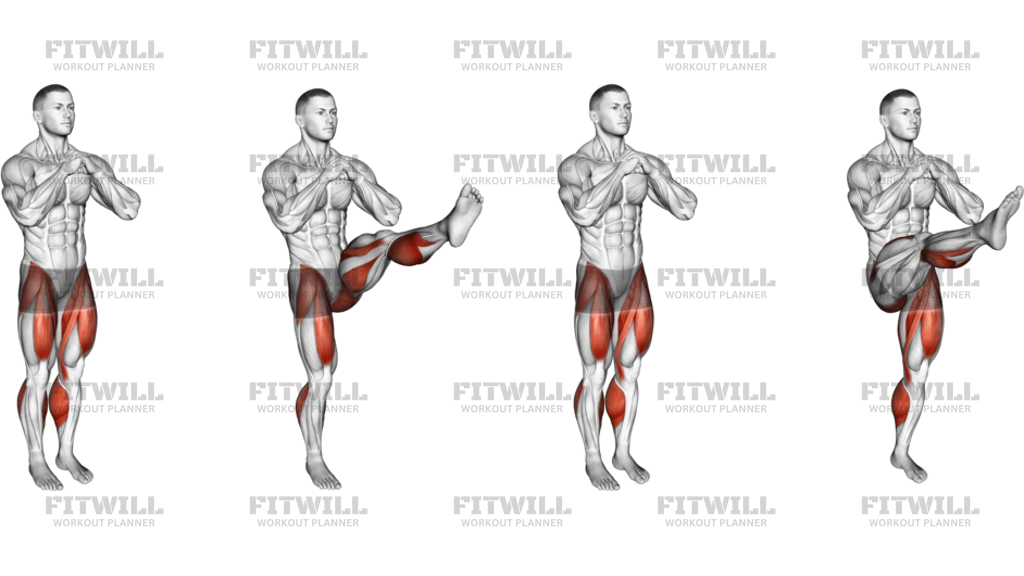
Instructions
- Stand upright with your feet about hip-width apart and your hands up in front of your chest or chin for balance.
- Shift your weight onto one leg and keep that standing foot planted flat before the kick starts.
- Brace your midsection and keep your ribs stacked over your pelvis so the torso does not lean back.
- Lift the working knee forward until the thigh comes up in front of you without twisting the hips.
- Extend the lower leg into a straight front kick, stopping before the knee locks hard or the back arches.
- Keep the toes pointed upward or the foot neutral as you reach the top of the kick.
- Lower the leg under control and bring the foot back to the floor without letting it drop.
- Reset your stance, switch sides, and repeat for the planned reps with the same tempo on each leg.
Tips & Tricks
- Keep the standing knee soft but not bent deeply; a locked or collapsed support leg makes the kick wobble.
- Kick only as high as you can keep your ribs down and your pelvis facing forward.
- If you feel the lower back taking over, shorten the extension and think about lifting from the hip, not throwing the torso.
- A slight pause near the top makes the rep cleaner than a fast swing that bounces off momentum.
- Use a wall or rack lightly for balance if one side feels much less stable than the other.
- Exhale as the leg extends to help keep the trunk steady through the top of the kick.
- Do not snap the knee into hard lockout; finish the kick with a strong but controlled extension.
- Stop the set when the standing foot starts spinning or the pelvis tilts noticeably to one side.
Frequently Asked Questions
What muscles does Front Leg Kick work?
Front Leg Kick mainly trains the hip flexors and quads of the kicking leg, with the standing leg, glutes, and core working to keep you balanced.
Is Front Leg Kick a good beginner exercise?
Yes. It is a good beginner drill if you keep the kick low, move slowly, and use a wall or rack for balance until the standing leg feels steady.
How high should I kick in Front Leg Kick?
Kick only as high as you can without leaning back or losing the line of your hips. A lower, controlled kick is better than a high swing.
What is the most common Front Leg Kick mistake?
The biggest mistake is swinging the leg with momentum and arching the lower back. Keep the torso stacked and let the hip drive the motion.
Should my hands stay up during Front Leg Kick?
Yes, keeping your hands up in a guard position helps with balance and keeps the upper body from drifting backward during the kick.
Can I do Front Leg Kick before running or sports work?
Yes, it works well as a warm-up because it wakes up the front of the hips and reinforces single-leg control before faster movement.
How do I keep from losing balance on Front Leg Kick?
Plant the standing foot, keep your ribs over your hips, and reduce the kick height. Light fingertip support is fine if you need it.
What should I avoid if my hip flexors feel tight?
Do not force a high kick or a fast recoil. Use a smaller range, slower tempo, and smoother return until the motion feels controlled.