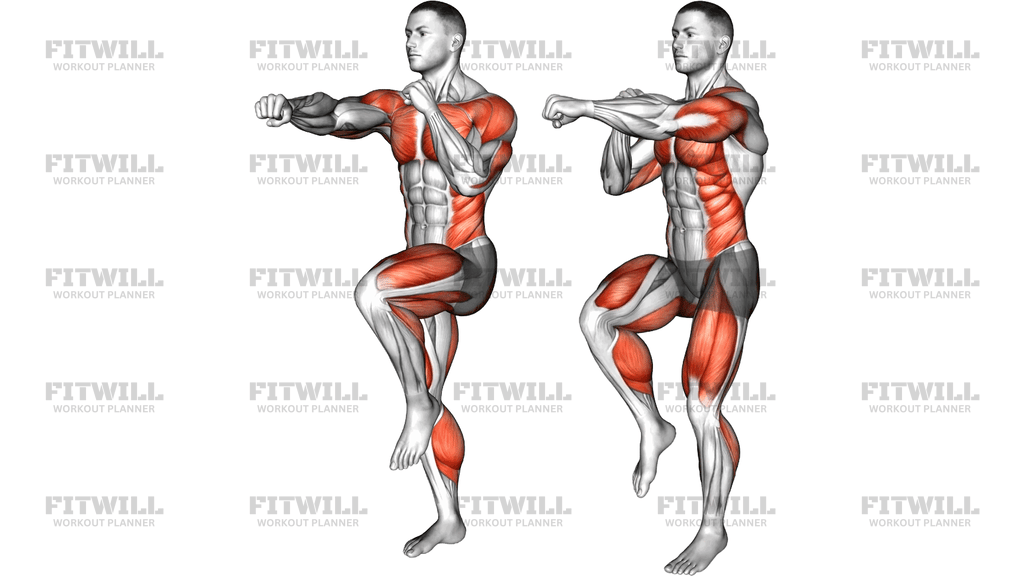
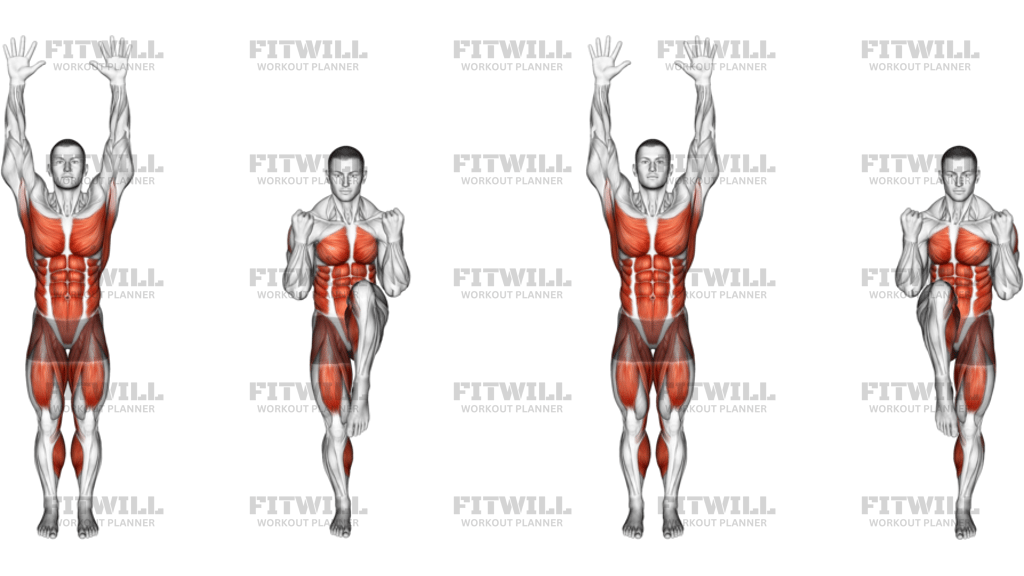
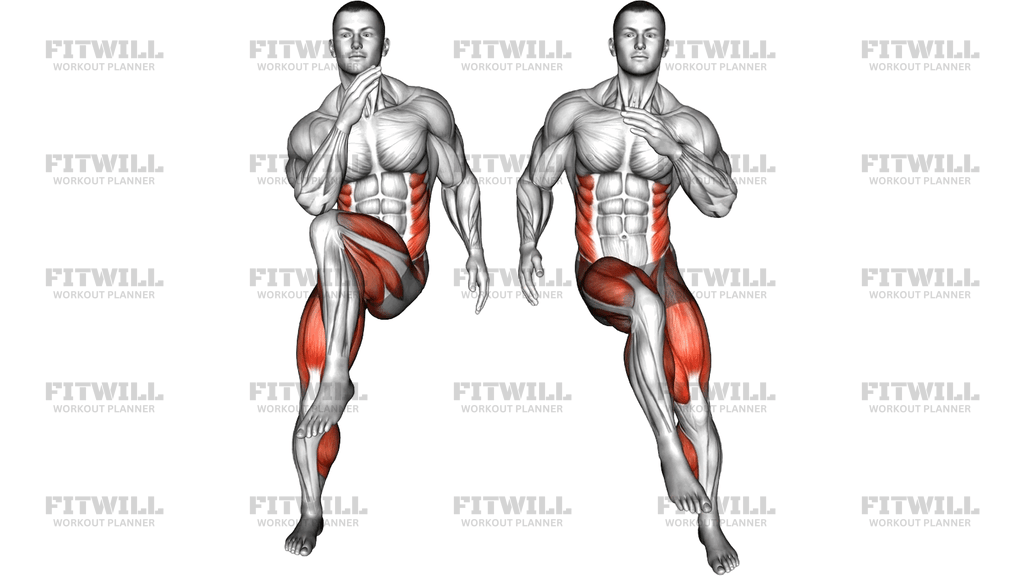
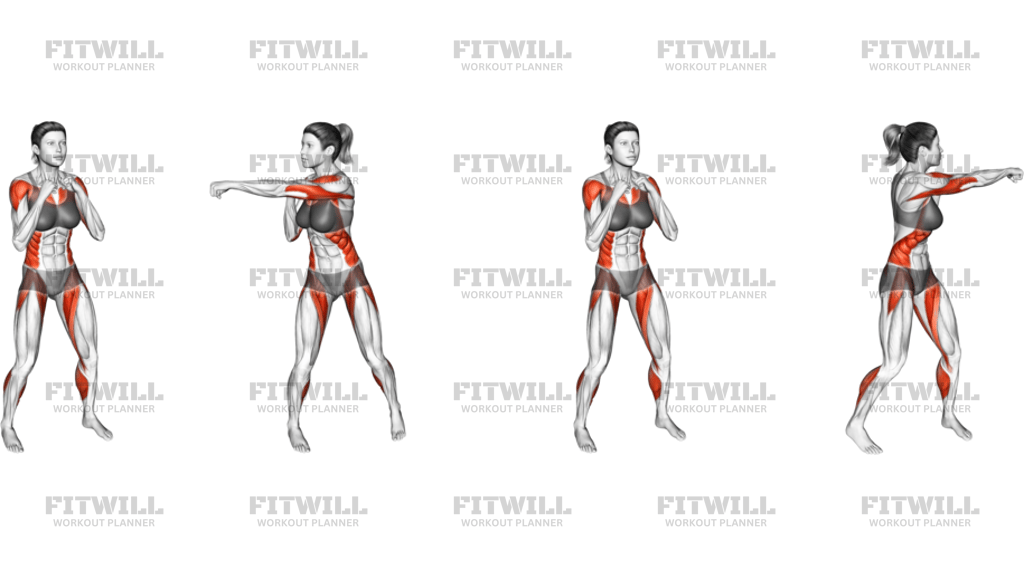
Arm Raise Step In Place
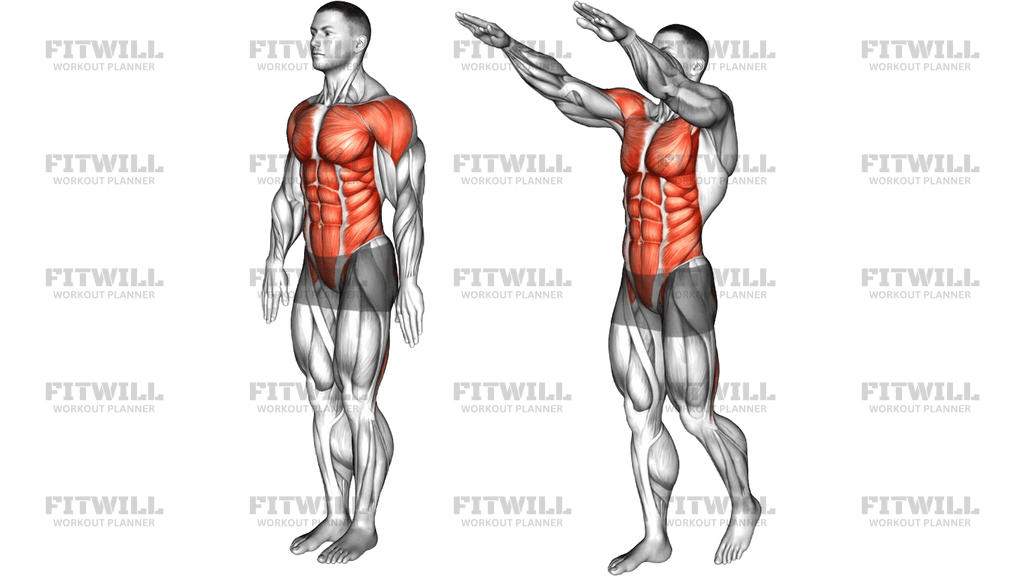
Arm Raise Step In Place is a standing march that pairs a steady step cadence with an overhead arm reach. It sits in the space between warm-up, coordination drill, and light conditioning work: the legs keep you moving, while the shoulders, upper back, and trunk work to keep each rep organized. The goal is not speed for its own sake, but a clean rhythm that lets you raise the arms without losing posture or balance.
This movement is useful when you want to get blood moving before a workout, wake up the shoulders, or add low-equipment conditioning without jumping. Because the feet keep shifting under you, the torso has to stay tall and centered while the arms travel from shoulder height to overhead. That makes it a practical drill for body awareness, posture, and shoulder control at a manageable intensity.
The setup matters more than it first appears. Stand tall with your feet about hip-width apart, soften the knees, and keep the ribs stacked over the pelvis before you start marching. If your low back arches when the arms rise, the reach is coming from the wrong place. A good rep feels like the feet are stepping under your center while the arms move smoothly overhead without shrugging or leaning back.
As you continue, think of the march and the arm raise as one coordinated pattern. Each step should stay quiet and controlled, and each arm lift should finish with the elbows straight and the hands overhead or slightly in front of the ears. If the exercise is performed with an alternating pattern, keep the rhythm even from side to side; if it is performed with both arms together, keep the reach smooth and avoid snapping the shoulders into position.
Arm Raise Step In Place works well in warm-ups, low-impact cardio circuits, and recovery sessions where you want movement without heavy loading. It can also be used to reinforce shoulder mobility and trunk control before pressing work. Beginners can usually learn it quickly, but the details still matter: stay upright, keep the steps light, and stop the set if the shoulders pinch, the neck tightens, or the torso starts to sway.
Fitwill
Log Workouts, Track Progress & Build Strength.
Achieve more with Fitwill: explore over 9600 exercises with images and videos, access built-in and custom workouts, perfect for both gym and home sessions, and see real results.
Start your journey. Download today!




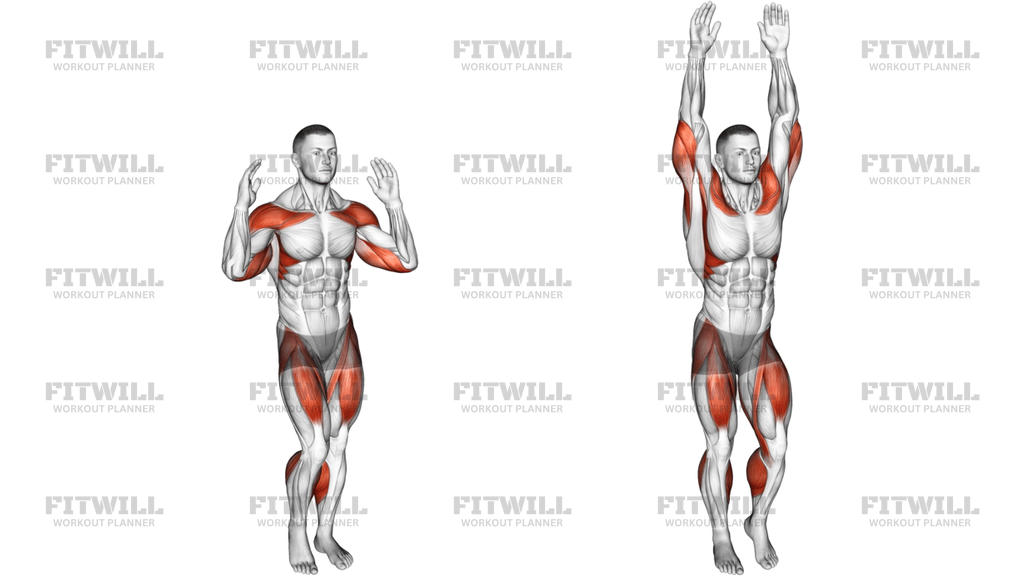
Instructions
- Stand tall with your feet about hip-width apart, knees soft, and your hands lifted around shoulder height with bent elbows.
- Stack your ribs over your pelvis and keep your chest open so you can march without leaning backward.
- Start stepping in place by lifting one foot a few inches off the floor and placing it back down under your hip.
- As you march, raise both arms overhead in a smooth path until your elbows are straight and your hands are above or slightly in front of your ears.
- Lower the arms back to shoulder height as the next step lands, keeping the movement smooth and controlled.
- Keep alternating the steps at a steady rhythm so your torso stays upright instead of twisting side to side.
- Land each foot softly and keep your weight centered through the middle of the foot rather than rocking onto the toes.
- Breathe continuously, exhaling as the arms rise and inhaling as they lower.
- Finish by lowering your arms to your sides, slowing the march, and standing still before the next set.
Tips & Tricks
- Keep your lower ribs from flaring when your arms reach overhead; the reach should come from the shoulders, not an arched lower back.
- If your shoulders feel tight, stop the raise just before full lockout and keep the hands in the front of the ears instead of drifting behind them.
- Take shorter steps if your torso starts bouncing; the drill should look smooth, not like a high-knee sprint.
- Let the feet land quietly. A loud foot strike usually means you are stepping too hard and losing control of the rhythm.
- Keep your neck long and avoid shrugging toward your ears when the arms go up.
- If you want more conditioning, speed up the cadence first rather than making the arm path bigger.
- If you want less impact, keep the march shallow and focus on a clean arm reach rather than lifting the knees high.
- Use the same pace on both sides if you are alternating arms; uneven timing usually makes the torso lean or rotate.
- Stop the set as soon as the shoulders pinch or the trunk starts to swing to help the arms reach higher.
Frequently Asked Questions
What muscles does Arm Raise Step In Place work?
It mainly trains the shoulders and upper back while the core, hips, and calves help you stay tall and coordinated through the march.
Is Arm Raise Step In Place more of a cardio drill or a strength exercise?
It is mostly a light conditioning and coordination drill. The arms and trunk have to stay organized, but the load is low enough to use it as a warm-up or active recovery movement.
Do I need weights for Arm Raise Step In Place?
No. Body weight is enough for most people, and adding dumbbells usually makes the shoulders and lower back work harder than the movement needs.
Should the arms go up together or alternate during Arm Raise Step In Place?
Either version can work, but the key is to keep the marching rhythm smooth. If you alternate, keep both sides even; if you raise both arms together, avoid leaning back to finish the rep.
How high should my knees come up?
Only as high as you can lift them without bouncing or tilting your torso. A small, controlled march is usually better than forcing a high step.
What if my shoulders feel tight when my arms reach overhead?
Keep the arms slightly in front of the ears and stop short of a painful end range. You can also reduce the reach height and focus on a smooth, pain-free overhead path.
Can beginners do Arm Raise Step In Place?
Yes. Beginners usually do best with a slower pace, smaller steps, and a controlled arm raise before trying to speed up the drill.
What is the most common mistake with this exercise?
The biggest mistake is turning the march into a bounce and using the low back to get the arms higher. Keep the ribs stacked and let the shoulders do the reaching.
Can I use Arm Raise Step In Place as a warm-up before pressing work?
Yes. It is a good way to raise temperature and rehearse overhead control before bench pressing, shoulder work, or other upper-body sessions.