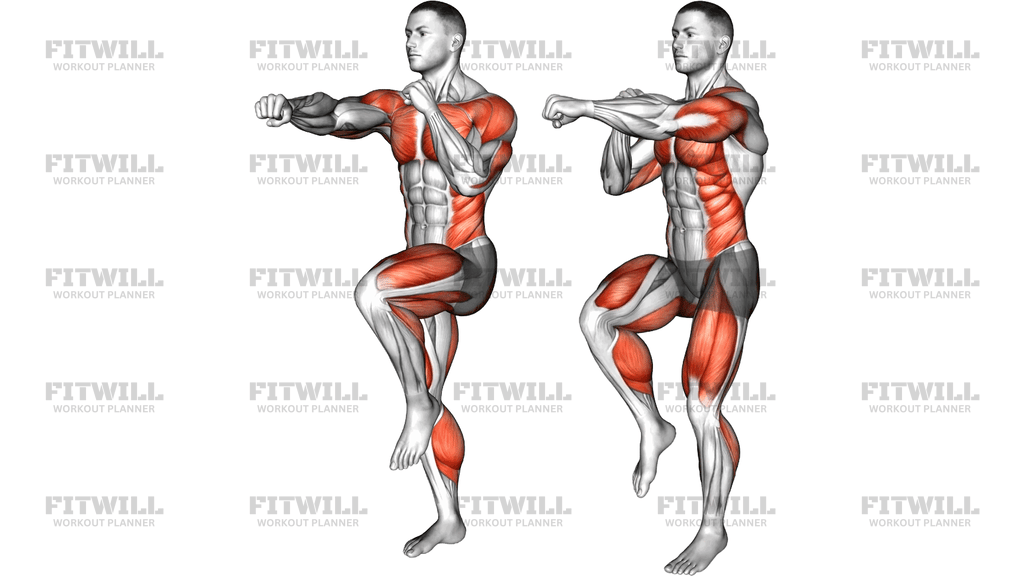
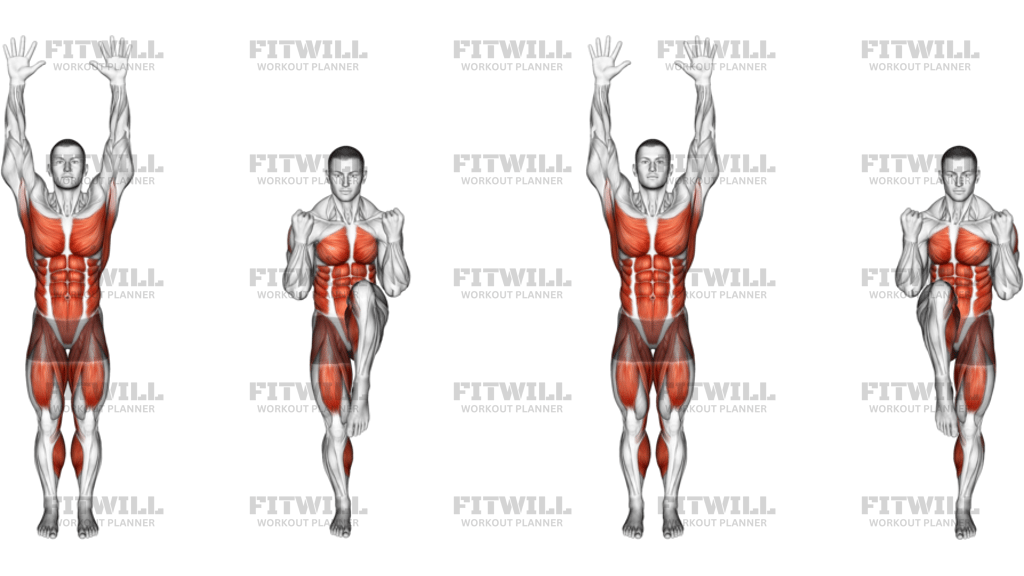
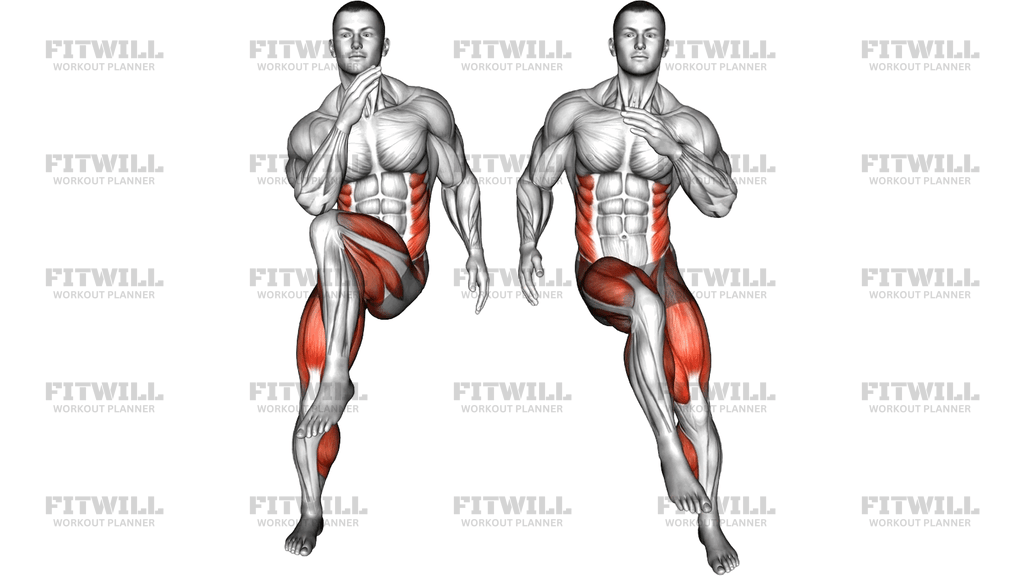
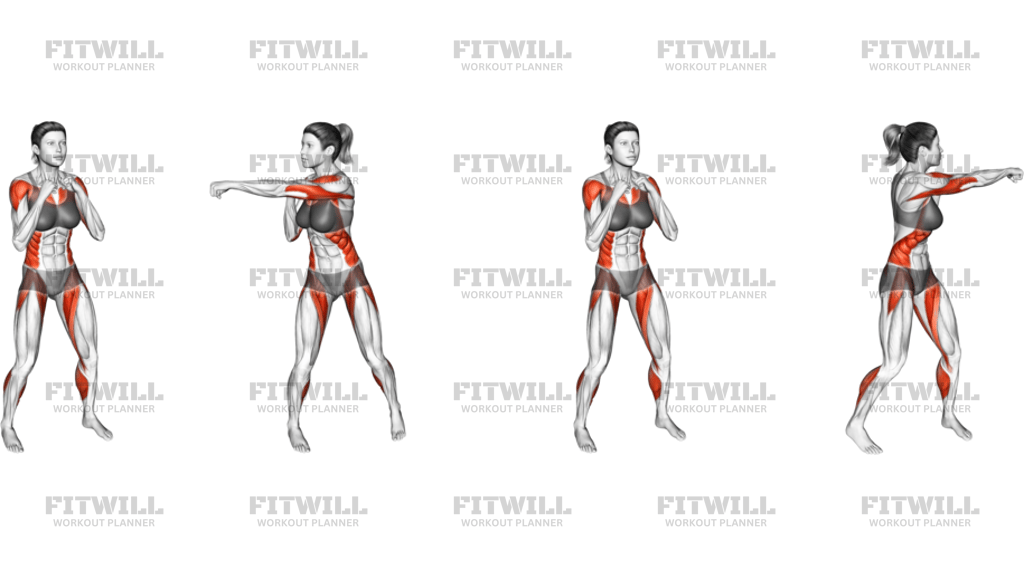
Arm Raise Step In Place
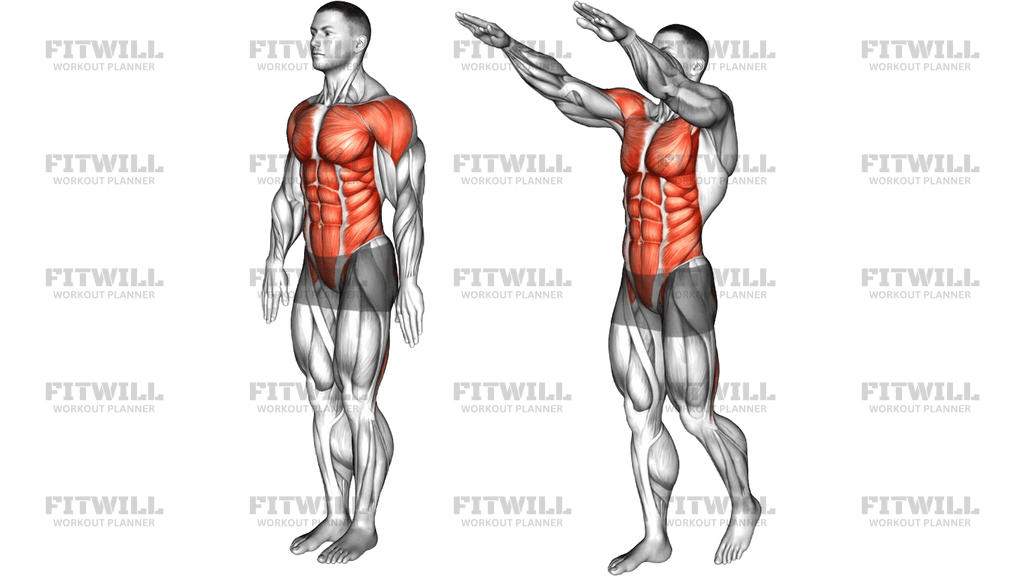
Arm Raise Step In Place is a low-impact bodyweight conditioning drill that combines marching in place with coordinated arm raises. It is useful for warming up the shoulders, waking up the legs, and increasing heart rate without the impact of running or jumping. Because the movement stays rhythmic and simple, it also works well when you want light aerobic work that still asks for posture, coordination, and shoulder control.
The exercise is best understood as a controlled march rather than a rushed cardio drill. Each step should stay light and quiet while the arms travel together in a smooth path, usually from the sides of the body to shoulder height or overhead depending on the version you are performing. That coordination makes the movement valuable for people who want to train rhythm, balance, and upper-body motion at the same time.
Setup matters because this exercise can lose quality quickly if the torso leans back, the ribs flare, or the shoulders start shrugging. Stand tall with your feet under you, brace lightly through the midsection, and keep your neck long so the arm raise comes from the shoulder joint instead of from momentum. The arms should move with control and return under tension, not swing loosely as the feet keep marching.
Use Arm Raise Step In Place when you need a warm-up before strength training, a low-intensity cardio segment in a circuit, or a simple movement break between more demanding exercises. It is especially useful for newer exercisers, older adults, and anyone who needs a joint-friendly way to stay active in a small space. If overhead range feels limited, keep the arm path lower and controlled rather than forcing the reach.
The main training benefit comes from repeated clean reps: steady breathing, stable posture, and a consistent tempo. When done well, the exercise raises temperature and prepares the body for more demanding work while also reinforcing shoulder rhythm and lower-body coordination. That makes it a practical bridge between mobility work and harder conditioning.
[ Workout Log & Planner ]
Put your next workout in Fitwill
Keep your plan and training log ready when you are.


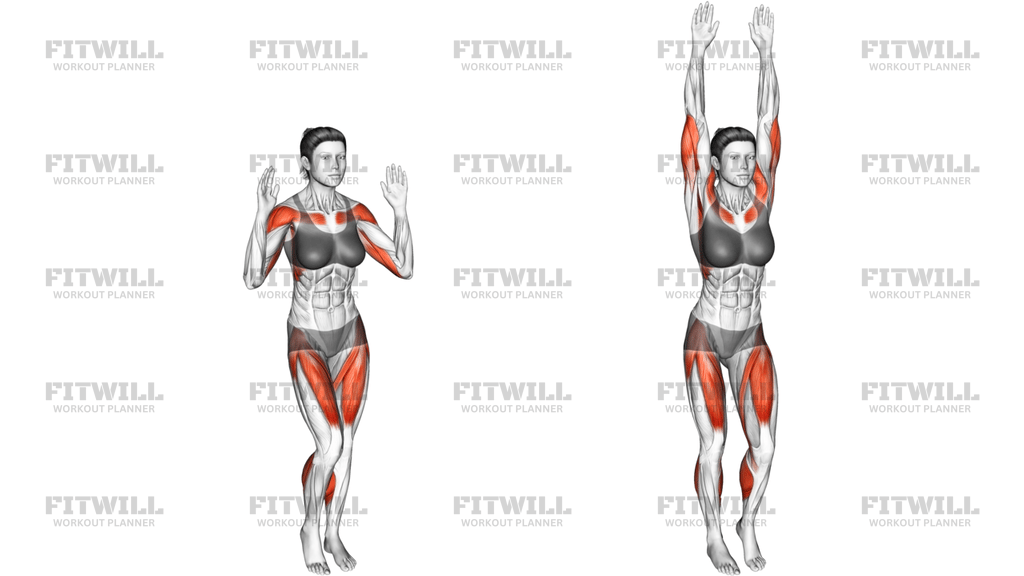
Instructions
- Stand tall with your feet about hip-width apart and your arms relaxed at your sides.
- Brace lightly through your midsection and keep your ribs stacked over your pelvis.
- Begin marching in place with small, even steps instead of bouncing or hopping.
- As one foot lifts, raise both arms smoothly to shoulder height or overhead, depending on your chosen range.
- Keep your elbows softly bent and your shoulders away from your ears as the arms lift.
- Lower the arms with control as the opposite foot steps down and the march continues.
- Keep the head level and avoid leaning backward or twisting the torso to help the arm raise.
- Match the arm speed to the foot rhythm so the movement stays coordinated and steady.
- Breathe continuously through the set, then stop the march and lower the arms when the rep or time target is complete.
Tips & Tricks
- Keep the march quiet and light; if the feet start slapping the floor, the pace is probably too fast.
- Choose an arm height you can repeat cleanly, even if that means stopping at shoulder level instead of going overhead.
- Let the arms rise from the shoulder joint instead of shrugging the traps and lifting the neck.
- Keep the torso tall so the rib cage does not flare as the hands go up.
- Use a steady tempo that you could hold for the full set without rushing the breathing.
- If your balance feels shaky, shorten the step and slow the arm path before adding more range.
- Exhale as the arms rise and inhale as they lower to keep the rhythm smooth.
- Stop the set if the movement turns into a bounce or the lower back starts arching to finish the arm raise.
Frequently Asked Questions
What does Arm Raise Step In Place primarily train?
It mainly trains shoulder control and coordination while also giving you light aerobic work through the marching pattern.
Is Arm Raise Step In Place good for beginners?
Yes. Beginners can keep the arm raise lower, step more slowly, and build up to a bigger range once the rhythm feels natural.
Should my arms go all the way overhead?
Only if you can do it without shrugging, leaning back, or losing control. Shoulder-height raises are a fine option.
What is the biggest mistake in this exercise?
Most people rush the march and turn the arm raise into a swing. That usually leads to poor posture and sloppy breathing.
What muscles support the movement besides the shoulders?
The core, upper back, hip flexors, and calves help keep the march stable and the torso upright.
Can I use this as a warm-up?
Yes. It works well before upper-body lifting, circuit training, or any session where you want to raise your temperature without impact.
How can I make the movement easier on my shoulders?
Keep the arms below shoulder height, slow the tempo, and focus on smooth motion instead of chasing a bigger reach.
What should I do if I start leaning back?
Reduce the arm range, shorten the step, and reset your rib cage over your pelvis before continuing.