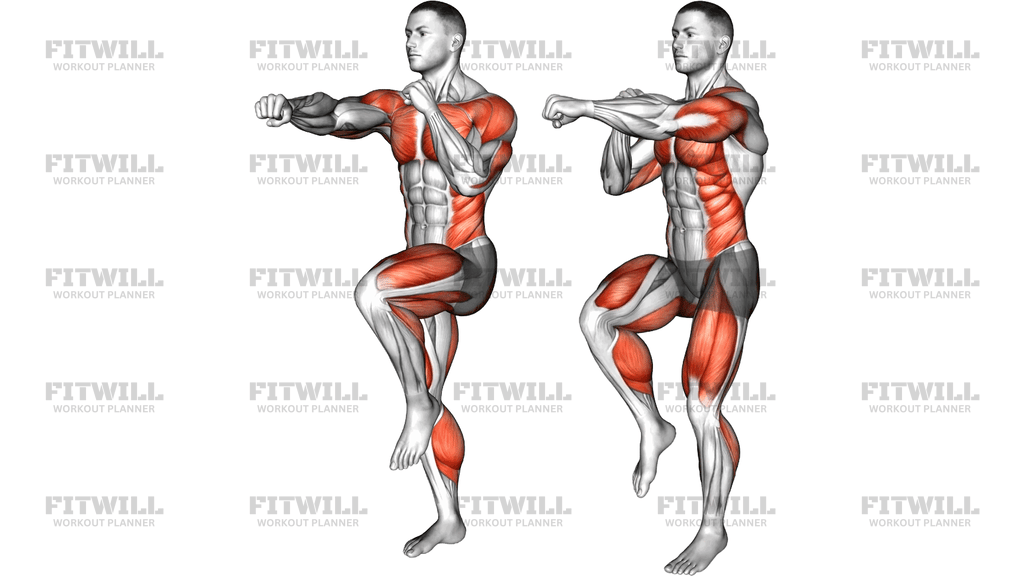
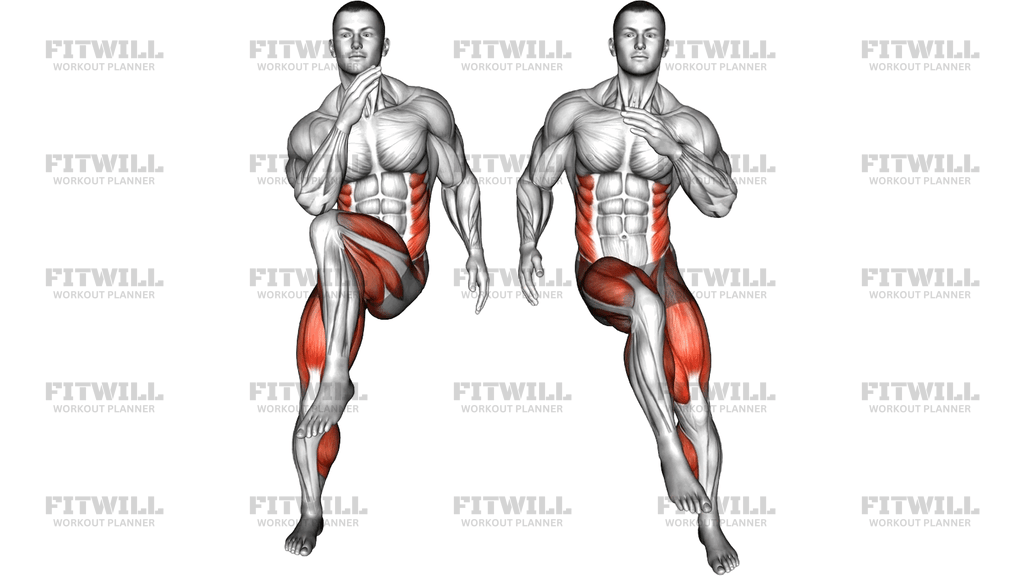
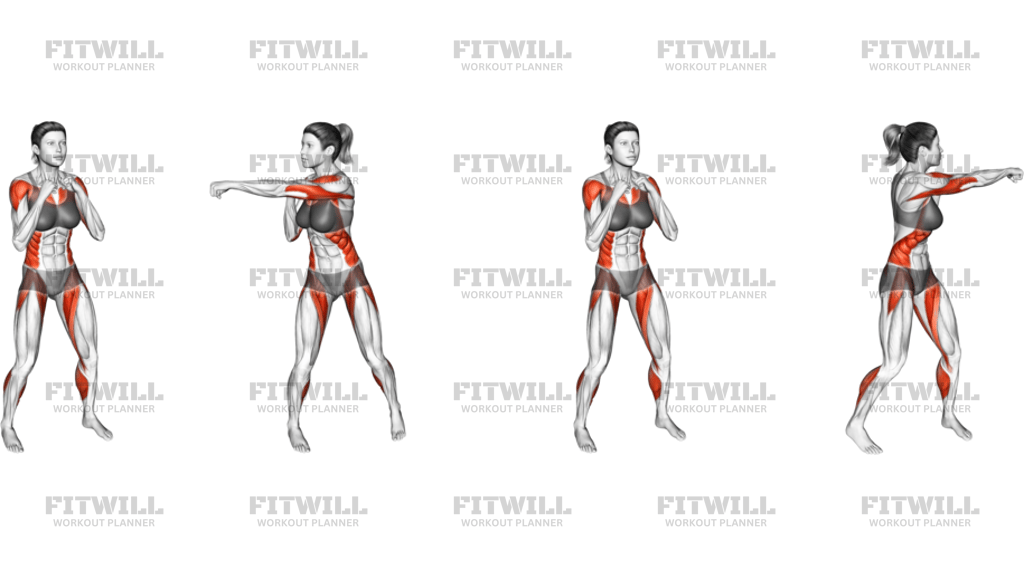
Stepback Pulldown
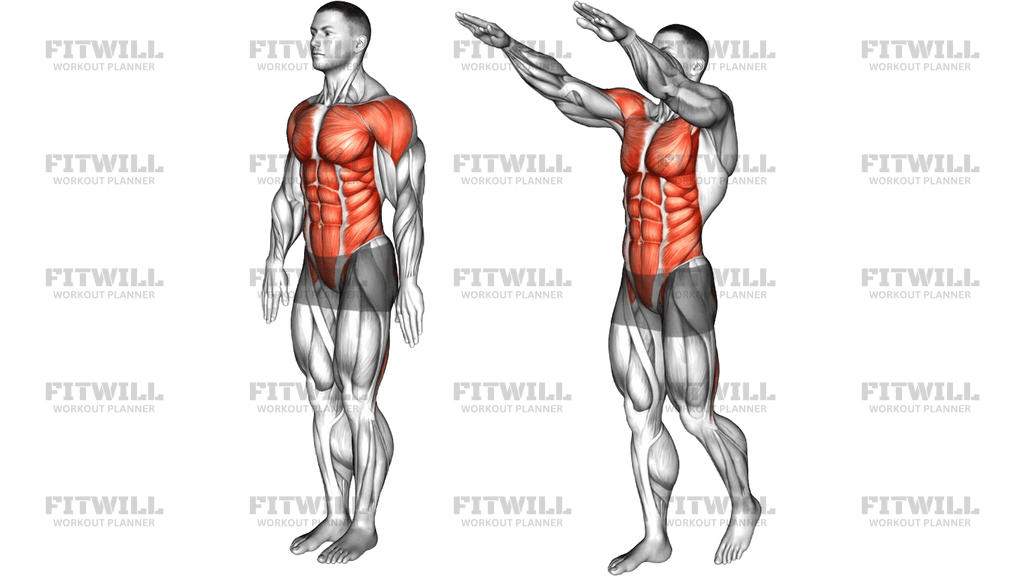
Stepback Pulldown is a bodyweight coordination drill that combines a reverse step with a strong downward arm pull. The movement starts in a tall stance, then asks you to step back under control while drawing the elbows down and back, almost as if you were performing a pulldown without a machine. It is useful when you want an athletic pattern that challenges balance, rhythm, posture, and lower-body control at the same time.
The exercise trains the quads, glutes, hamstrings, calves, lats, upper back, shoulders, and core as one linked movement. The stepback puts more demand on the front leg and hip, while the arm pull teaches you to keep the ribcage stacked and the shoulders from drifting up toward the ears. That makes the drill valuable for warmups, conditioning blocks, and movement prep before more loaded lower-body or pulling work.
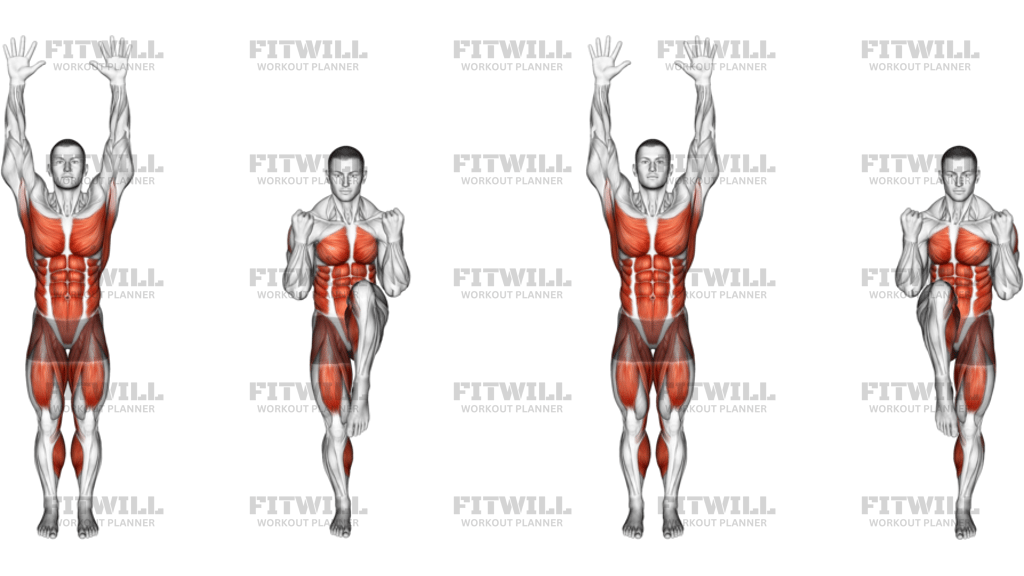
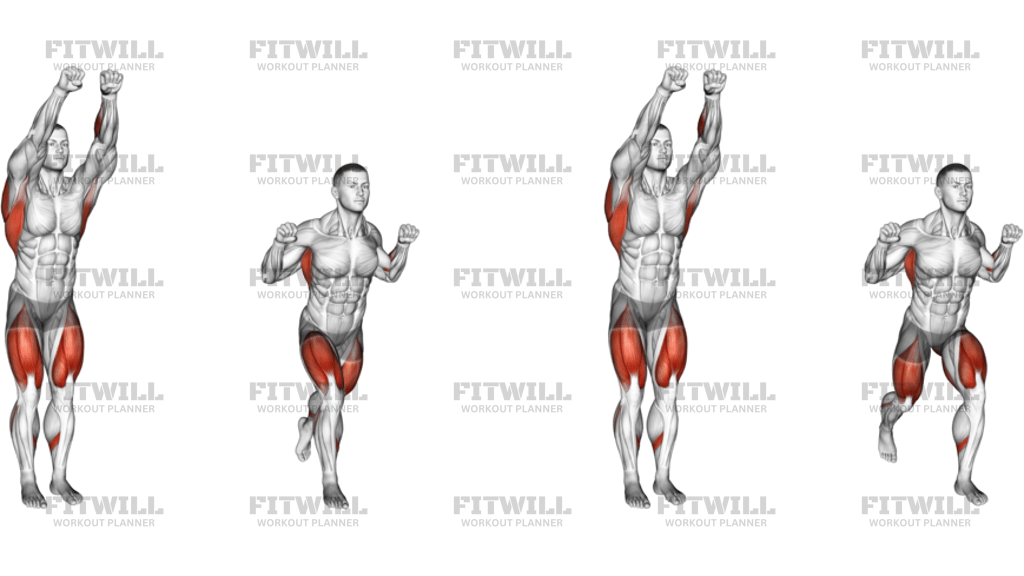
Set up by standing tall with the feet about hip-width apart and the arms reaching overhead. From there, step one foot straight back into a short reverse lunge while pulling the elbows down toward shoulder height or slightly below. Keep the front heel planted, the torso upright, and the pelvis from tipping forward as the arms travel. The best repetitions feel smooth and coordinated, not rushed or exaggerated.
Because this is a bodyweight drill, the quality of the rep matters more than the size of the step or the speed of the transition. If you lose balance, let the front knee cave inward, or arch the low back when the arms rise, shorten the range and slow the tempo. Beginners can use a smaller step and a shallower lunge, while more experienced lifters can add pace without turning it into a jump. The goal is a crisp, repeatable pattern that keeps the legs, trunk, and shoulders working together from the first rep to the last.
[ Workout Log & Planner ]
Put your next workout in Fitwill
Keep your plan and training log ready when you are.


Instructions
- Stand tall with your feet about hip-width apart and your arms reaching overhead, as if you are starting a pulldown with no machine.
- Stack your ribs over your pelvis, soften your knees, and keep your chest lifted without arching your low back.
- Step one foot straight back into a short reverse lunge while keeping the front heel planted and the front knee tracking over the second toe.
- At the same time, pull your elbows down and back until your hands are beside your shoulders or slightly below, like finishing a pulldown.
- Keep your torso tall as you lower; do not fold forward or twist the hips to reach the range.
- Press through the front foot to return to standing while reaching both arms overhead again.
- Reset your balance at the top before the next rep, then switch legs or continue alternating as prescribed.
- Breathe out on the step-back and pull, then inhale as you return to the tall start position.
Tips & Tricks
- Keep the step short enough that you can stay upright and return to balance without wobbling.
- Think about pulling the elbows down, not flaring the hands wide or shrugging the shoulders up.
- Let the front leg do the work; if the back foot is doing most of the pushing, the lunge is too shallow or the rhythm is off.
- Avoid arching the low back when the arms go overhead; keep the ribs stacked instead.
- Land softly and quietly on the back step so the movement stays controlled rather than bouncy.
- If the front knee dives inward, reduce speed and narrow the range until the tracking is clean.
- A smooth, even tempo makes the coordination element more useful than trying to race through reps.
- Use this as a warmup or conditioning drill, not as a max-effort strength exercise.
Frequently Asked Questions
What does Stepback Pulldown work?
It mainly trains the legs, hips, upper back, shoulders, and core together as one coordinated pattern.
Is this exercise more like cardio or strength work?
It sits closer to a conditioning and coordination drill, although the reverse step still gives the legs a useful strength and stability challenge.
Do I need equipment for the pulldown part?
No external load is required. The arms move through a pulldown-style path to teach posture and rhythm, even when you are just using body weight.
How far should I step back?
Only step back far enough to keep your torso tall and your front foot stable. A shorter step is better than losing balance or collapsing forward.
What should I feel first during the rep?
You should feel the front leg and hip working as you step back, with the lats and upper back helping to control the arm pull.
What is the most common mistake with Stepback Pulldown?
The biggest mistake is turning it into a rushed lunge with a wild arm swing. Keep the step, pull, and return connected and controlled.
Can beginners use a smaller range of motion?
Yes. A shorter step and a shallower reverse lunge are good ways to learn the pattern without losing posture.
Where does this fit in a workout?
It works well in a warmup, movement prep sequence, or conditioning circuit before more demanding lower-body or pulling exercises.