Lying Hyperextension Hold
Lying Hyperextension Hold is a bodyweight prone back-extension isometric that builds endurance in the glutes, spinal erectors, and deep trunk stabilizers. The exercise is performed face down on the floor with the torso and legs lifted into a shallow arch, then held without letting the ribs flare or the low back take over. It is useful when you want posterior-chain work that is controlled, repeatable, and easy to scale by changing hold time or lever length.
The position matters because this movement is about tension management, not height. A good hold starts with the pelvis and lower ribs organized, the neck long, and the glutes doing enough work to keep the legs from drifting upward through the low back. If the chest is yanked high or the chin cranes forward, the hold turns into lumbar compression instead of clean hip extension endurance. The image shows the classic prone floor version: arms reaching forward, legs long, and the body held off the ground in a steady, extended line.
Train it when you need posterior-chain activation, trunk stiffness, or low-load accessory work that supports running, hinging, jumping, or general back health. It also fits well in warmups and core circuits because the setup is simple and the rep quality is easy to judge. Beginners can use short holds and a very small lift; more advanced lifters can extend the hold time or keep the limbs slightly lower to make the leverage harder without changing the movement pattern.
The safest and most effective execution is a quiet one. Lift only to the point where you can keep the abs lightly braced, the glutes on, and the neck neutral. Breathe behind the brace instead of holding your breath rigidly for the entire set. Lower with control and fully reset between reps so each hold starts from the same position. If you feel pinching in the low back, shorten the lift, reduce the hold time, or stop the set before form breaks down.
[ Workout Log & Planner ]
Put your next workout in Fitwill
Keep your plan and training log ready when you are.


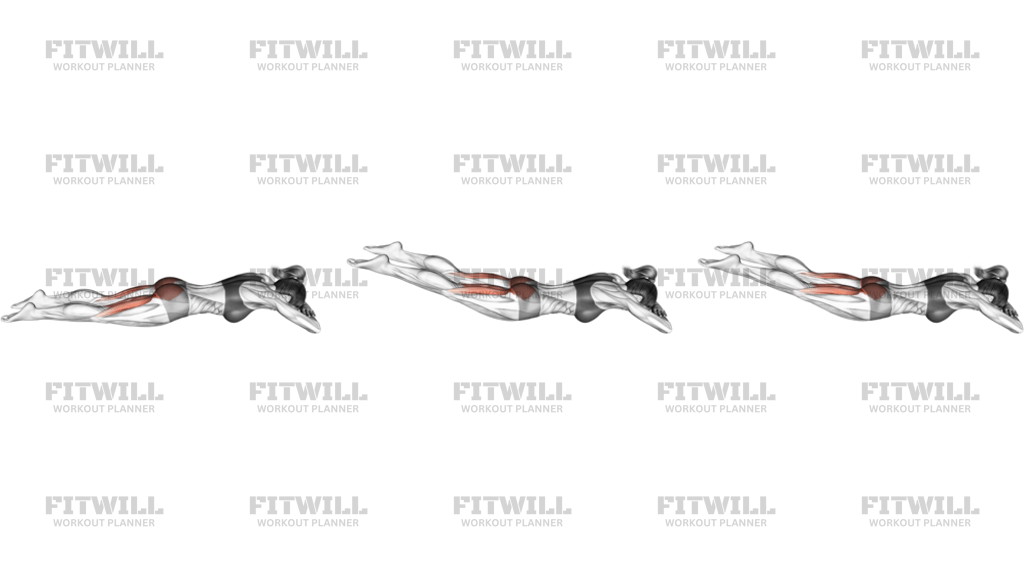
Instructions
- Lie face down on a mat with your legs straight, toes relaxed on the floor, and your arms reaching forward in line with your ears.
- Set your forehead or chin just above the floor, keep your neck long, and lightly tuck the chin so you are not looking straight ahead.
- Brace your midsection, squeeze your glutes, and press the front of your hips lightly into the floor before you lift.
- Raise your chest, arms, and thighs a few inches off the floor until you feel the back of your hips and upper back working together.
- Keep the ribs from flaring and the lower back from collapsing into a hard arch as you hold the top position.
- Maintain long legs and active feet so the lift comes from the posterior chain instead of a sloppy knee bend.
- Breathe in small, controlled breaths while you keep the hold, using the exhale to keep the brace organized.
- Lower under control, let the body fully reset on the floor, and repeat for the planned hold time or number of reps.
Tips & Tricks
- Think about lengthening through the crown of the head and fingertips instead of trying to throw the chest as high as possible.
- If your low back takes over, lower the chest a little and focus on squeezing the glutes harder before lifting again.
- A small lift with clean tension is better than a big arch with no control.
- Keep the chin slightly tucked so you do not crank the neck while the torso is off the floor.
- If the shoulders feel crowded, move the arms a little wider or keep them slightly lower instead of forcing the full overhead line.
- For longer holds, keep the breath quiet and rhythmic rather than holding air until your posture breaks.
- Stop the set when the legs start to separate, the ribs pop up, or the chest drops toward the floor.
- Use this as an accessory drill, not a max-effort strength test; quality matters more than duration.
Frequently Asked Questions
What muscles does Lying Hyperextension Hold train?
It mainly challenges the glutes, spinal erectors, hamstrings, and deep core stabilizers that keep the torso rigid in the prone position.
Is this the same as a superman hold?
It is the same general prone back-extension pattern, usually done with the chest and legs lifted off the floor in a static hold.
How high should I lift my chest and legs?
Only lift high enough to feel tension without pinching the low back; a small, controlled hover is usually better than a big arch.
Where should I feel the hold?
You should feel it in the back of the hips, glutes, and upper-to-mid back, not as a sharp squeeze in the spine.
Can beginners do this exercise?
Yes. Beginners should start with short holds and a very small lift, then build time only while posture stays clean.
What if my lower back cramps during the hold?
Shorten the range, squeeze the glutes harder, and stop the set if the cramp does not ease quickly.
How long should I hold each rep?
Most people do best with short holds of about 5 to 20 seconds, depending on the goal and their ability to keep the position tidy.
Can I make this harder without adding weight?
Yes. You can lengthen the hold, keep the limbs slightly lower, or reduce rest while still maintaining the same prone body position.