Lying Hyperextension Hold
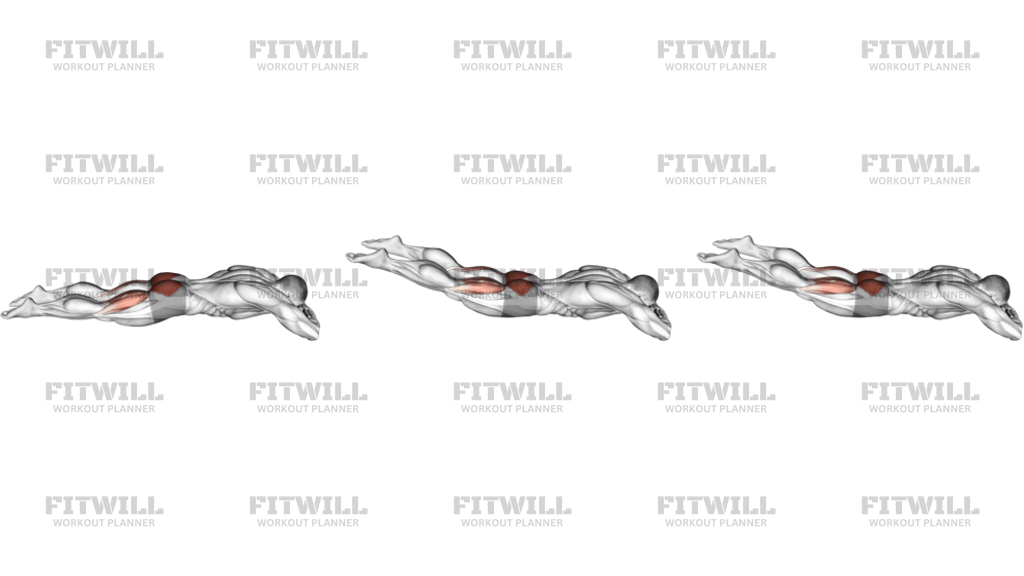
Lying Hyperextension Hold is a prone isometric exercise that asks you to keep the hips, glutes, and trunk working together while the torso and legs stay slightly lifted off the floor. It is a simple-looking movement, but the quality comes from how well you control body tension, not from how high you can raise yourself. When it is done well, the hold teaches you to keep the posterior chain active without turning the rep into a sloppy back arch.
This exercise is useful when you want a low-load way to train extension strength, spinal endurance, and whole-body control. The glutes, lower back, and core all have to contribute so the body stays long and organized instead of collapsing through the middle. Because the position is static, it also exposes compensation quickly, which makes it a good drill for warming up, accessory work, or short core-focused finishers.
The setup matters because the hold starts from the floor, not from momentum. Lie face down with your arms reaching overhead, legs straight, and your face angled toward the floor so your neck stays neutral. Before lifting, brace your midsection, squeeze your glutes, and think about lengthening through the fingertips and toes so the body stays tight from end to end.
During the hold, the chest and thighs should come up only a few inches. The goal is to maintain tension through the glutes and core while keeping the ribs from flaring and the lower back from taking over the entire effort. Breathe in short, controlled breaths while you hold, then lower with control and reset without crashing back to the floor.
Lying Hyperextension Hold is best used when you want a strict bodyweight drill that builds awareness as much as strength. Beginners can use it safely if they keep the range small and the holds short, while more advanced lifters can extend the time under tension or use it as part of a posterior-chain circuit. If you feel pinching in the low back or neck, shorten the hold, reduce the lift, and re-check your alignment before continuing.
Fitwill
Log Workouts, Track Progress & Build Strength.
Achieve more with Fitwill: explore over 9600 exercises with images and videos, access built-in and custom workouts, perfect for both gym and home sessions, and see real results.
Start your journey. Download today!




Instructions
- Lie face down on the floor or a mat with your arms reaching overhead and your legs straight behind you.
- Set your forehead or chin lightly toward the floor, keep your neck long, and square your hips so both sides feel even.
- Brace your abdomen, squeeze your glutes, and press your thighs and pubic bone gently into the floor before lifting.
- Raise your chest, hands, and thighs a few inches off the floor without throwing your head back or bending your knees.
- Reach forward through the fingertips and back through the toes to create tension from your upper body to your feet.
- Hold the top position for the planned count while keeping the ribs down and the glutes engaged.
- Breathe in short, controlled breaths during the hold instead of holding your breath for the entire rep.
- Lower your chest and legs slowly to the floor, relax briefly, and reset your brace before the next hold.
- End the set by setting the body down under control rather than dropping out of the position.
Tips & Tricks
- Keep the lift small; this hold should feel like tension through the whole back side, not a big arch in the low back.
- Think about lengthening the body rather than crunching up, with the fingertips reaching away from the heels.
- Squeeze the glutes first so the lower back does not become the only driver of the hold.
- Keep the chin slightly tucked so the neck stays in line with the rest of the spine.
- If your shoulders feel crowded overhead, open the arms slightly wider while keeping them long.
- Do not let the ribs flare hard off the floor; that usually turns the hold into an uncontrolled backbend.
- Use shorter holds if your hamstrings cramp or if your hips start twisting side to side.
- The rep should end as soon as you lose the ability to keep the thighs and chest equally controlled.
Frequently Asked Questions
What muscles does Lying Hyperextension Hold work?
It mainly trains the glutes, spinal erectors, and deep core, with the upper back and shoulders helping to hold the arms long overhead.
Is Lying Hyperextension Hold the same as a Superman hold?
It is very similar, but Lying Hyperextension Hold emphasizes a controlled prone extension hold with a small, strict lift instead of a big swing or bounce.
How high should I lift in Lying Hyperextension Hold?
Only a few inches. The torso and thighs should leave the floor just enough to create tension without turning the movement into a hard lumbar arch.
Can beginners do Lying Hyperextension Hold?
Yes. Beginners should start with short holds, a small range, and calm breathing so they can learn the body position before increasing time under tension.
Why do my lower back or neck feel strained in Lying Hyperextension Hold?
Usually the lift is too high or the chin is coming up. Lower the chest and legs, keep the gaze down, and squeeze the glutes before you hold.
Should my arms stay straight in Lying Hyperextension Hold?
Yes, if your shoulders tolerate it. Keep the elbows long and reach through the fingertips; if overhead position bothers you, bring the arms slightly wider while keeping the same body tension.
How long should I hold each rep?
Most people do best with short holds of about 10-30 seconds, long enough to feel the posterior chain working without losing position.
What is a good substitute if Lying Hyperextension Hold bothers my back?
A bird dog hold or a prone cobra is usually easier on the spine while still training trunk control and posterior-chain endurance.