Lying Alternate Straight Leg Circle
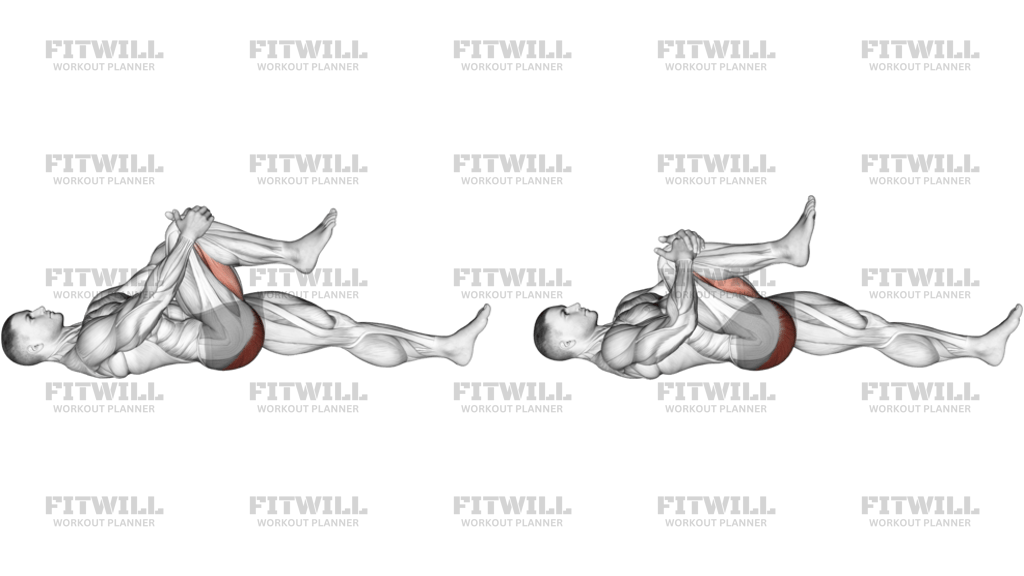
Lying Alternate Straight Leg Circle is a floor-based hip and core control drill performed on your back with one leg held straight in the air while the other stays long and quiet on the ground. The lifted leg traces a small circle from the hip socket, and the trunk resists the urge to rock, twist, or arch as the leg moves. It is useful when you want to train control through the hip while keeping the pelvis and lower back organized.
The main stress is on the front of the hip, lower abdominals, obliques, and deep stabilizers that keep the torso steady while one leg moves. The glutes and inner-thigh muscles help control the returning path and keep the pelvis from drifting. Because the exercise is done without load, quality comes from position, tension, and range rather than from speed or effort swings.
Setup matters here. Lie on a mat with both legs straight, arms down by your sides, and the non-working leg pressed long into the floor. Lift the working leg only as high as you can without losing contact between your low back and the mat. That starting height should make the circle feel smooth, not forced. If the leg is too high, the pelvis will tip and the movement will turn into a back arch instead of a hip drill.
During the rep, keep the circle small and intentional. Move the lifted leg across the body, down, out, and back to center using the hip joint, not a swing from the foot or a pull from the torso. Breathe steadily, keep the ribs down, and let the motion feel smooth enough that you could repeat it on the other side with the same control. If the hips start to wobble, the circle is too large.
Use this exercise as warm-up work, accessory core training, or a controlled finisher before or after lower-body lifting. It is especially useful when you want better hip awareness, cleaner leg-lower mechanics, or more control in positions where the abdomen has to stop the pelvis from overextending. Beginners can absolutely use it, provided the range is small and the pelvis stays quiet. If you feel pinching in the front of the hip or strain in the low back, shorten the range immediately and lower the working leg a little.
[ Workout Log & Planner ]
Put your next workout in Fitwill
Keep your plan and training log ready when you are.


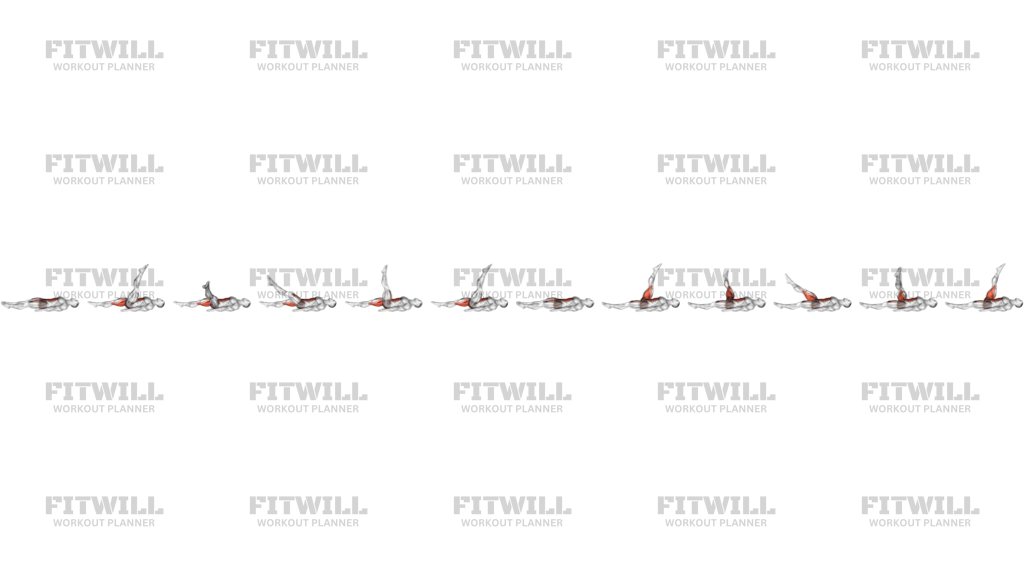
Instructions
- Lie on a mat on your back with both legs straight and your arms resting by your sides for support.
- Press one leg long into the floor and lift the other leg straight up until the low back can stay flat on the mat.
- Keep the working knee long but not locked, and relax the foot so the motion comes from the hip rather than the shin.
- Brace your ribs down, lightly tuck the pelvis, and set the torso before the leg starts to move.
- Trace a small controlled circle with the lifted leg, moving across the body, down, out, and back to the top.
- Keep the support leg quiet and the pelvis square so the circle does not turn into a hip roll.
- Breathe steadily through the rep instead of holding your breath as the leg passes the hardest part of the circle.
- Finish the planned circles, lower the leg with control, and switch sides.
Tips & Tricks
- Keep the circle small enough that your pelvis stays heavy on the mat; bigger circles usually mean the low back is helping too much.
- If the front of the hip pinches, lower the leg a little and shorten the circle before you try to push through it.
- Press the non-working heel lightly into the floor to help keep the pelvis square and the torso quiet.
- Do not flick the foot to make the circle larger; the path should come from the hip joint, not from the ankle.
- Keep the lifted knee long but not hard-locked so you do not jam the hamstrings or knee joint.
- Reverse the circle direction between sets to challenge both directions of hip control.
- Exhale as the leg moves through the hardest part of the circle and inhale as you reset at the top.
- If your lower back arches, reduce the leg height before you reduce the number of reps.
Frequently Asked Questions
What does Lying Alternate Straight Leg Circle train?
It mainly trains hip control, lower-abdominal stability, oblique bracing, and the ability to keep the pelvis quiet while one leg moves.
Should the circle come from my foot or my hip?
From the hip. The foot just follows the path; if the foot is driving the motion, the torso usually starts to sway.
How high should the raised leg be?
Only high enough to keep your low back down. If the pelvis tilts or your ribs flare, lower the leg and make the circle smaller.
Can I bend the leg that stays on the floor?
Yes, if your hamstrings are tight or your back starts to arch. Keep that leg quiet and use the bent position only as much as needed.
Do I circle both directions?
You can. Many people do one direction per set and then reverse it on the next set to balance control around the hip.
Why do I feel this in my hip flexor?
That is normal because the raised leg is being held and moved under tension. Sharp pinching in the front of the hip is the warning sign to reduce range.
Is this exercise suitable for beginners?
Yes, as long as the circle is tiny and the pelvis stays still. Beginners should favor control over range.
How many reps should I do?
Use a short controlled set per side, or a brief timed set, and stop before the low back starts taking over.