Spider Plank
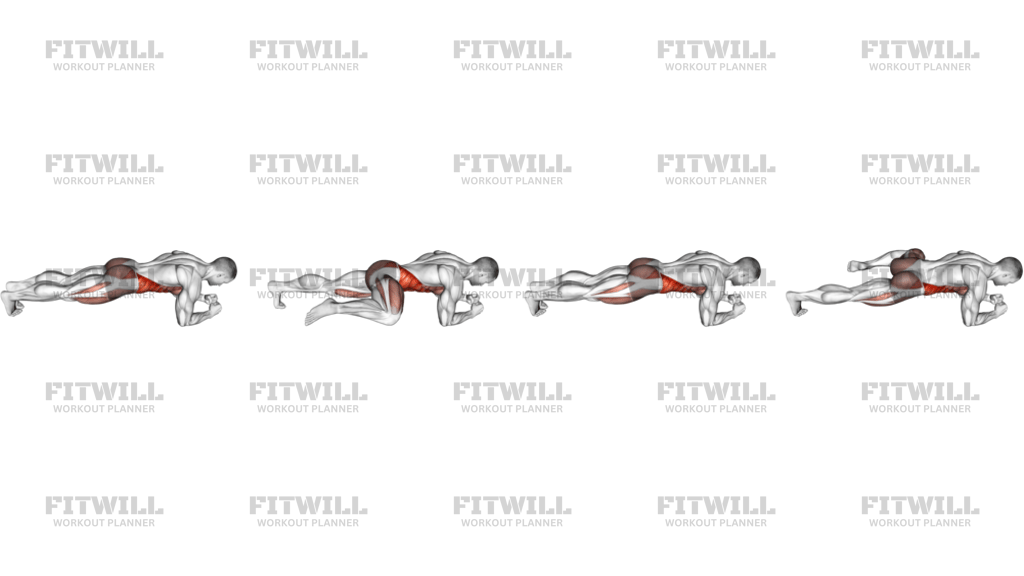
Spider Plank is a body-weight core and hip-control exercise performed from a forearm plank while one knee travels out toward the same-side elbow. It combines static trunk stability with a controlled hip drive, so the rep challenges the abs, glutes, hip flexors, and shoulder stabilizers at the same time. Because the body stays close to the floor, small changes in brace, shoulder position, or pelvis angle make a big difference in how clean each repetition feels.
The exercise is useful when you want plank work that is more dynamic than a basic hold but still controlled enough to expose side-to-side leaks in the torso. The hips should stay level as the knee steps forward, rather than swinging open or letting the low back sag. That makes Spider Plank a practical choice for core sessions, conditioning circuits, warmups, and accessory work for athletes who need trunk stiffness while the legs keep moving.
Setup matters more here than in many floor exercises. Start with the elbows under the shoulders, forearms pressed into the floor, and legs extended straight behind you with the feet slightly apart for balance. From that base, squeeze the glutes, draw the ribs down, and create a long line from head to heels before the first knee drive. If the plank starts loose, the knee-to-elbow motion usually turns into hip rotation and lower-back extension instead of a focused core-and-hip challenge.
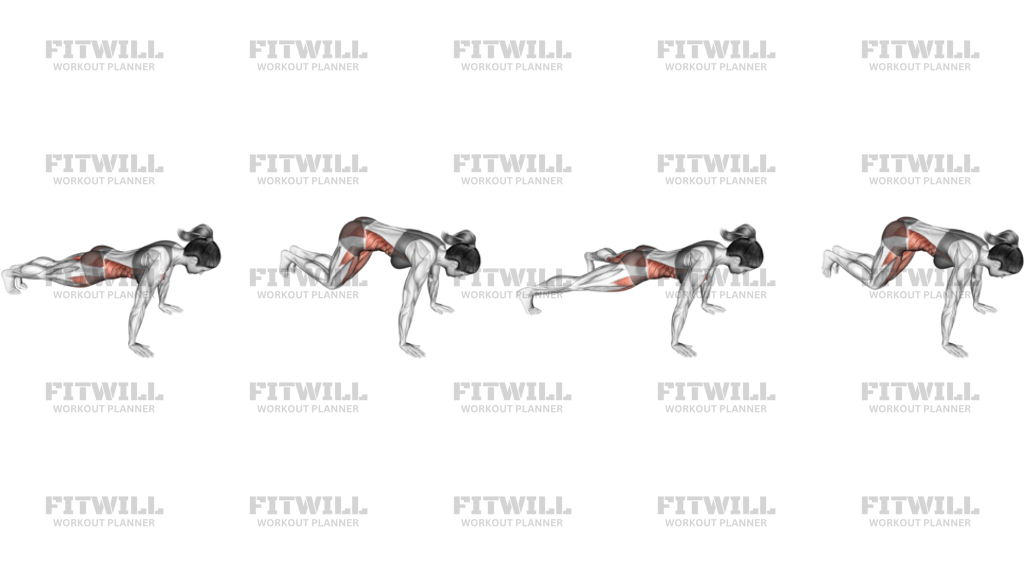
Each rep should feel deliberate. Drive one knee out and forward toward the matching elbow, stop short of collapsing the torso, then extend the leg back to the original plank without losing tension through the middle. The supporting shoulder should stay packed and quiet while the moving side works through the hip. Breathing should stay short and controlled so the brace holds while the legs alternate.
Spider Plank is best trained for quality, not speed. Use it when you want to build coordination, anti-rotation control, and hip mobility under tension, or when you need a lower-impact core drill that still demands focus. If the shoulders start to wobble, the lower back takes over, or the knee can only travel by twisting the pelvis, shorten the range and clean up the position before adding more speed or volume.
[ Workout Log & Planner ]
Put your next workout in Fitwill
Keep your plan and training log ready when you are.


Instructions
- Place your forearms on the floor with your elbows under your shoulders and your legs straight behind you.
- Set your feet a little wider than hip-width so the plank is stable before the first knee drive.
- Press your forearms down, tuck your ribs slightly, and squeeze your glutes to make a long line from head to heels.
- Lift one foot and sweep that knee out toward the same-side elbow without letting your hips roll open.
- Keep the supporting shoulder steady and stop the knee drive before your lower back starts to arch.
- Extend the leg back to the plank position under control and re-establish your brace before the next rep.
- Alternate sides for the planned reps while keeping your breathing short and steady.
- Lower your knees to the floor and reset the plank before ending the set if your torso starts to wobble.
Tips & Tricks
- Keep the feet slightly wider if your hips sway when the knee leaves the floor.
- Think about sliding the knee around the side of your body, not just lifting it straight forward.
- If your low back pinches, shorten the knee path and tighten the glutes before each rep.
- Push the floor away through both forearms so the shoulders do not sink between repetitions.
- A small pause at the top of the knee drive makes the anti-rotation demand much harder than rushing the switch.
- Do not let the moving knee touch down between reps unless you are intentionally resetting the plank.
- Keep the chin slightly tucked so the neck stays in line with the torso instead of leading the motion.
- Stop the set when your hips start to twist more than the knee is traveling.
Frequently Asked Questions
What muscle does Spider Plank target most?
It mainly challenges the core and hips, especially the lower abs, obliques, glutes, and hip flexors. The shoulders and upper back also work hard to hold the forearm plank steady.
Can beginners perform this exercise?
Yes, but beginners should start with a short range and slower tempo. If the plank position is still new, practice a solid forearm plank first before adding the knee-to-elbow drive.
How should my forearms and elbows be positioned in Spider Plank?
Place the elbows under the shoulders and keep the forearms rooted into the floor. That alignment gives you a stronger base and makes it easier to keep the torso square while the knee moves.
What is the biggest Spider Plank mistake?
The most common error is letting the hips rotate open as the knee comes forward. The rep should come from the hip and core while the shoulders and pelvis stay as level as possible.
Should Spider Plank feel more like a core move or a hip move?
It should feel like both. The knee drive asks the hips to move, but the trunk has to resist rotation and extension the whole time.
How can I make Spider Plank easier?
Widen your feet, shorten the knee travel, and slow the tempo. You can also reduce the number of alternating reps and focus on keeping the plank quiet.
What should I feel in my body during Spider Plank?
You should feel the abs working to stop the torso from twisting, the glutes staying engaged, and the hip flexor on the moving side doing the leg drive. The lower back should not be doing the main work.
Can I use Spider Plank as part of a warmup?
Yes. It works well as a controlled core activation drill before running, field sports, or lower-body lifting, as long as the reps stay smooth and the trunk does not sag.