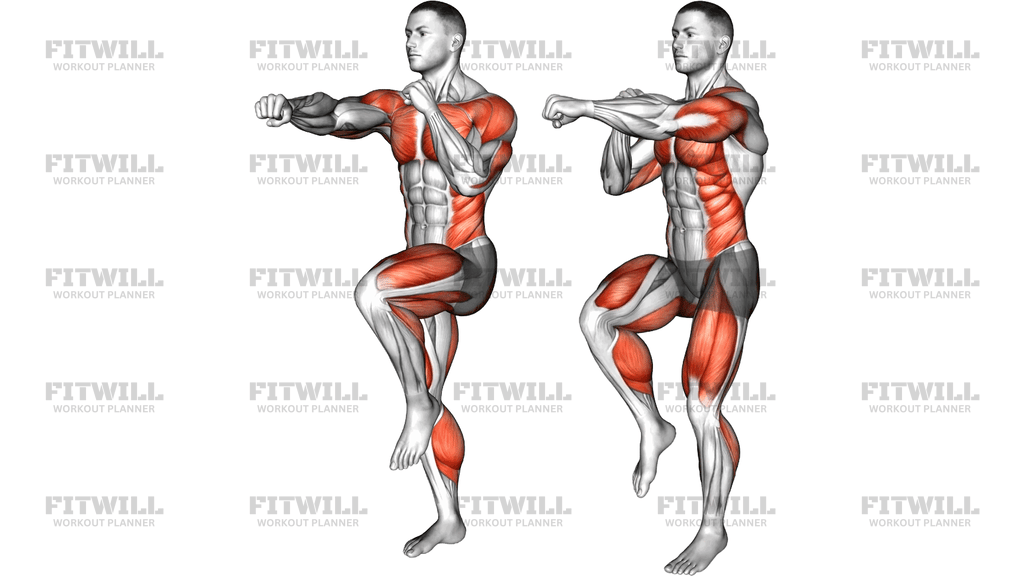
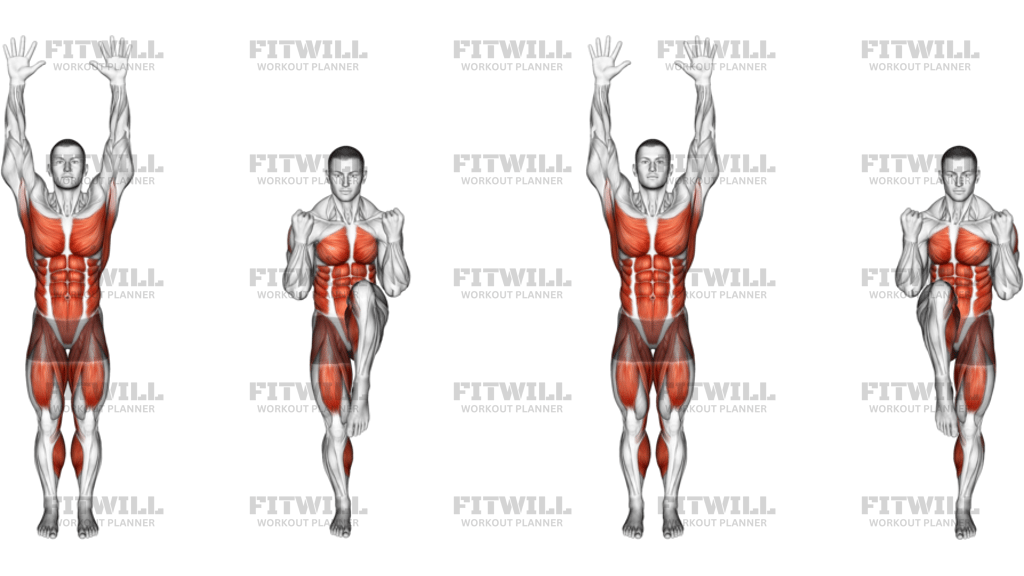
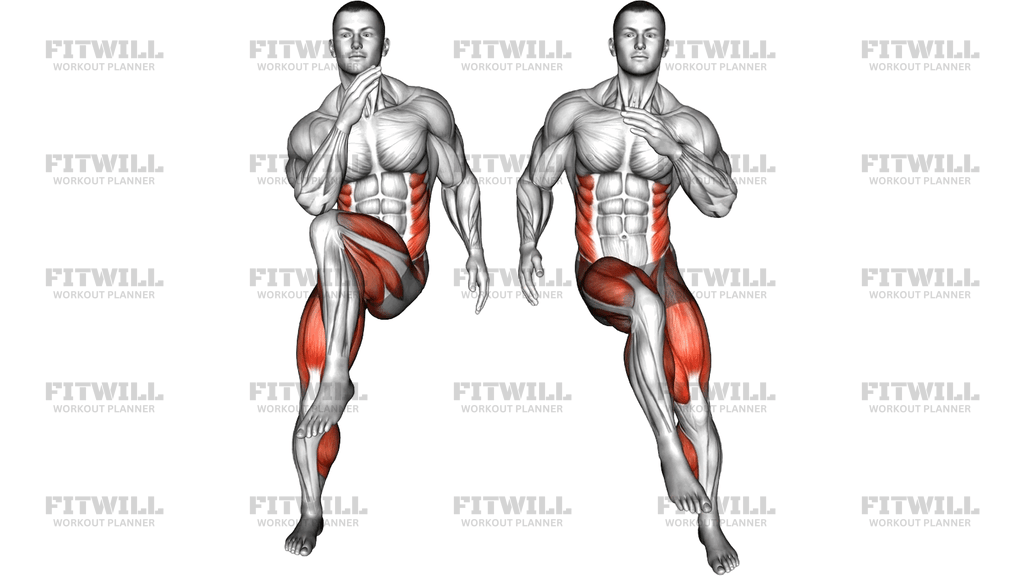
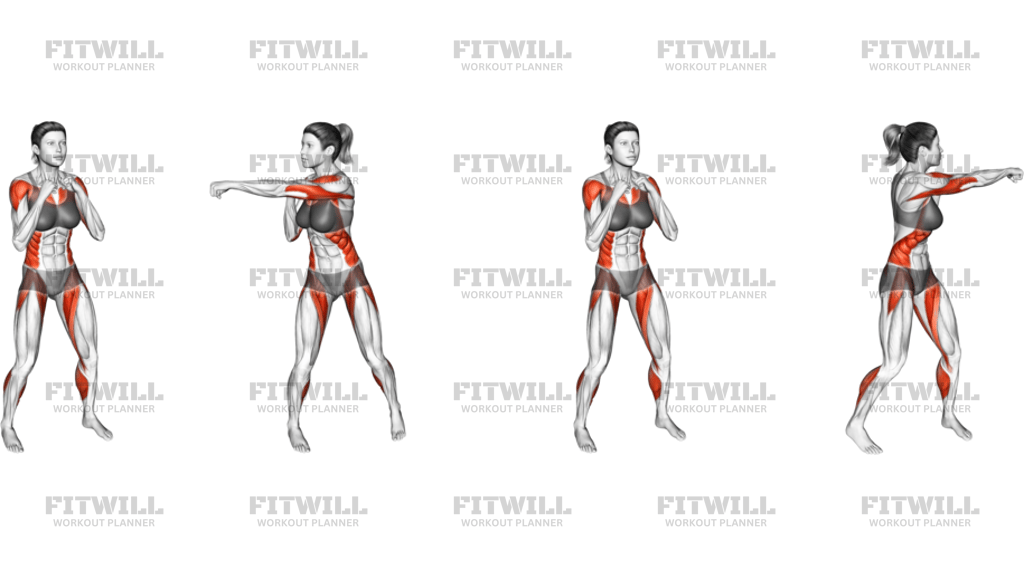
Back Kick Overhead Press
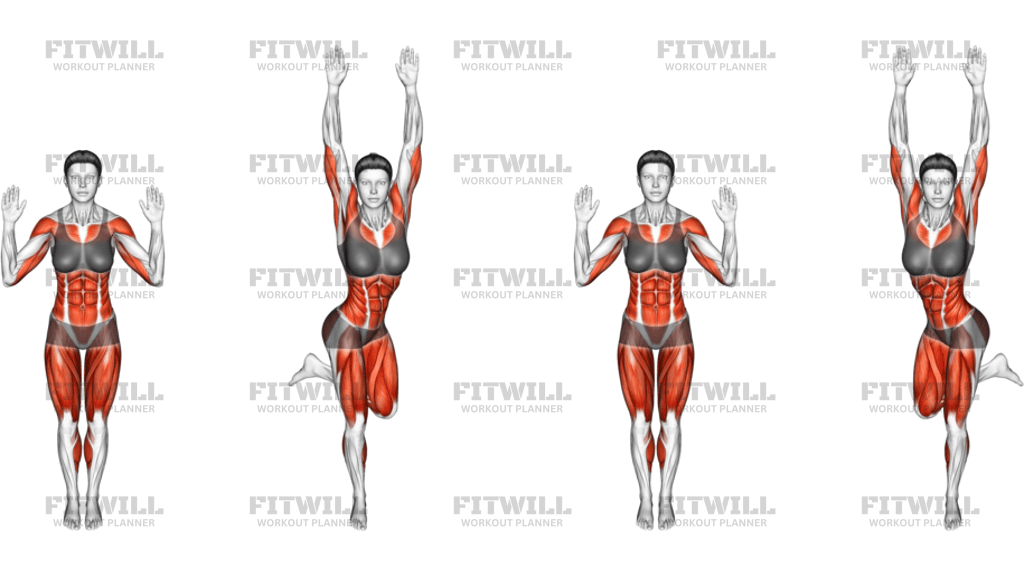
Back Kick Overhead Press is a bodyweight plyometric and balance drill built around a tall stance, a quick rear heel kick, and an overhead reach or press. It is less about heavy loading and more about coordination: one leg supports you while the other heel lifts behind you as the arms travel overhead. That makes the exercise useful for warmups, athletic prep, and conditioning work where rhythm and control matter more than force.
Because the movement is single-leg and upright, the setup changes everything. A stacked ribcage and pelvis, stable standing foot, and relaxed neck keep the motion from turning into a forward lean or a loose hop. The standing leg, glutes, calves, shoulders, and core all contribute, but the quality of the rep depends on keeping the torso tall while the non-working leg kicks back cleanly.
Start from a compact arm position, then drive the working heel behind you as the arms press or reach overhead. The leg should travel behind the body without arching the lower back, and the arms should finish long above the head without shrugging. Lower under control, reset your balance, and switch sides if the drill is alternating. Use a light, snappy tempo so each rep stays crisp rather than sloppy.
This is a good choice for athletic warmups, coordination circuits, or low-load plyometric blocks when you want to challenge balance, shoulder positioning, and trunk control at the same time. Keep the range pain-free and shorten the kick if your lower back starts to arch or the standing hip collapses inward. The goal is clean rhythm: stable foot, tall torso, smooth overhead finish, and a controlled return to the start.
[ Workout Log & Planner ]
Put your next workout in Fitwill
Keep your plan and training log ready when you are.


Instructions
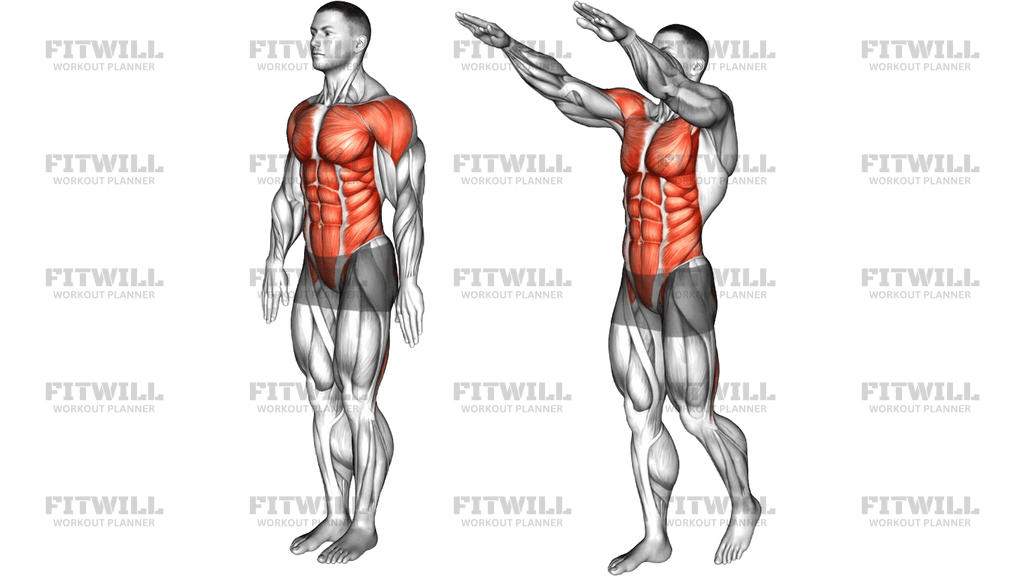
- Stand tall with your feet under your hips, elbows bent, and hands near shoulder height in a goalpost position.
- Shift your weight onto one foot and keep a soft bend in that standing knee so your torso stays stacked over your hips.
- Kick the opposite heel back behind you as you keep the hips square and the chest lifted.
- At the same time, drive both arms straight overhead until the elbows are long and the ribs stay down.
- Finish tall through the crown of the head without leaning forward or arching the lower back.
- Lower the arms back to the start as the kicking leg returns under your body with control.
- Reset your balance on the standing foot before the next rep or before switching sides.
- Exhale as you kick and reach overhead, then inhale as you return to the start.
Tips & Tricks
- Keep a tripod foot on the standing leg so the ankle does not roll outward during the kick.
- Make the rear kick small enough that your pelvis stays level and your lower back does not arch.
- Think about reaching overhead, not backward, so the ribs stay stacked over the pelvis.
- If your shoulders shrug, stop the rep slightly short of full lockout and keep the neck long.
- Use a light bounce from the ankle rather than a big jump; this drill should stay quick and controlled.
- Shorten the kick if the standing hip collapses inward or you lose balance on the landing.
- A wall or mirror can help you learn the pattern, but do not lean your weight into support.
- Stop the set when the overhead reach turns into a sway or the leg starts swinging instead of kicking.
Frequently Asked Questions
What muscles does Back Kick Overhead Press work?
It emphasizes shoulders, glutes, quads, calves, and core control, with balance and coordination driving the movement.
Is the rear kick supposed to be a big jump?
No. Keep the kick quick and compact so you can stay tall and keep your standing foot stable.
How high should my arms go overhead?
Press or reach until the elbows are straight and the ribcage stays stacked. If your back arches, stop a little lower.
Can beginners do this exercise?
Yes. Start slowly, use a short kick, and stay near a wall until you can balance without leaning.
What is the most common form mistake?
Leaning forward or arching the lower back while the arms go overhead usually means the kick is too big or too fast.
Should I alternate legs every rep?
Alternate if the workout calls for it. If you are practicing balance, work one side for a set before switching.
Does this exercise need equipment?
No. The movement in this version is bodyweight only, so the priority is rhythm, posture, and clean foot placement.
Why do I feel this in my standing hip or calf?
That is normal because the standing leg is stabilizing the body. The sensation should feel controlled, not pinchy or unstable.