Bodyweight Skipping
Bodyweight Skipping is a bodyweight plyometric drill performed without a rope. It uses quick alternating hops, an active arm swing, and a springy ankle push-off to build rhythm, coordination, elastic lower-body power, and light aerobic conditioning. The movement should feel crisp and rhythmic rather than forceful or high impact.
This exercise is usually used as a warm-up, coordination drill, or low-volume plyometric tool. The main value is the quality of each skip: a tall torso, fast foot contacts, and clean timing between the knee drive and the opposite arm swing. When the rhythm is good, the drill helps rehearse running mechanics and prepares the calves, ankles, hips, and trunk for faster work.
Setup matters because skipping falls apart when the athlete leans back, overstrides, or turns it into a broad jump. Start with feet under the hips, weight on the balls of the feet, and a light bend in the knees and hips. Keep the chest open, ribs stacked, and eyes forward so the trunk stays organized while the legs cycle through the pattern.
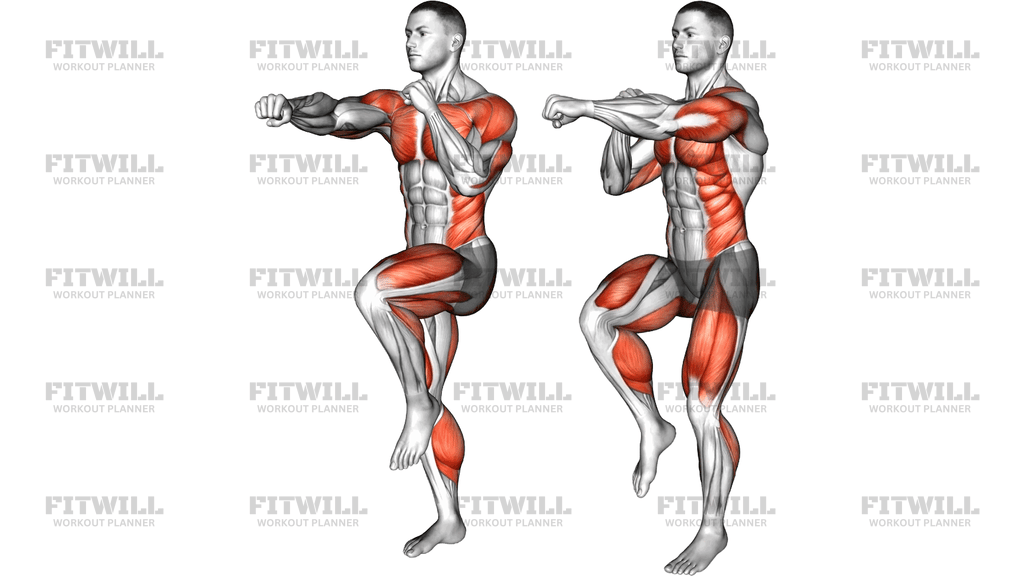
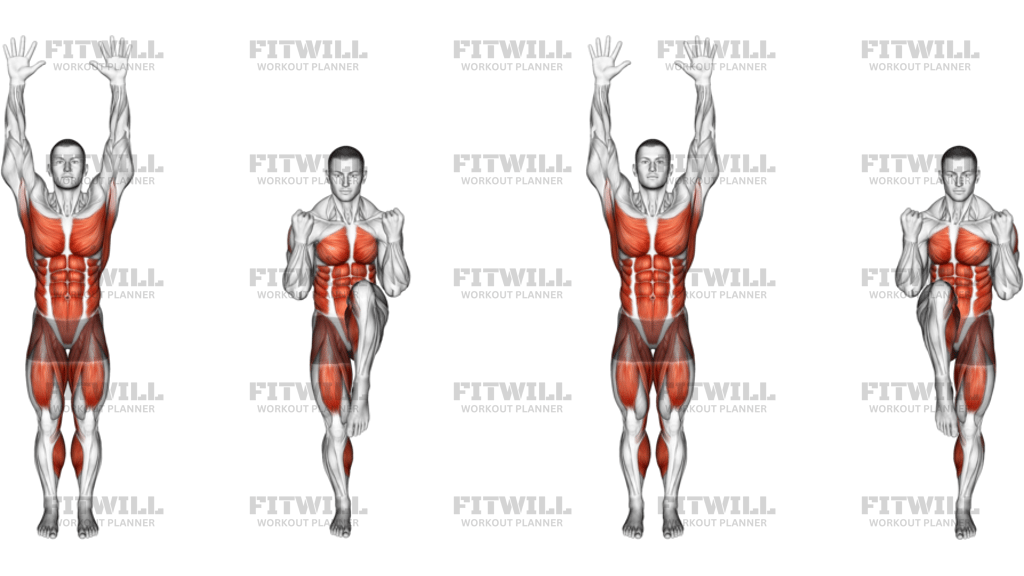
Each repetition should be driven by a quick push through the ground, not by trying to jump as high as possible. One knee rises as the opposite arm punches forward, then the landing happens softly under the body with the other foot taking over immediately. The contacts should be short, springy, and controlled enough that you could repeat them for the planned distance or time without losing shape.
Bodyweight Skipping is useful when you want a drill that wakes up the lower body without loading it heavily. It can fit into a warm-up before sprinting, field work, conditioning circuits, or any session that benefits from rhythm and elastic stiffness. Keep the reps clean, stop when the cadence gets sloppy, and favor smooth mechanics over speed for its own sake.
[ Workout Log & Planner ]
Put your next workout in Fitwill
Keep your plan and training log ready when you are.


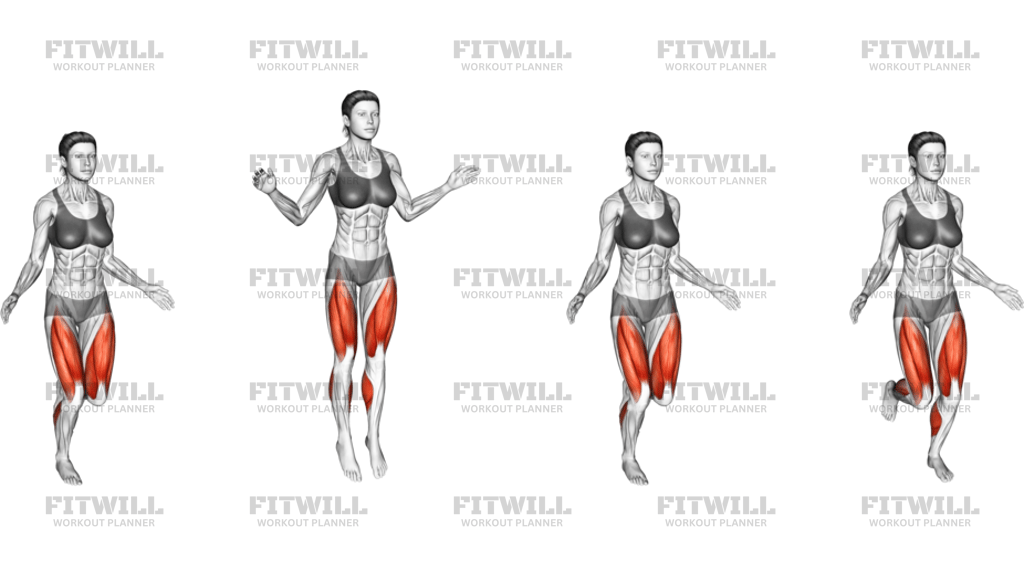
Instructions
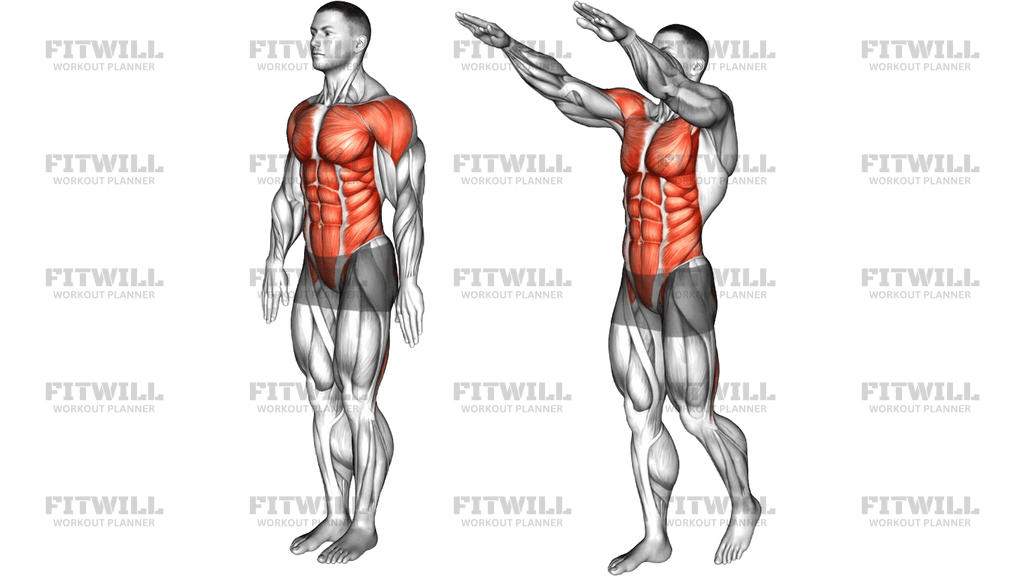
- Stand tall with your feet under your hips and your weight on the balls of your feet, then relax your hands and prepare to skip in place or travel forward.
- Keep a small bend in your knees and hips so you can spring off the ground without landing stiff-legged.
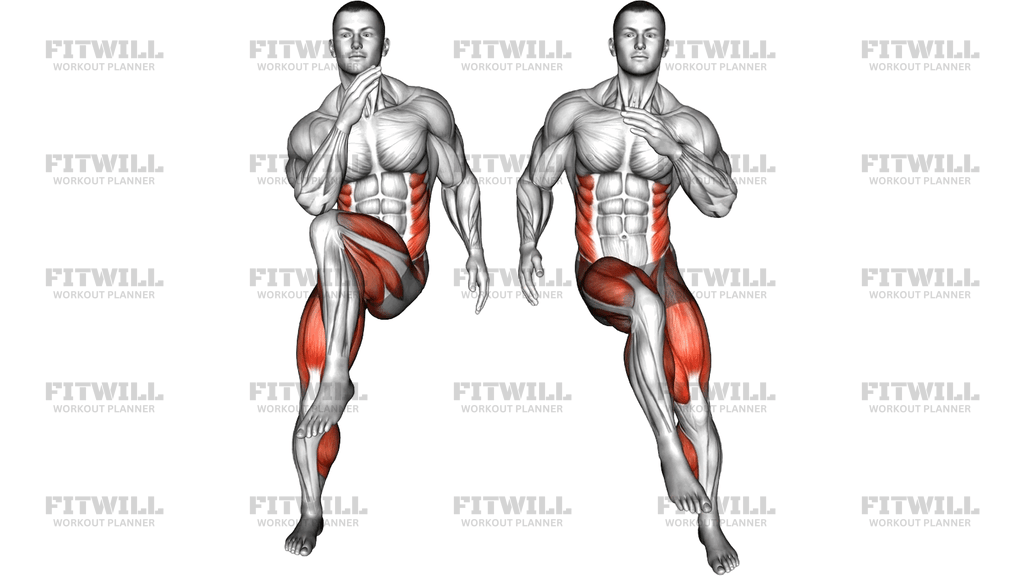
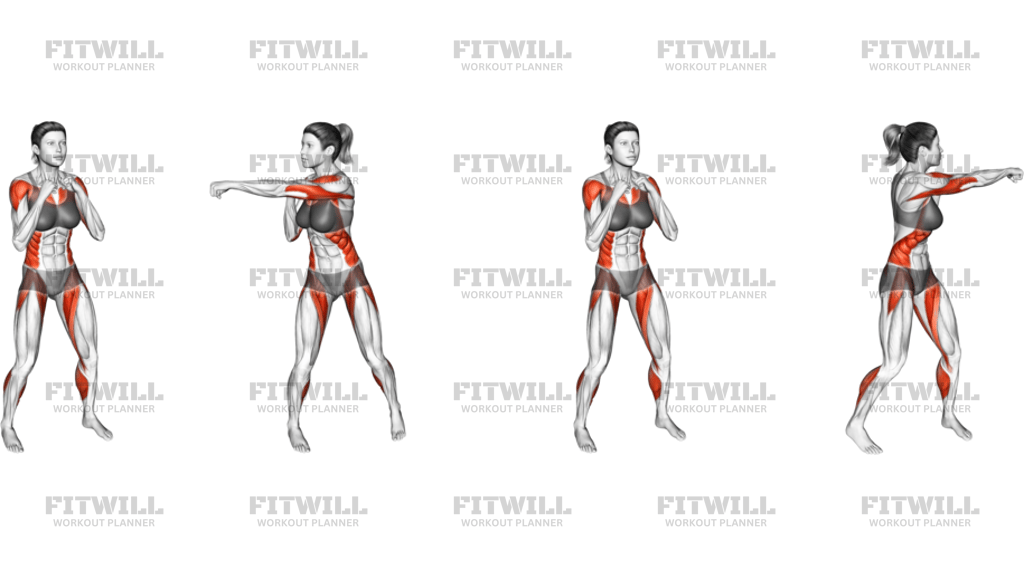
- Drive one knee upward while the opposite arm swings forward in a natural running pattern.
- Push off the standing foot and make a quick, light hop rather than a high jump.
- Land softly under your center of mass on the forefoot or midfoot, with the heel touching down only if it happens naturally.
- Switch legs immediately and keep the skip rhythm smooth and even from side to side.
- Hold your chest tall and your eyes forward so your torso stays stacked over your hips.
- Breathe in a steady rhythm as you move and slow down if your contacts start getting heavy or noisy.
Tips & Tricks
- Keep the skip low. The drill should look springy and quick, not like a series of maximal jumps.
- Let the opposite arm swing help the rhythm; stiff, passive arms usually make the lower body feel awkward.
- Land with your foot under your hips instead of reaching forward, which keeps braking forces lower.
- Think of pushing the ground away with the ankle and calf, not driving straight up with the whole body.
- Use short ground contacts and a fast turnover if you want a more athletic warm-up effect.
- Stay upright through the torso. If your chest collapses or leans back, the skip usually becomes noisy and inefficient.
- Choose a distance or time that lets every rep look the same; quality drops quickly when fatigue turns the movement into bouncing.
- Use a softer surface and supportive shoes if your calves, shins, or feet need a little extra forgiveness.
- Stop before the rhythm turns into stomping or shuffling, because the exercise is supposed to stay elastic.
Frequently Asked Questions
What muscles does Bodyweight Skipping train most?
It mainly challenges the calves, ankles, hips, and trunk while also training coordination and rhythm.
Can beginners perform this exercise?
Yes. Beginners should keep the skips small, stay in place first, and focus on clean foot contacts before moving faster.
Should I skip in place or move forward?
Both work. Skipping in place is easier to control, while forward skipping is better when you want a more athletic warm-up or drill line.
How high should the knees and hops be?
Keep the hop low and the knee drive moderate. The goal is a quick, rhythmic pattern, not a huge jump.
What is the most common mistake with bodyweight skipping?
Overstriding and bouncing too high are the biggest issues. Both make the drill less springy and more jarring.
Where should my feet land?
Land under your hips on the forefoot or midfoot so the next skip can happen immediately without a hard brake.
Is Bodyweight Skipping more cardio or plyometric work?
It sits between both. The drill builds light conditioning, but the springy contacts and timing make it a plyometric pattern.
How can I make it harder without adding weight?
Increase the travel distance, sharpen the arm drive, or use a faster cadence while keeping the same clean mechanics.