Dumbbell Seated Drag Curl
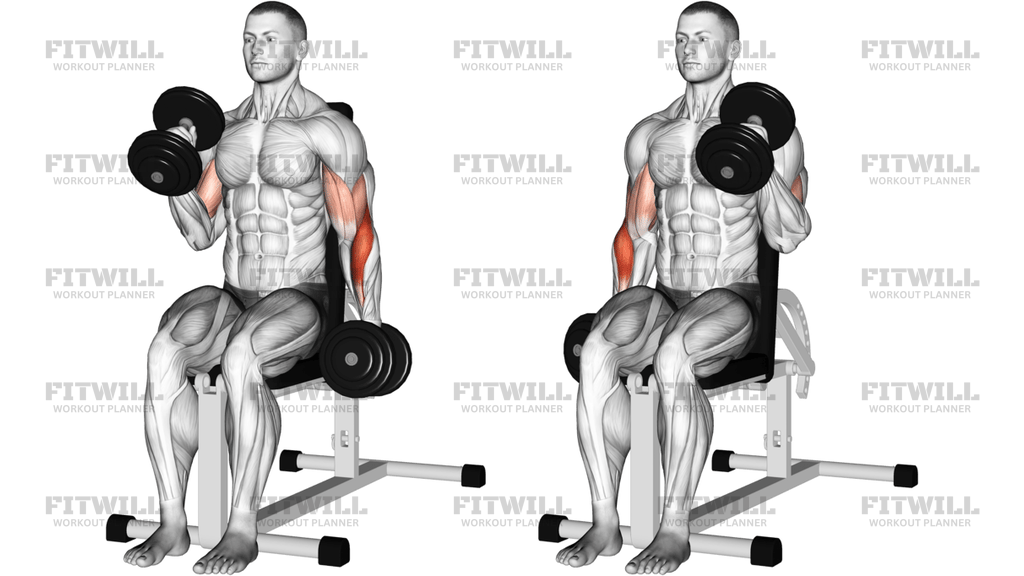
Dumbbell Seated Drag Curl is a seated biceps variation that keeps the dumbbells close to the torso instead of swinging them forward. By sitting tall on a bench and dragging the weights upward along the body line, you reduce momentum and make the elbow flexors do the work through a very controlled range. That makes this exercise useful when you want a strict arm movement that stresses the upper arms and forearms without turning the set into a full-body heave.
The seated position matters because it strips away a lot of leg drive and back extension. With your hips planted and your chest up, the curl starts from a stable base and the elbows can stay slightly behind the torso, which is the signature of a drag curl. That setup shifts the feel toward the biceps and brachialis while the front shoulders and grip muscles help stabilize the dumbbells.
A good Dumbbell Seated Drag Curl is not a front-delt raise with bent arms and it is not a swinging curl. The dumbbells should travel close to the sides of your body, almost brushing the shirt line as they come up. The upper arms stay quiet, the wrists stay stacked over the forearms, and the shoulders remain down so the rep stays honest from the first inch to the top squeeze.
This exercise is a strong choice for arm-focused accessory work, especially if straight barbell curling irritates your wrists or if you want a more controlled dumbbell option. It also works well after pressing or pulling work because it trains the arms without needing heavy systemic loading. Because the movement is strict and easy to scale, beginners can learn it with light dumbbells, while more advanced lifters can use it to keep tension high and momentum low.
Safety comes from patience and precision, not load. Choose dumbbells you can lower under control for every rep, and stop the set when you feel yourself tipping backward or turning the motion into a shrug. If you keep the bench contact steady, the elbows slightly back, and the descent slow, the exercise gives you a clean biceps-focused set with very little wasted motion.
[ Workout Log & Planner ]
Put your next workout in Fitwill
Keep your plan and training log ready when you are.


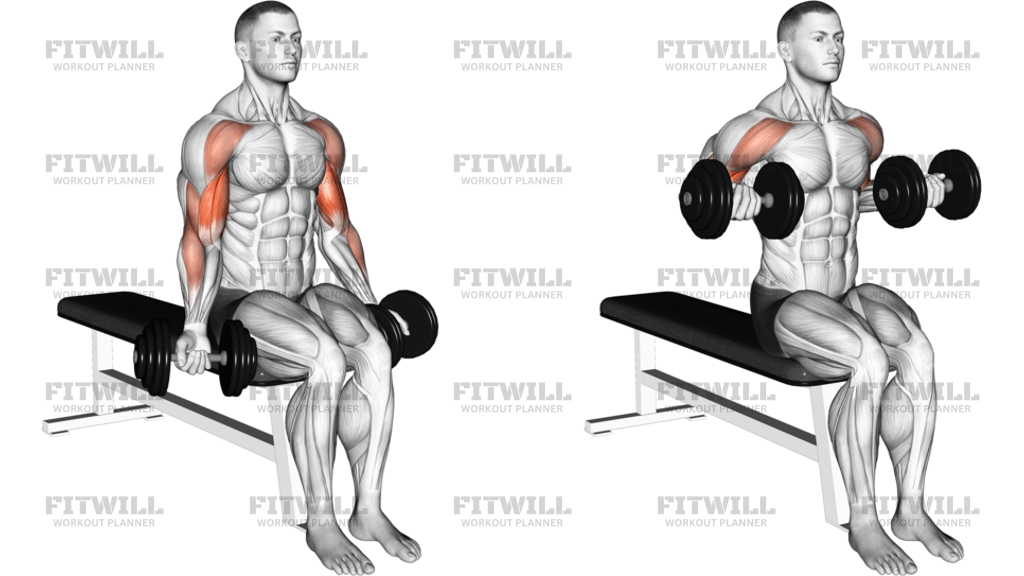
Instructions
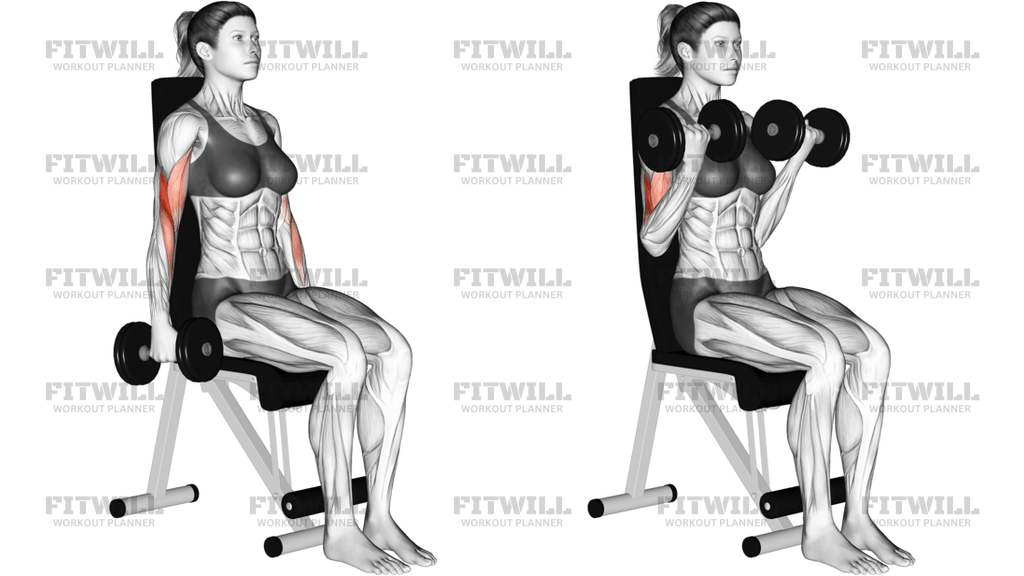
- Sit on the end of a flat bench with your feet flat, knees bent, and a dumbbell in each hand hanging beside your thighs.
- Sit tall with your chest lifted, shoulders down, and your palms facing forward or slightly inward as the dumbbells rest near your outer legs.
- Pin your upper arms close to your sides and slightly behind your torso so the curl starts from a dragged-back arm position.
- Brace your midsection and keep your lower back neutral before the first rep begins.
- Curl both dumbbells upward while dragging them close to your body instead of letting them swing in front of you.
- Keep your elbows traveling back and up only as much as needed, with the weights staying near your ribcage and shirt line.
- Squeeze hard at the top when the dumbbells reach upper-abdomen to lower-chest height without letting your shoulders roll forward.
- Lower the dumbbells slowly along the same close-to-body path until your arms are fully extended and tension is still controlled.
- Exhale as you curl, inhale on the way down, and reset your shoulders before the next repetition.
- Set the dumbbells down carefully once the set is complete, keeping your posture tall as you finish.
Tips & Tricks
- If the dumbbells drift away from your torso, you are turning the drag curl into a normal curl and losing the tight biceps bias.
- Keep your elbows slightly behind your ribcage; if they travel far forward, the front shoulders will take over.
- Use a bench height that lets your feet stay flat and your torso stay upright without scooting or rocking.
- Think about pulling the dumbbells up your shirt seam rather than arcing them toward your shoulders.
- A slightly narrower grip and a neutral-to-supinated hand turn often feels better on the wrists than a hard, fully twisted finish.
- Do not lean back to start the rep; if your torso moves, the load is too heavy for strict seated dragging.
- Pause briefly at the top so the biceps finish the rep instead of bouncing through the top half.
- Lower slowly enough to keep tension on the biceps and brachialis instead of letting gravity rip the weights down.
- Stop the set when your shoulders shrug upward or your lower back starts to arch to create momentum.
- Choose a weight that lets every rep look the same; this exercise rewards clean position more than heavy loading.
Frequently Asked Questions
What muscles does Dumbbell Seated Drag Curl work most?
It mainly targets the biceps, with strong help from the brachialis, brachioradialis, and grip muscles. The front shoulders assist with stabilization, but the elbows should still do the work.
How is Dumbbell Seated Drag Curl different from a regular dumbbell curl?
In a drag curl, the dumbbells stay close to your torso and the elbows stay slightly back, which reduces swinging and changes the line of pull. That usually makes the top of the curl feel stricter and more controlled.
Should my elbows move forward during Dumbbell Seated Drag Curl?
Only a little. If the elbows shoot in front of your ribs, the movement turns into a standard curl and the drag-curl tension drops.
Can beginners do Dumbbell Seated Drag Curl safely?
Yes, as long as they use light dumbbells and keep the torso still on the bench. The seated position makes it easier to learn the close-to-body path without using momentum.
Why do I feel Dumbbell Seated Drag Curl in my shoulders?
A little front-shoulder support is normal, but the shoulders should not be doing the lift. If you feel the delts dominating, lower the load and keep the elbows pinned back.
What is the best bench setup for Dumbbell Seated Drag Curl?
Sit on a flat bench with both feet planted and enough space for the dumbbells to hang beside your thighs. You should be able to sit tall without leaning back or sliding forward.
Where should the dumbbells finish at the top of Dumbbell Seated Drag Curl?
They usually finish around lower-chest to upper-abdomen height, close to the torso. You do not need to drive them high if that forces the elbows forward.
What is the biggest mistake to avoid in Dumbbell Seated Drag Curl?
The biggest mistake is turning it into a swinging curl by leaning back or letting the dumbbells drift away from the body. Keep the path tight and slow so the biceps stay loaded.