Dumbbell Reverse Push-Up
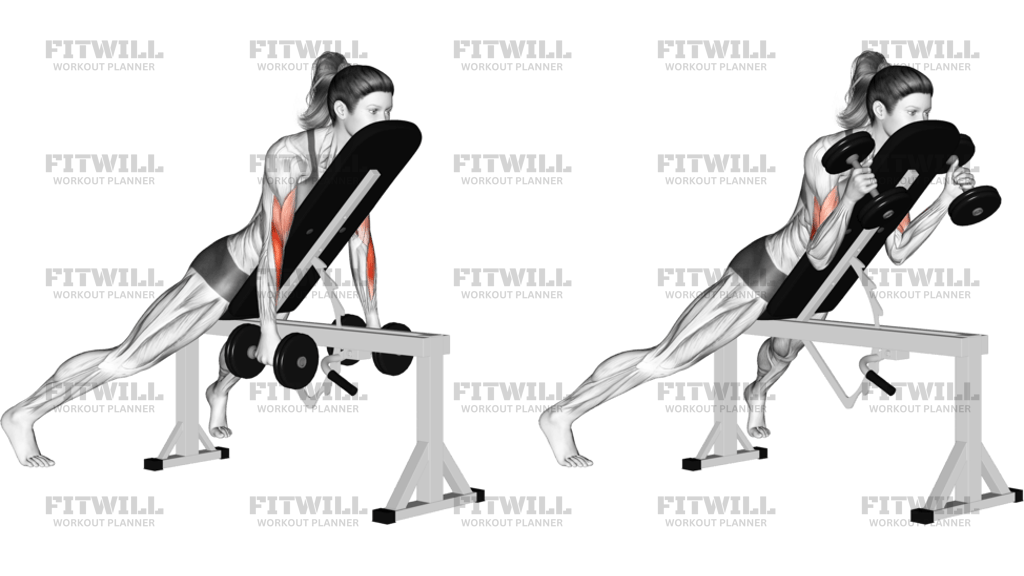
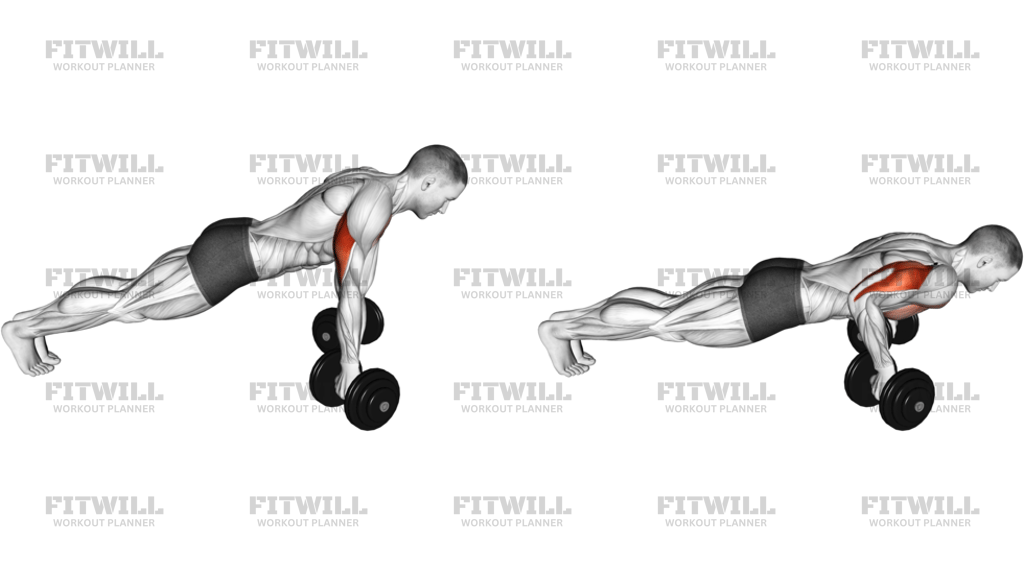
Dumbbell Reverse Push-Up is a dumbbell-handled push-up variation that lets you keep a neutral wrist position while building pressing strength through a stricter, slightly deeper range of motion. The image shows a close-grip push-up setup on two dumbbells, with the body held in a straight plank and the elbows tracking close to the torso. That makes the movement useful for training the chest, triceps, front shoulders, and the trunk muscles that keep the torso from sagging or twisting.
The setup matters more here than it does in a standard floor push-up because the dumbbells create both the handholds and the range limit. Place the dumbbells on a flat, non-slip surface, set your hands on the handles, and walk your feet back until you can make a straight line from head to heels. The closer your hands are, the more the triceps have to contribute, but the shoulders still need enough room to lower without pinching or collapsing forward. A stable base keeps the dumbbells from rolling and lets you focus on the press instead of fighting for balance.
Each repetition should look controlled from the first inch to the last. Lower your chest between the dumbbells by bending the elbows back at about a 30 to 45 degree angle from your sides, not flaring them wide. Keep your ribs down, glutes tight, and neck long so the body stays rigid while the shoulders and elbows do the work. Touch or hover just above the dumbbells if the range is comfortable, then press the floor away until the elbows straighten and the shoulder blades finish in a stable, not shrugged, position.
This version fits well as accessory pressing work, triceps-focused strength work, or a push-up progression for athletes and recreational lifters who want more wrist comfort than a flat-palmed version provides. It can also be regressed by elevating the hands on a bench or box, or by dropping to the knees while keeping the dumbbell grip. If the shoulders start to drift forward, the lower back arches, or the dumbbells wobble, reduce the range or simplify the setup before adding reps or load. The goal is a repeatable press with steady tension, not a rushed set that turns into a balance drill.
[ Workout Log & Planner ]
Put your next workout in Fitwill
Keep your plan and training log ready when you are.


Instructions
- Place two dumbbells on a flat, non-slip floor and line them up under your shoulders so the handles are easy to grip.
- Grip the dumbbell handles with neutral wrists, then step your feet back into a high plank with your body in one straight line.
- Set your feet hip-width or slightly wider for balance, squeeze your glutes, and brace your ribs down before the first rep.
- Lower your chest between the dumbbells by bending your elbows back at roughly 30 to 45 degrees from your torso.
- Keep your shoulders level and your neck long as you descend; do not let your head reach for the floor first.
- Pause briefly at the bottom when your chest is just above the dumbbells or touches them lightly, depending on your range.
- Press through the dumbbell handles and drive your body back up while exhaling steadily.
- Finish each rep with straight elbows, a firm plank, and no extra shrugging or hip lift.
- Reset your brace before the next repetition and repeat for the planned set.
Tips & Tricks
- Use hex or otherwise stable dumbbells so the handles do not roll when you load the bottom position.
- A slightly narrower hand position shifts more work to the triceps, while a wider position usually feels easier on the shoulders.
- Keep the elbows from flaring straight out; that usually sends the shoulders forward and makes the rep less stable.
- If your lower back sags, shorten the set and tighten the glutes harder before adding more reps.
- Take 2 to 3 seconds on the way down so the chest and triceps stay under tension instead of dropping into the bottom.
- Stop the rep when your chest reaches the dumbbells with control; do not bounce off the handles.
- If your wrists feel better on the dumbbells than on the floor, keep the neutral grip and use that advantage to stay stricter.
- Elevate your hands on a bench or box if you cannot keep a solid plank from the floor position.
Frequently Asked Questions
What does Dumbbell Reverse Push-Up work most?
It primarily trains the chest and triceps, with the front shoulders and core working hard to keep the body rigid.
Why use dumbbells instead of doing the push-up on the floor?
The dumbbells let you keep a neutral wrist and create a small handle height, which can make the bottom position feel cleaner and more comfortable.
How close should my elbows stay to my sides?
A 30 to 45 degree elbow angle is usually the best target. Tucking too hard can jam the shoulders, while flaring too wide turns the rep sloppy.
Can beginners do this version safely?
Yes, if they start with an elevated surface or a knee-supported version and keep the dumbbells stable.
What should I do if the dumbbells wobble?
Use a flatter, more stable pair and widen your feet slightly. If the handles still shift, reduce the range or move to a more stable incline setup.
How low should I go on each rep?
Lower until your chest reaches just above the dumbbells or lightly touches them without losing your plank position.
Is this more of a chest or triceps exercise?
It trains both, but the narrow hand position and neutral grip usually make the triceps work feel more prominent.
What is the biggest mistake to avoid?
Letting the hips sag or the head reach forward first. Keep the torso locked in one line and let the elbows do the bending.