Dumbbell Frog Hip Thrust
Dumbbell Frog Hip Thrust is a floor-based glute bridge variation where the soles of the feet stay together and the knees fall open. That frog stance shortens the hamstrings and shifts more of the work toward hip extension, glute squeeze, and inner-thigh support. The dumbbell adds load across the hip crease so you can train the top of the rep with more tension than bodyweight alone.
The setup is what makes this movement work well. Lie on your back on a mat, keep your head and upper back relaxed on the floor, bring your heels close to your hips, and press the soles of the feet together so the knees can open naturally. Hold the dumbbell firmly at the crease of the hips with both hands so it stays centered and does not slide as you lift.
Each rep should begin with the ribs stacked over the pelvis and the core lightly braced. Drive the hips up by squeezing the glutes, not by throwing the ribs up or arching the lower back. At the top, the torso and thighs should come close to a straight line, with the knees still open and the dumbbell stable. Lower under control until the glutes are close to the floor and the tension stays on the hips.
This exercise fits well in glute-focused training, lower-body accessory work, warmups, and controlled strength circuits. It is usually easier to learn than a full bench hip thrust because the floor limits the range of motion and gives you more stability. Keep the reps clean, use a load you can hold steady across the pelvis, and shorten the range if the lower back starts to take over or the hips feel pinched.
Fitwill
Log Workouts, Track Progress & Build Strength.
Achieve more with Fitwill: explore over 9600 exercises with images and videos, access built-in and custom workouts, perfect for both gym and home sessions, and see real results.
Start your journey. Download today!




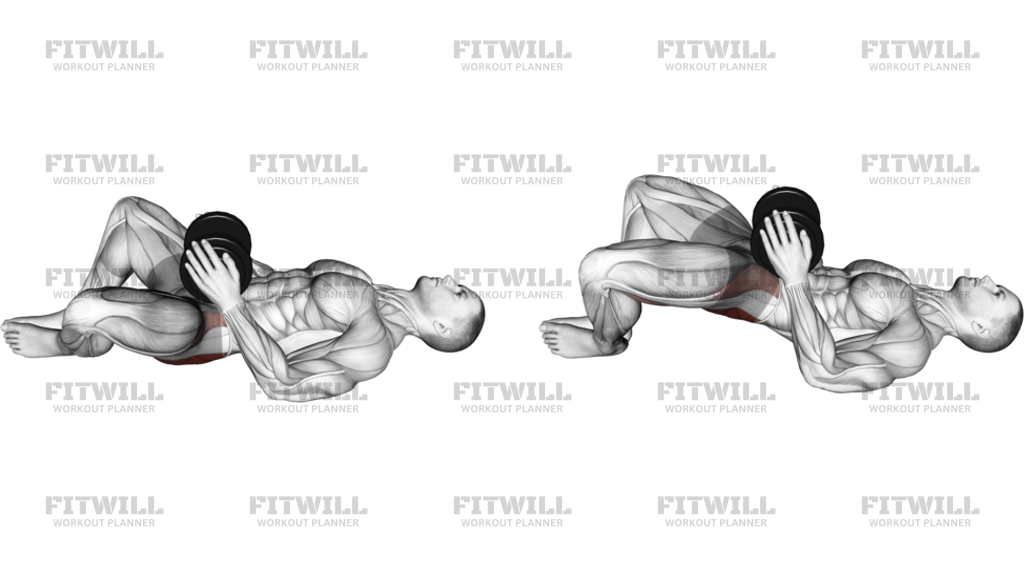
Instructions
- Lie on your back on a mat with the dumbbell across the hip crease, the soles of your feet together, and your knees opened wide.
- Keep your head and upper back relaxed on the floor and hold the dumbbell with both hands so it stays centered on your pelvis.
- Bring your heels close to your hips, then set your ribs down and lightly brace your abs before the first rep.
- Start with your hips low and your knees still open instead of letting them collapse inward.
- Exhale as you drive your hips upward by squeezing your glutes and pressing through your heels.
- Lift until your torso and thighs are nearly in line without flaring your ribs or over-arching your lower back.
- Pause briefly at the top while keeping the dumbbell stable and the knees turned out.
- Lower the hips slowly until the glutes are close to the floor and the tension stays on the hips.
- Reset your brace, keep the frog position, and repeat for the planned number of repetitions.
Tips & Tricks
- Place a folded towel or pad under the dumbbell if the hip crease feels bruised or if the weight shifts against the pelvis.
- Keep the soles of the feet together and let the knees fall open naturally instead of forcing them wider with your hips.
- Drive through the heels and the outer edges of the feet, not the toes, so the glutes stay in charge of the lift.
- If your ribs pop up at the top, reduce the height of the rep until the pelvis can stay controlled.
- Use your hands to steady the dumbbell, but do not press it into your body so hard that you lose the glute squeeze.
- Keep your neck long and your gaze up to avoid craning the chin during the lift.
- A slower lowering phase makes this movement much harder without needing a heavier dumbbell.
- Stop the set when the lower back starts taking over or when the knees begin to drift inward.
Frequently Asked Questions
What muscles does Dumbbell Frog Hip Thrust target most?
It primarily trains the glutes, with help from the hamstrings, adductors, and core for stability.
Why use the frog position instead of a regular glute bridge?
The feet-together, knees-open position usually reduces hamstring dominance and makes the top-end glute squeeze easier to feel.
Where should the dumbbell sit during the rep?
It should rest across the hip crease or upper pelvis, held in place with both hands so it stays centered.
Should I feel this in my lower back?
No. The lower back should stay quiet; if it takes over, shorten the range and reset the rib position.
Can beginners do this movement?
Yes. The floor limits the range of motion, so it is usually easier to learn than a bench hip thrust.
How heavy should I go with this exercise?
Use a load you can keep steady on the pelvis without losing knee position or arching your lower back.
Is this the same as a bench hip thrust?
No. This is the floor version, so the range is shorter and the setup is more stable.
What is the most common form mistake?
People often chase height by flaring the ribs and arching the lower back instead of driving the glutes.