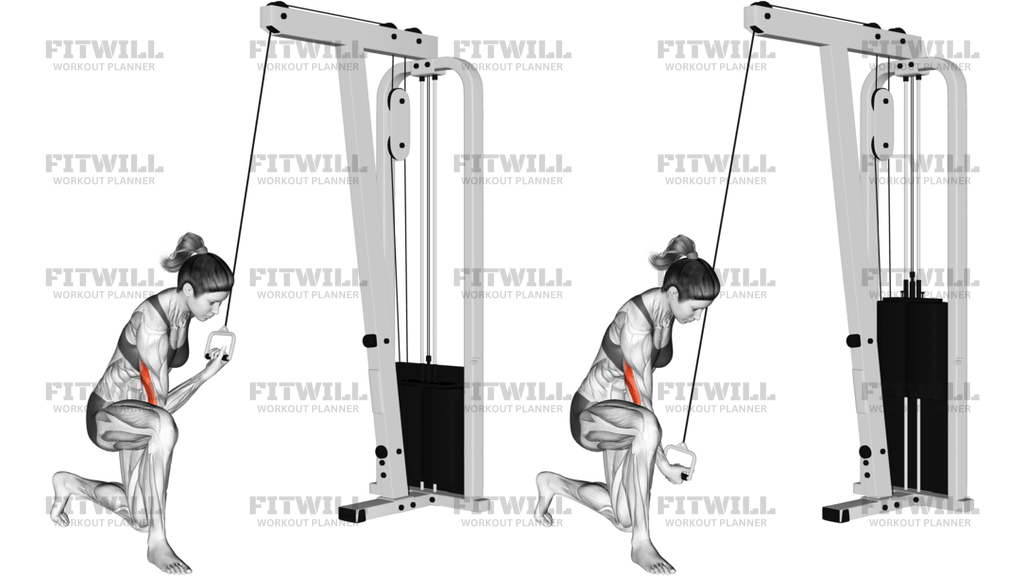
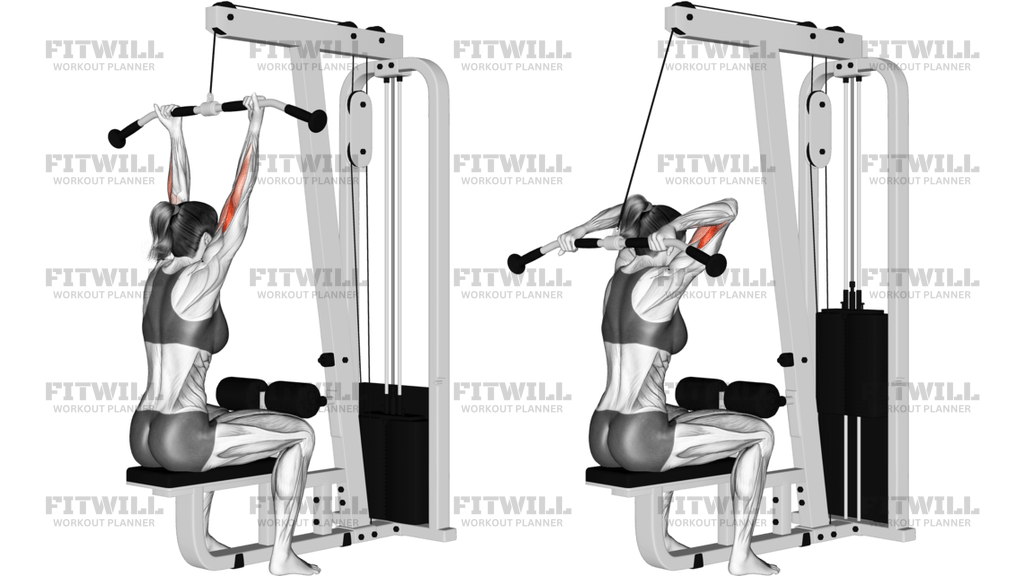
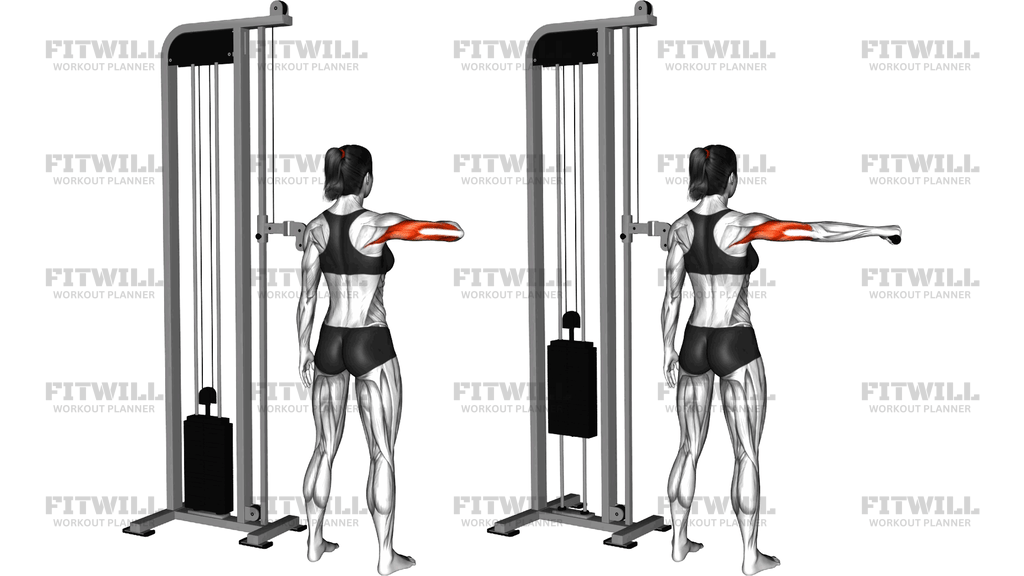
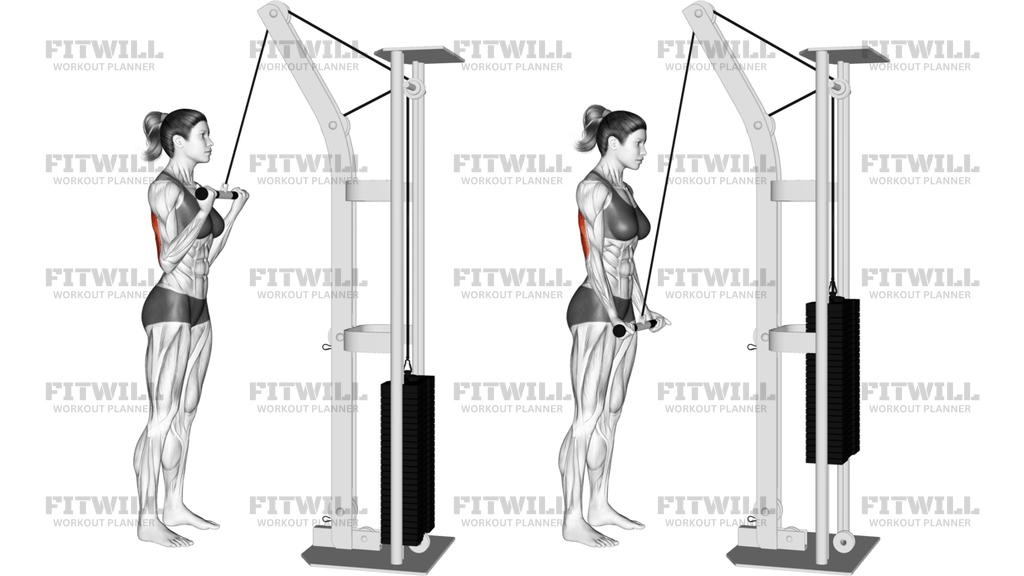
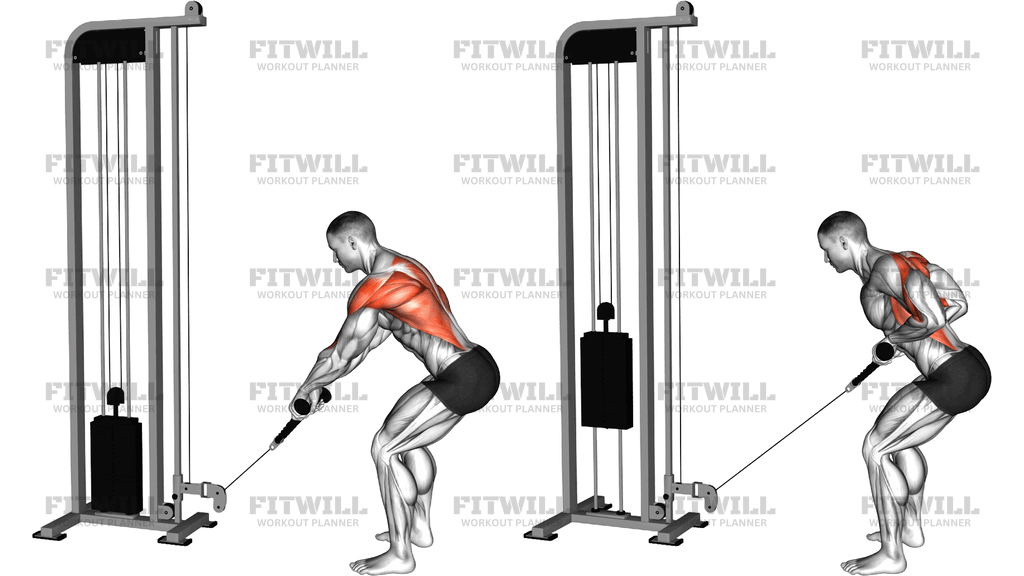
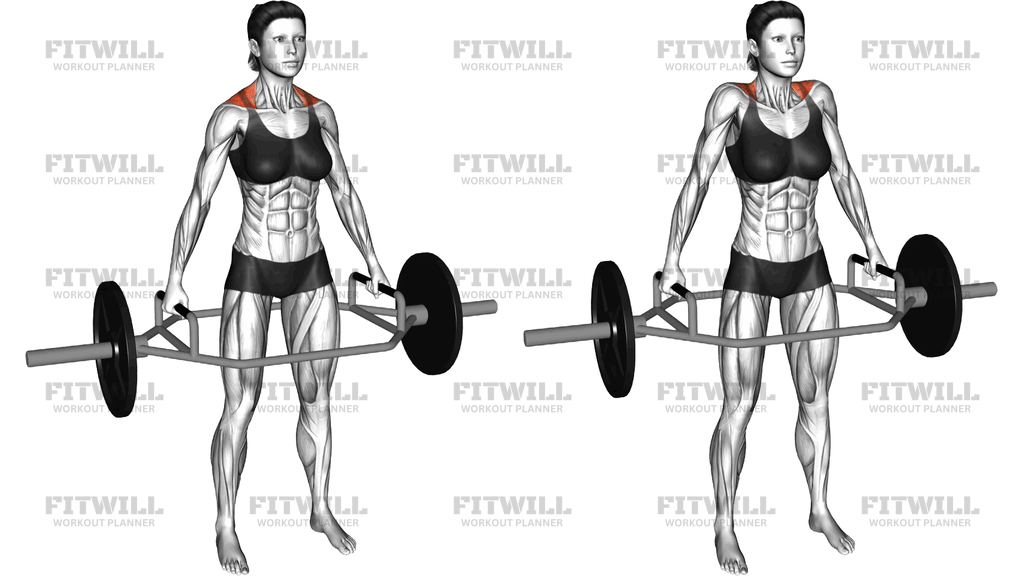
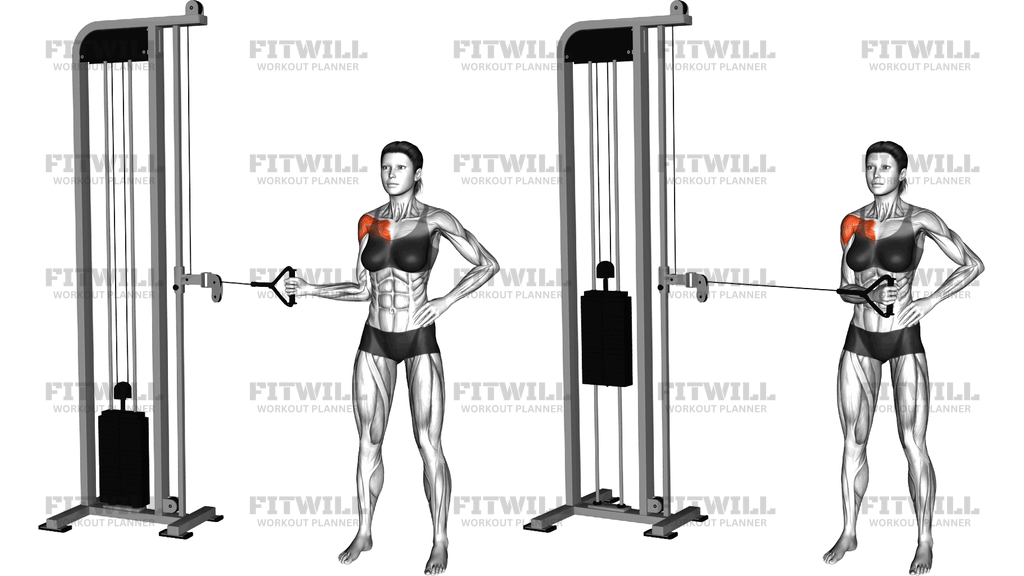
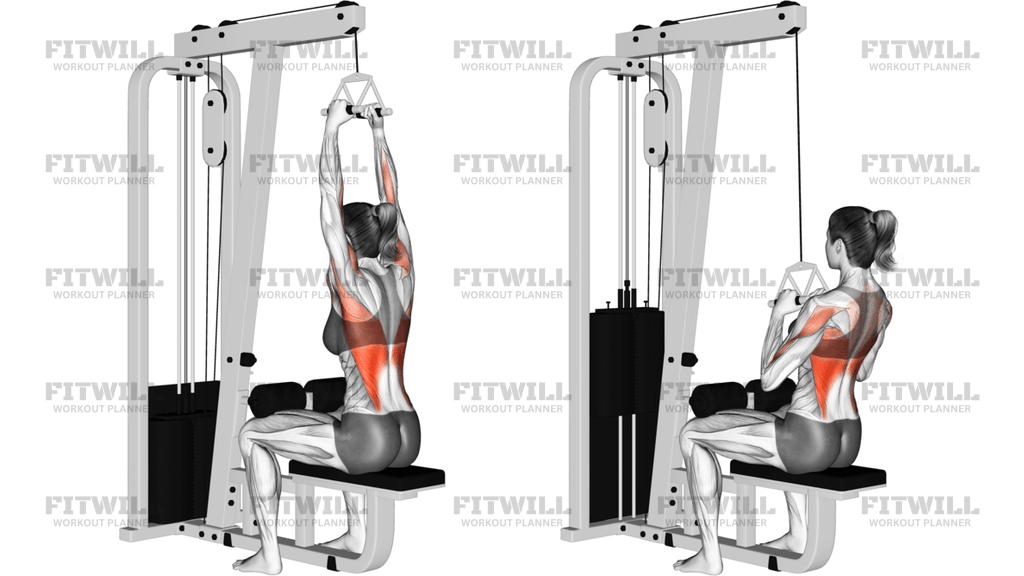
Cable Standing Wrist Roll
Cable Standing Wrist Roll is a forearm-focused cable exercise that builds wrist control, grip endurance, and the small stabilizers that keep the hand and forearm organized under tension. It is usually best treated as accessory work rather than a main strength lift, so the goal is smooth tension and precise wrist motion instead of big loads or body English.
The standing setup matters because the cable keeps pulling on the hands the entire time. Face the stack, step back until the line of pull stays steady, and raise the handle in front of your chest with the arms long enough that the shoulders can stay quiet. That position lets the forearms do the work while the torso and upper back simply stabilize.
From there, roll the wrists through a short, controlled arc so the handle rotates under cable tension. Keep the elbows nearly fixed, the chest tall, and the shoulders down as the hands move. The useful range is the one where you can feel the forearms working without letting the motion leak into the elbows, ribs, or low back.
Cable Standing Wrist Roll is useful for lifters who want stronger forearms for pulling, carrying, grappling, racket sports, or general grip work. It also fits well at the end of an upper-body session, after rows or curls, when the forearms are already warm. Because the cable keeps the resistance smooth, the exercise is a good choice when you want continuous tension without the abrupt swing that can happen with free weights.
Keep the load light enough that the wrists can lead every rep and the handle never jerks out of position. If the shoulders shrug, the elbows bend, or the body starts leaning back, the weight is too heavy or the pulley is set poorly. Treat each repetition like a precise forearm drill: controlled roll, brief squeeze, slow return, and a clean reset.
[ Workout Log & Planner ]
Put your next workout in Fitwill
Keep your plan and training log ready when you are.


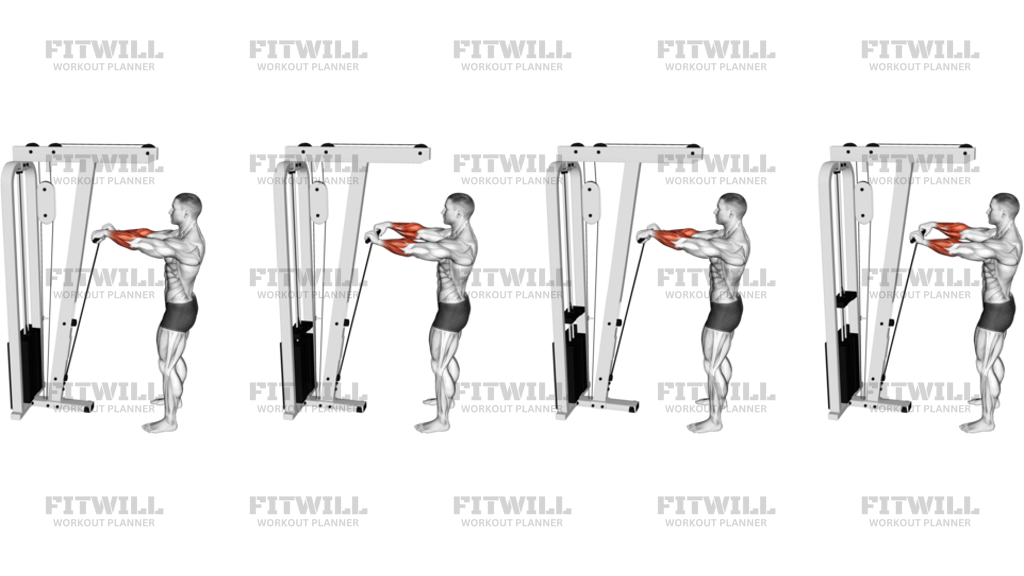
Instructions
- Set a single handle on a cable machine and adjust the pulley so the attachment sits in front of your hands at about chest height.
- Stand facing the stack, about an arm's length away, with feet hip-width apart and knees softly unlocked.
- Reach both arms straight forward, hold the handle with a firm overhand grip, and stack your wrists over your forearms.
- Pull your shoulders down and brace lightly so your torso stays still before the first roll.
- Roll the handle with your wrists through a short, smooth arc, keeping the elbows nearly locked and the upper arms quiet.
- Squeeze the end position for a beat without leaning back or lifting the shoulders.
- Reverse the roll slowly until the wrists are back to the start and the cable is still under control.
- Breathe out during the roll, breathe in on the return, and step forward only after the handle settles.
Tips & Tricks
- Keep the pulley lined up with your hands so the cable pulls straight toward you instead of up or down.
- Use a lighter load than you would for curls; this exercise breaks down fast when the wrists start to compensate.
- If your shoulders rise, lower the weight and think about sliding the shoulder blades into your back pockets.
- Keep the elbows almost fixed; bending them turns the drill into a front-raise pattern.
- A short range with clean tension beats a bigger roll that makes the handle wobble.
- Let the forearms burn, but stop if the wrist joint feels pinched at either end of the roll.
- Pause briefly at the hardest point to remove momentum and make the forearms do the work.
- If the grip gives out before the wrists do, reduce the reps rather than cheating the roll with body sway.
Frequently Asked Questions
What muscles does Cable Standing Wrist Roll work?
It mainly trains the forearms and grip, with the shoulders and core helping you hold the arm position steady.
Should my arms stay straight during Cable Standing Wrist Roll?
Yes, keep the arms almost straight with only a soft elbow bend. The more the elbows drift, the less the forearms have to do.
How heavy should the cable be for Cable Standing Wrist Roll?
Light to moderate resistance is usually best. If the handle jerks or your shoulders start taking over, the load is too high.
Is Cable Standing Wrist Roll a good beginner exercise?
Yes, as long as the weight is light and the wrist motion stays small and controlled. Beginners usually learn it best with a very strict tempo.
Where should I feel the movement?
You should feel it in the forearms and grip, with some tension in the stabilizing muscles around the shoulders and trunk.
What is the most common mistake on Cable Standing Wrist Roll?
The usual mistake is turning it into an arm or torso movement. Keep the chest tall, the elbows quiet, and the wrists doing the work.
Can I swap this for a dumbbell forearm exercise?
Yes. A dumbbell wrist curl or reverse wrist curl can work the same general area, but the cable gives smoother tension through the whole roll.
When should I put Cable Standing Wrist Roll in my workout?
It works well at the end of a pull workout, after back or biceps work, or as a short forearm finisher after upper-body training.