Bodyweight Slow To Explosive Squats
Bodyweight Slow to Explosive Squats are bodyweight squats built around tempo and intent: lower with control, then drive up fast without leaving the floor. The exercise trains the legs and hips to absorb force on the way down and produce force on the way up, which makes it useful for general lower-body strength, athletic prep, and clean movement quality.
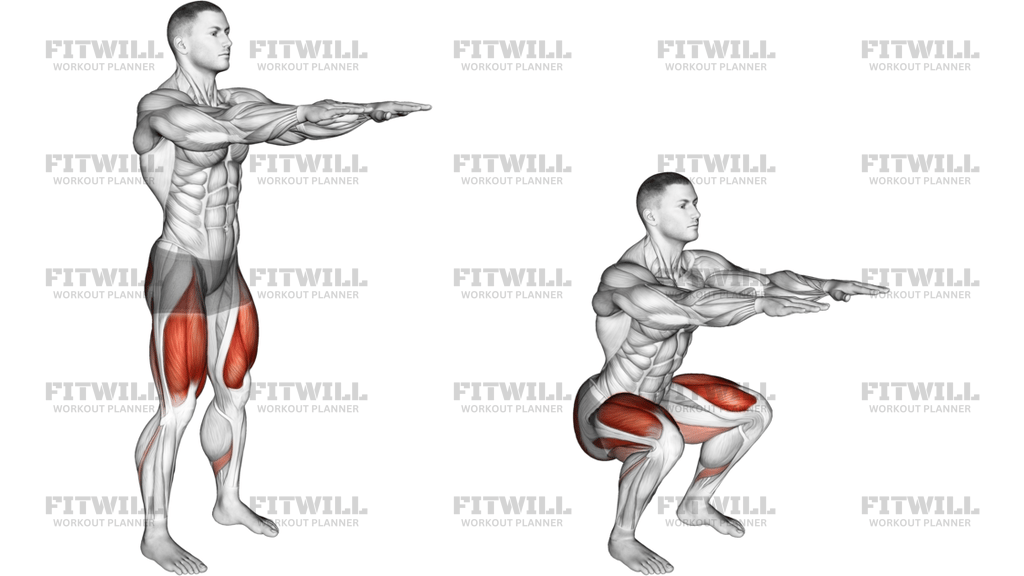
The slow eccentric phase matters because it teaches you to stay organized at the hips, knees, and ankles instead of dropping into the bottom position. With no external load to stabilize, the exercise asks you to own your stance, keep the torso stacked, and control depth through the whole range. The arm position in the image is held forward to counterbalance the squat and help you stay upright.
Use the descent to find a smooth, deliberate groove: feet planted, heels heavy, knees tracking over the toes, and chest lifted enough that the spine stays long. The bottom position should feel solid, not collapsed. From there, the concentric phase changes sharply in intent. Stand up with speed as if you are trying to accelerate the floor away from you, but keep the feet flat and the landing quiet rather than turning the rep into a jump.
This pattern is a good fit for warmups, power-focused bodyweight work, or lower-body conditioning when you want more than just a standard squat. It can also expose control issues that get hidden when reps are rushed. If depth, balance, or knee tracking break down, shorten the range slightly and rebuild the tempo before pushing the explosive part harder.
Treat every repetition as a clean contrast between control and speed. Slow lowering should create tension and positioning, while the fast rise should stay crisp and athletic. When done well, the exercise builds coordination through the hips and thighs without needing equipment or impact-heavy plyometrics.
Fitwill
Log Workouts, Track Progress & Build Strength.
Achieve more with Fitwill: explore over 9600 exercises with images and videos, access built-in and custom workouts, perfect for both gym and home sessions, and see real results.
Start your journey. Download today!




Instructions
- Stand with your feet about shoulder-width apart, toes turned slightly out, and hold your arms straight out in front of you for balance.
- Brace your midsection, stack your ribcage over your pelvis, and keep your weight centered through the middle of your feet and heels.
- Begin the descent by sending your hips back and bending your knees at the same time.
- Lower slowly for about 3 to 4 seconds, keeping your chest lifted and your heels down as you approach squat depth.
- At the bottom, keep your knees tracking in line with your toes and avoid letting your lower back round or your torso collapse forward.
- Drive through your heels and midfoot to stand up as fast as you can without jumping.
- Finish tall with your hips fully extended and your glutes engaged at the top.
- Reset your breath before the next rep and repeat for the planned set.
Tips & Tricks
- Use the arm reach in front of you to keep your torso balanced if your chest tends to tip forward.
- If your heels start lifting, reduce depth slightly and keep pressure through the whole foot.
- The slow lowering phase should feel controlled all the way to the bottom; do not relax into the squat.
- Keep the explosive part fast but grounded. If your feet pop off the floor, you are turning it into a jump squat.
- Think about spreading the floor apart with your feet as you stand to help your knees track cleanly.
- A short pause at the bottom can help if you want to remove bounce and rebuild position before each ascent.
- Stop the set when the rise slows dramatically or when your knees cave inward on the way up.
- Use a box or bench target only if you need a consistent depth cue for control.
Frequently Asked Questions
What muscles do Bodyweight Slow to Explosive Squats work?
They mainly train the quadriceps and glutes, with the hamstrings, adductors, calves, and core helping you stay stable through the slow descent and fast stand.
Is the explosive part supposed to be a jump?
No. The image shows a fast stand-up, not a jump. Drive up quickly, but keep both feet on the floor and finish under control.
How slow should the lowering phase be?
A 3 to 4 second descent is a good target for most sets. The point is to stay controlled long enough to own the bottom position before you accelerate up.
What is the most common mistake with this squat?
Most people lose position by collapsing their chest, letting the heels come up, or turning the fast stand into a sloppy bounce out of the bottom.
Can beginners use Bodyweight Slow to Explosive Squats?
Yes. Beginners should shorten the range if needed and focus on clean tempo first, then add speed on the way up once the bottom position feels stable.
How deep should I squat?
Go as deep as you can while keeping the heels down, the knees tracking well, and the torso from folding forward. Depth should be earned, not forced.
Where should my arms go during the rep?
Hold them straight out in front like the image. That counterbalance helps you stay upright and makes it easier to keep the squat controlled.
How can I progress this movement?
Add more control on the way down, pause briefly at the bottom, or increase speed on the ascent while keeping the same clean bodyweight squat pattern.