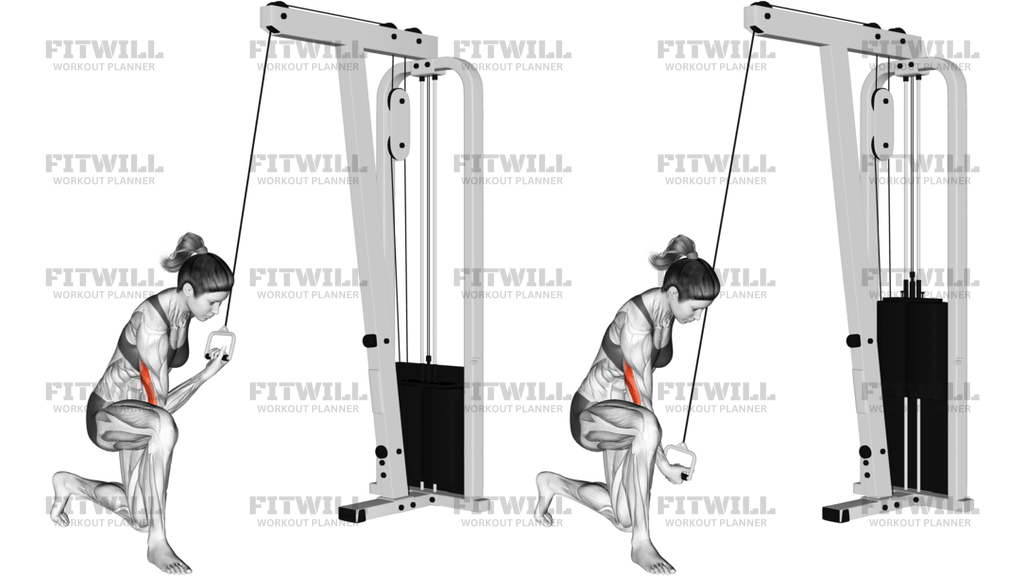
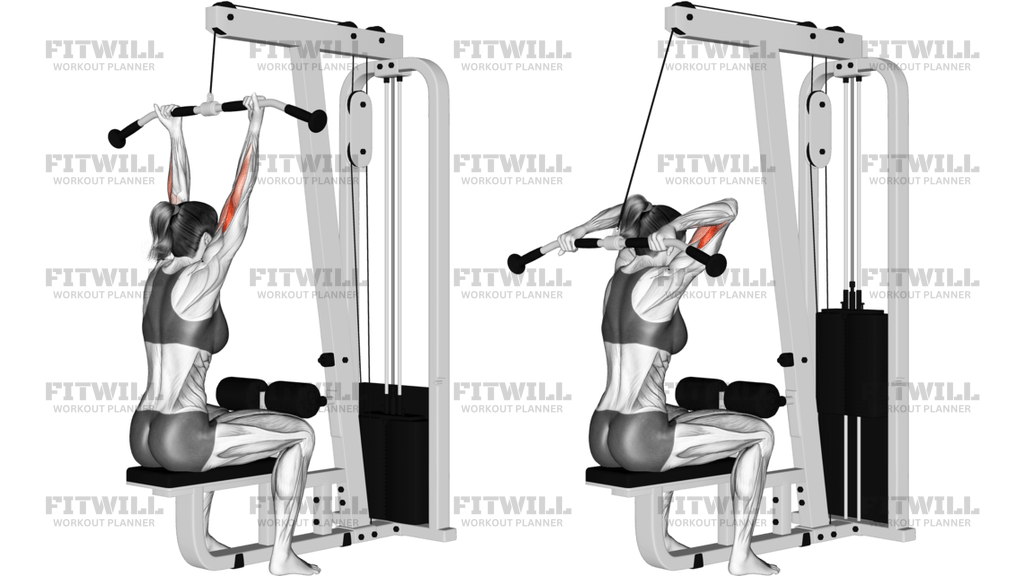
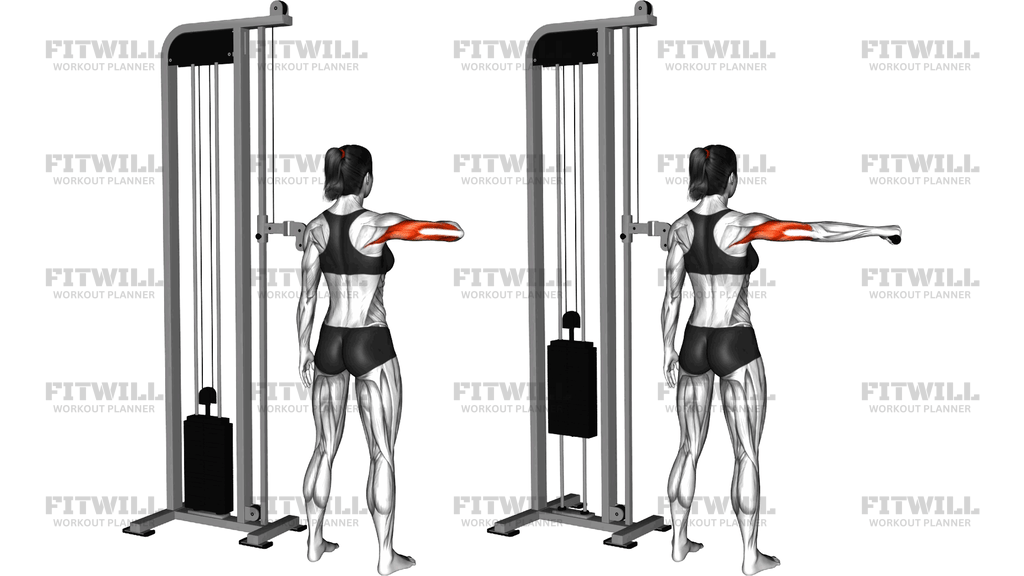
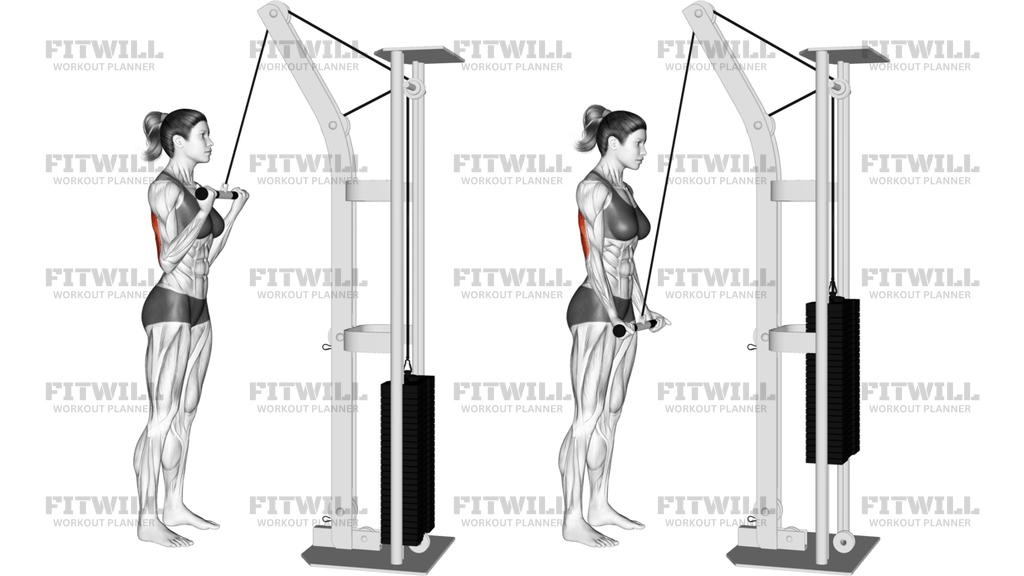
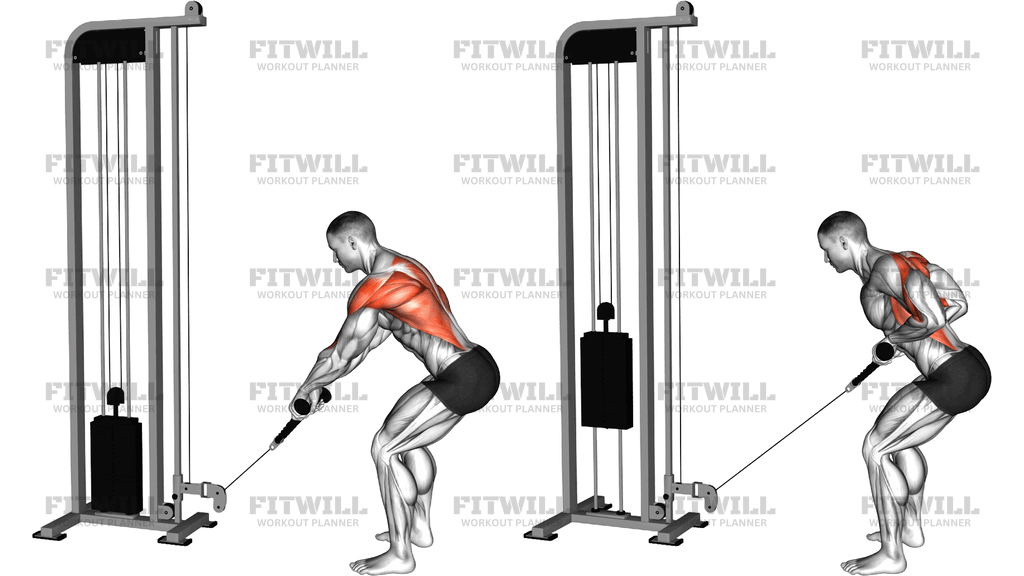
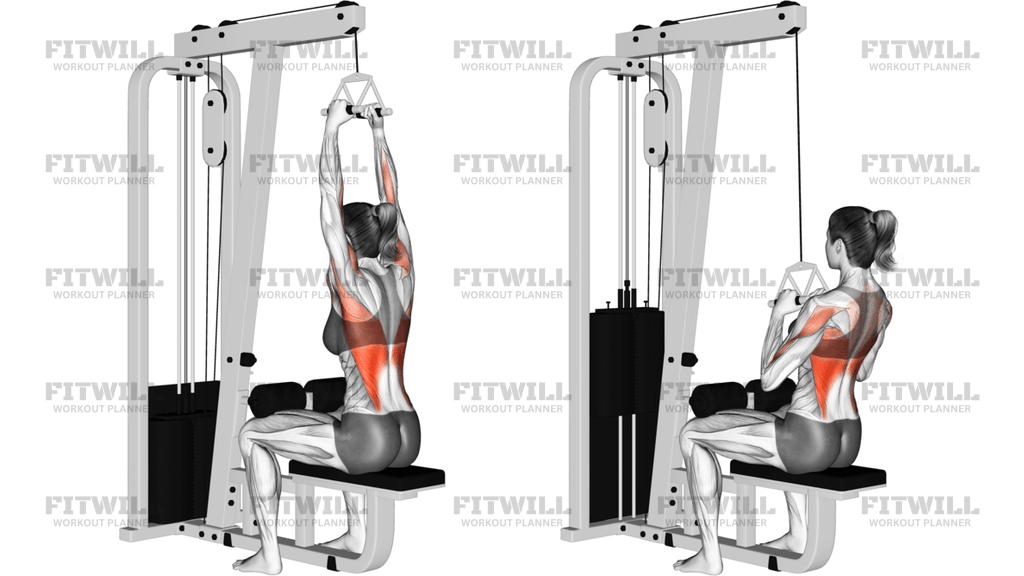
Cable Standing Wrist Curl
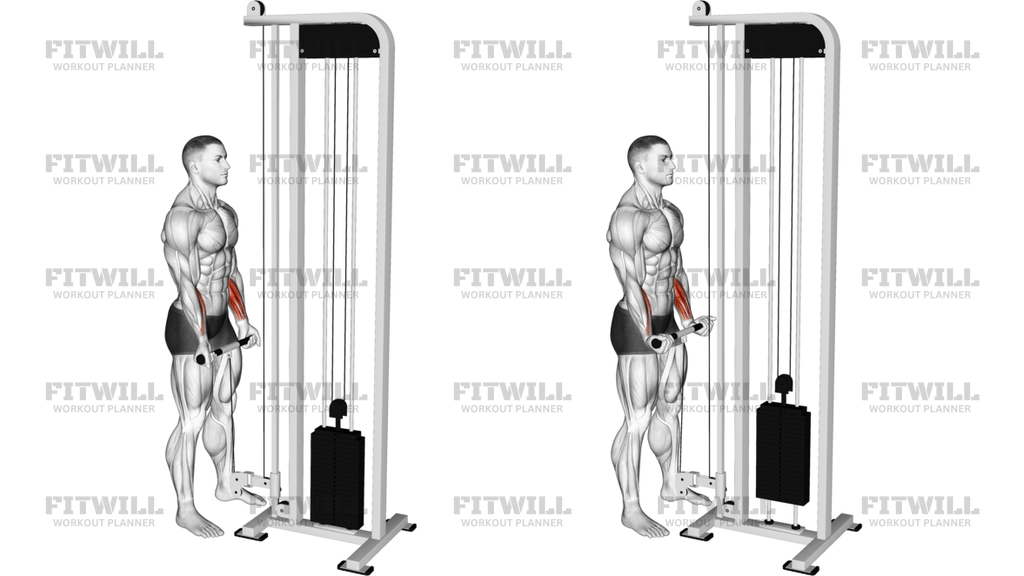
Cable Standing Wrist Curl is a forearm isolation exercise that uses a low cable and straight bar to train wrist flexion through a controlled, continuous line of tension. The standing position keeps the setup simple and makes it easy to load the forearm flexors without turning the movement into a body English exercise. It is most useful when you want direct forearm work that is stricter than a free-weight curl and easier to keep smooth rep after rep.
The exercise mainly targets the wrist flexors on the front and inner side of the forearm. Your grip, fingers, and upper arm still help to stabilize the handle, but the movement should come from the wrists rather than from the shoulders or elbows. That makes the cable version especially good for lifters who want to build forearm strength, grip endurance, or a stronger base for pulling work, rack holds, carries, and barbell training.
The setup matters more than it looks. Stand close enough to the machine that the cable stays taut, hold the bar with an underhand grip, and let your hands rest in front of your thighs. Keep your elbows tucked near your ribs and your shoulders down so the cable does not pull you into a shrug. A small knee bend and a quiet torso help you keep the rep honest while the wrists travel through their full controlled range.
On each repetition, curl the bar upward by flexing only at the wrists. The forearms should stay mostly still while the knuckles travel toward the forearms and the bar rises in a short, smooth arc. Squeeze at the top, then lower slowly until the wrists extend again and you feel a clear stretch through the forearm flexors. The range should feel productive, not aggressive; if the bottom position irritates the wrist joint, shorten the stretch slightly.
Use Cable Standing Wrist Curl as accessory work after your main lifts or as a focused finisher when you want extra forearm volume without adding much fatigue to the rest of the body. It works well for beginners because the motion is easy to learn, but it still rewards strict tempo, modest loading, and clean positioning. The best reps look almost boring: quiet torso, fixed elbows, steady cable tension, and a controlled wrist-only curl from start to finish.
[ Workout Log & Planner ]
Put your next workout in Fitwill
Keep your plan and training log ready when you are.


Instructions
- Set the pulley at the lowest position and attach a straight bar or short handle.
- Stand facing the machine with feet about hip-width apart and the bar held in front of your thighs.
- Take an underhand grip, keep your elbows tucked close to your sides, and let the cable pull your wrists slightly open at the bottom.
- Keep your chest tall, shoulders down, and torso quiet so the bar does not swing.
- Curl the bar upward by flexing only at the wrists while the forearms stay nearly still.
- Bring your knuckles toward your forearms and squeeze the top of the rep for a brief pause.
- Lower the bar slowly until the wrists are extended again and you feel a clear forearm stretch.
- Reset your grip if needed, then repeat for the planned number of controlled repetitions.
Tips & Tricks
- Use a light load first; this exercise gets sloppy fast when the cable is too heavy.
- Keep the bar in front of your thighs instead of letting it drift away from your body.
- Think about moving the wrists only, not lifting with the elbows or shoulders.
- A one-second squeeze at the top helps you feel the forearm flexors working.
- Lower the bar slowly; the eccentric phase gives you a lot of the training effect here.
- If your elbows start traveling forward, the set has become too heavy or too loose.
- Stop just short of a painful bottom stretch if your wrists do not like deep extension.
- A straight bar usually feels more stable than a rope for standing wrist curls.
- Use higher repetitions if you want forearm endurance, but keep every rep strict.
- Keep your grip firm without crushing the handle so the wrists can move cleanly.
Frequently Asked Questions
What does Cable Standing Wrist Curl train?
It targets the wrist flexors and the front side of the forearms, with the hand and grip helping to stabilize the bar.
Should my elbows move during the rep?
No. Keep the elbows tucked and mostly fixed so the motion comes from the wrists instead of the arms.
Why use a cable instead of dumbbells?
The cable keeps constant tension through the full rep, which makes the movement smoother and more consistent.
What attachment works best?
A straight bar or short bar handle is usually the easiest option because it keeps both wrists aligned.
How heavy should I go?
Use a light to moderate load that lets you curl only with the wrists and control the lowering phase.
Is this exercise good for beginners?
Yes. The movement is small and easy to learn as long as you keep the torso still and avoid forcing the bottom stretch.
Where should I feel the exercise?
You should feel it in the forearm flexors on the palm side of the forearm, not in the shoulders or upper arms.
What is the most common mistake?
Using too much weight and turning the rep into a body swing or elbow-driven curl instead of a wrist curl.
Can I pair this with other forearm work?
Yes. It pairs well with reverse curls, carries, and grip work if you want balanced forearm training.