Cable Standing Back Wrist Curl
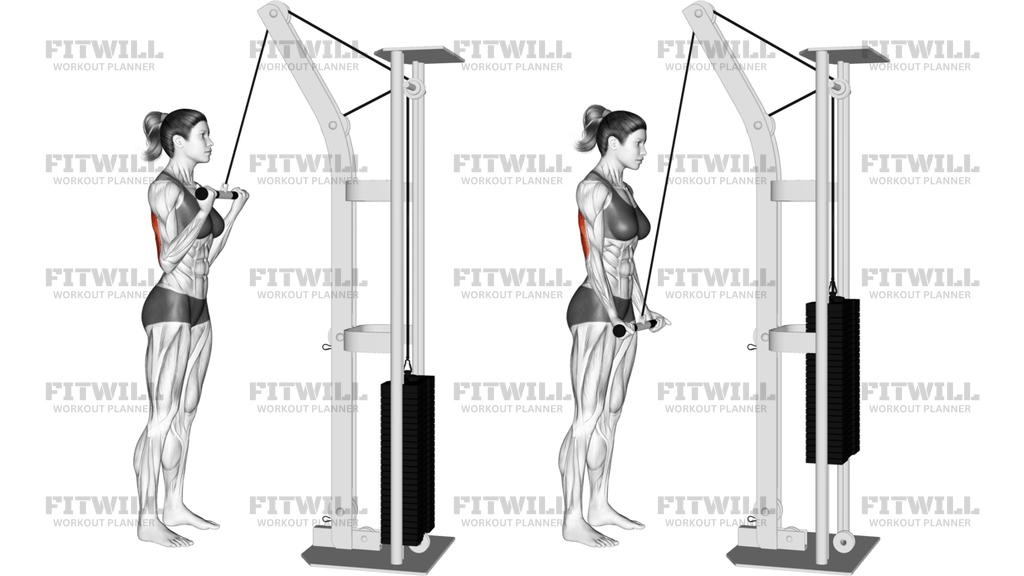
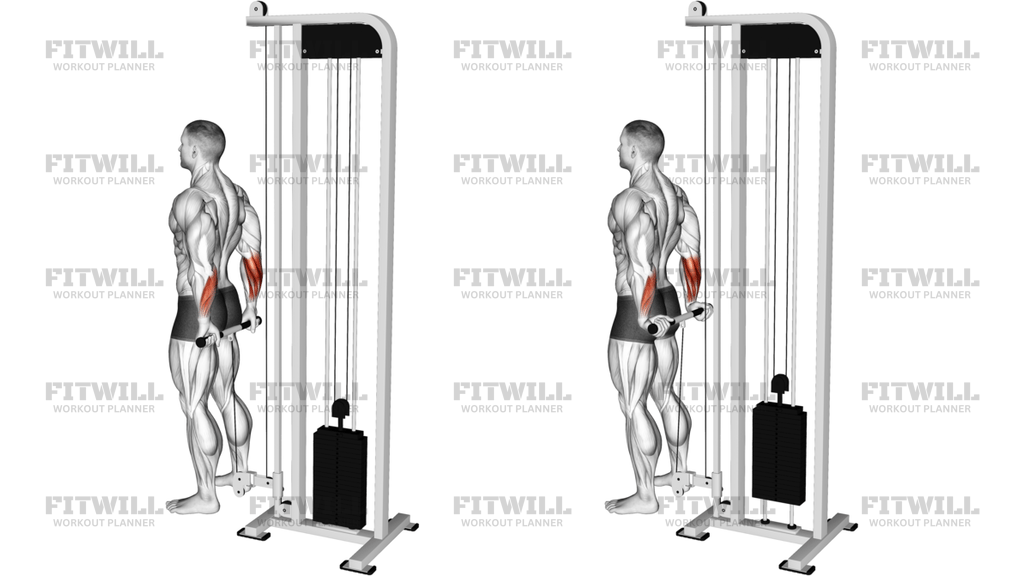
Cable Standing Back Wrist Curl is a forearm isolation exercise performed with the cable set behind your body and the hands held just behind the hips. It is used to train the wrist extensor muscles that help control grip, stabilize the wrist during pulling work, and build more balanced forearm development alongside regular wrist curls.
The standing setup matters because the cable keeps tension on the wrists while you stay upright. Face away from the stack, take a balanced stance, and hold the bar or handle behind the thighs with the elbows pinned close to the sides. From that position, the forearms stay still and the wrists do the work through a short, controlled arc.
On each rep, let the cable pull the wrists down first, then extend the wrists to bring the knuckles back and up. The movement should come from the wrists only, not from rocking the shoulders, bending the elbows, or leaning the torso. A slow return is important here because the forearms should stay under tension all the way back to the start.
This exercise fits well as accessory volume after bigger lifts, in a forearm-focused session, or as a lighter finish to a pulling workout. Light to moderate loads usually work better than heavy cheating reps, and a pain-free range is more important than forcing extra motion. If the wrists feel pinchy, shorten the range, reduce the load, or step slightly farther from the stack so the cable tracks smoothly behind the body.
Used well, Cable Standing Back Wrist Curl can strengthen the muscles that help support gripping, rack holds, and repetitive pulling work without needing much equipment or setup time. The goal is a clean set of repeatable reps with the wrists doing the movement and the rest of the body staying quiet.
[ Workout Log & Planner ]
Put your next workout in Fitwill
Keep your plan and training log ready when you are.


Instructions
- Set the cable low, attach a straight bar or short handle, and stand facing away from the stack so the cable runs behind your body.
- Take a shoulder-width stance, brace tall through the torso, and hold the bar behind your thighs with your elbows tucked close to your sides.
- Let your wrists start in the lowered position while the forearms stay still and the cable keeps light tension on the handle.
- Extend the wrists to curl the back of the hands upward without bending the elbows or shifting the shoulders.
- Lift only through a comfortable range until the forearm extensors are fully contracted and the wrists are near their top position.
- Pause briefly at the top while keeping the upper arms quiet and the torso stacked over the hips.
- Lower the handle slowly until the wrists return to the starting angle and the cable is still under control.
- Breathe out as you lift, inhale as you lower, and keep each rep smooth instead of jerky.
- Repeat for the planned number of reps, then step forward carefully and let the cable settle before releasing the handle.
Tips & Tricks
- Stand far enough from the stack that the cable stays taut behind you, but not so far that it pulls your shoulders forward.
- Keep the elbows locked in place; the wrists should move while the upper arms stay close to your sides.
- Use a lighter load than you would for a pulling movement, because wrist extensors fatigue quickly and sloppy reps show up early.
- If the handle digs into your palms or fingers, switch to a narrower attachment that lets the wrists travel cleanly behind the body.
- Do not lean back to finish the rep; that usually turns the exercise into a torso movement instead of a forearm isolation drill.
- A slow lowering phase helps more than a heavy stack here, because the forearms get a lot of work from the return portion.
- Keep the wrists in a straight line with the forearms at the bottom and only extend as far as the joint feels smooth.
- Stop the set if you feel pinching on the top of the wrist or if the cable starts yanking your shoulders out of position.
Frequently Asked Questions
What part of the forearm does Cable Standing Back Wrist Curl train?
It emphasizes the wrist extensor side of the forearm, which helps with grip control and wrist stability during pulling work.
Should I face the cable stack or turn away from it?
Turn away from the stack so the cable runs behind your body and the handle sits behind your thighs.
What attachment works best for this exercise?
A straight bar or short handle usually works best because it gives both wrists a stable path and keeps the movement even.
Do my elbows bend during the rep?
No, the elbows should stay tucked and quiet so the wrists can do the work without help from the arms or shoulders.
Can beginners do this exercise safely?
Yes, as long as they start with very light resistance and keep the range short, smooth, and pain-free.
How is this different from a regular wrist curl?
The cable stays behind the body and the wrist action is performed from that behind-the-hip position instead of from a bench or lap setup.
What should I feel if I am doing it correctly?
You should feel a concentrated burn along the forearm just below the elbow and into the back side of the wrist.
What is the most common mistake with this movement?
Most people either use too much load or start leaning and shrugging, which shifts tension away from the forearms.