Kettlebell Good Morning
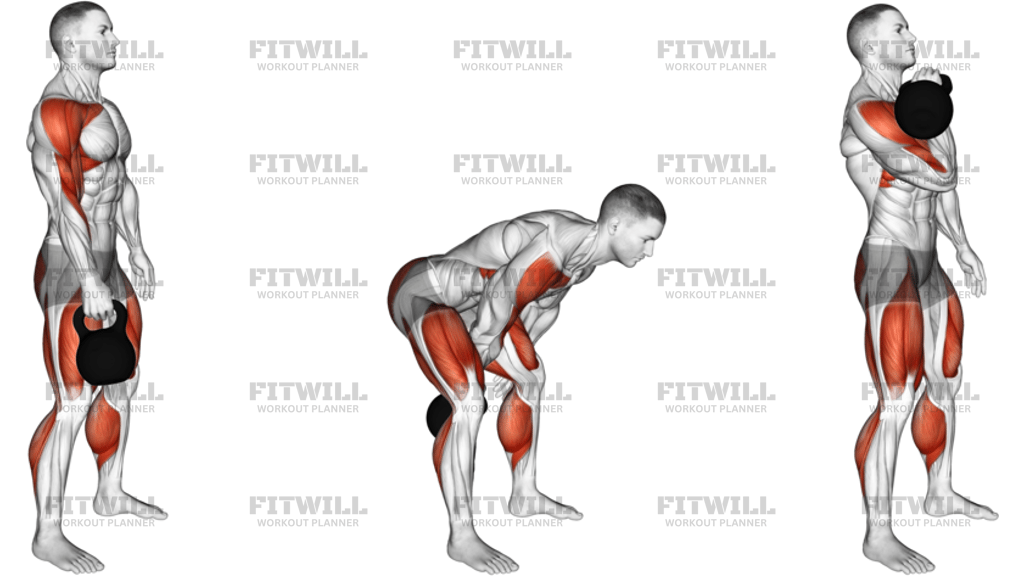
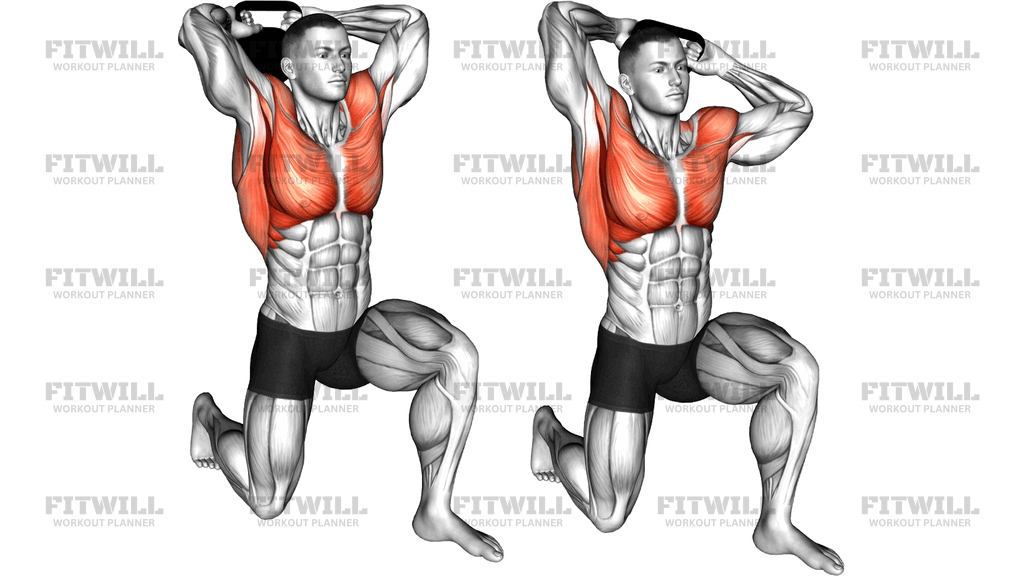
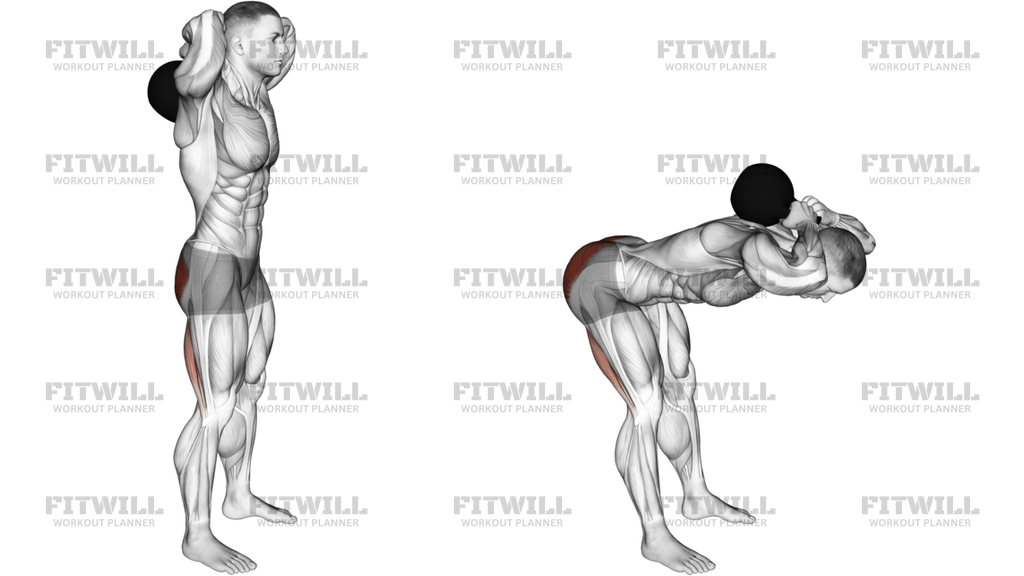
Kettlebell Good Morning is a hip-hinge exercise that trains the glutes, hamstrings, and deep trunk muscles to keep the torso organized while the hips move back. In the pictured setup, the kettlebell is supported behind the head and upper back with both hands, which makes posture and bracing more important than load. The exercise is useful when you want to build hinge control, posterior-chain strength, and a better sense of how to keep the ribcage stacked over the pelvis during a forward fold.
The movement is simple, but the setup matters a lot. A good starting position keeps the feet grounded, the knees softly bent, and the spine long before the hips begin to travel backward. Because the weight sits high and slightly behind the body, any loss of upper-back tension or neck position makes the rep feel unstable very quickly. That is why the best reps start with a firm brace, quiet shoulders, and a deliberate hinge instead of a drop into the bottom position.
On the way down, the torso should tip forward as the hips shift back, not round toward the floor. The shins stay nearly vertical, the heels stay planted, and the kettlebell stays fixed relative to the upper back while the body folds around the hips. The return is driven by squeezing the glutes and pushing the hips forward until you are tall again. If you lose tension before the top, shorten the range and clean up the hinge before adding load.
Kettlebell Good Morning is a useful accessory for lower-body days, posterior-chain warm-ups, and core-focused sessions because it teaches position rather than speed. It can also help lifters who need a safer, lighter hinge pattern before moving to more demanding good mornings or deadlift variations. Keep the range pain-free, keep the movement smooth, and treat each repetition as a posture and hinge drill rather than a stretch contest.
Fitwill
Log Workouts, Track Progress & Build Strength.
Achieve more with Fitwill: explore over 9600 exercises with images and videos, access built-in and custom workouts, perfect for both gym and home sessions, and see real results.
Start your journey. Download today!




Instructions
- Stand with your feet about hip-width apart and place the kettlebell behind your head and across the upper back, holding it securely with both hands.
- Set your feet flat, soften your knees slightly, and stack your ribs over your pelvis before you start the first rep.
- Brace your trunk, keep your neck long, and pull the shoulders down and back enough to keep the kettlebell steady.
- Push your hips straight back and hinge forward while keeping the shins nearly vertical.
- Lower until your torso is tilted forward as far as you can control without rounding your lower back.
- Pause briefly in the stretched position without losing tension in your midsection or upper back.
- Drive your hips forward and squeeze your glutes to return to a tall standing position.
- Exhale as you come back up, then reset your brace before the next repetition.
Tips & Tricks
- Keep the kettlebell pinned in place; if it slides on your upper back, the set is too heavy or your brace is fading.
- Let the hips travel back first instead of trying to reach the floor with your chest.
- Maintain a slight knee bend, but do not turn the rep into a squat.
- Stop the descent when your lower back wants to round, even if that is well above parallel.
- Keep the chin tucked lightly so the neck stays long instead of craned forward.
- Press through the whole foot, especially the heel and midfoot, to keep balance during the hinge.
- Use a slower lowering phase so you can feel the hamstrings load before the glutes drive you back up.
- Choose a light kettlebell if the behind-the-head position forces your shoulders or neck to tense up.
Frequently Asked Questions
What muscles does the kettlebell good morning train most?
It mainly trains the glutes, hamstrings, and spinal erectors, with the core working hard to keep the torso braced.
What should the kettlebell be doing in the setup?
It should stay supported behind the head and upper back while your hands keep it stable through the whole hinge.
How far should I hinge forward?
Go only as far as you can keep a neutral spine and flat feet; the bottom position should feel controlled, not forced.
Is this the same as a squat?
No. Your knees stay slightly bent, but the main action is sending the hips backward and forward.
Can beginners use this exercise?
Yes, but only with a light kettlebell and a short range until the hinge pattern feels natural.
What if I feel the exercise in my lower back more than my glutes?
That usually means you are rounding, overextending at the top, or using too much load. Shorten the range and tighten the brace.
Where should I breathe during the rep?
Take a breath and brace before hinging, then exhale as you drive the hips forward to stand back up.
What is a good substitute if the behind-the-head position feels awkward?
A bodyweight good morning or a light Romanian deadlift is usually easier on the shoulders and still trains the same hinge pattern.