Bear Plank Kickback
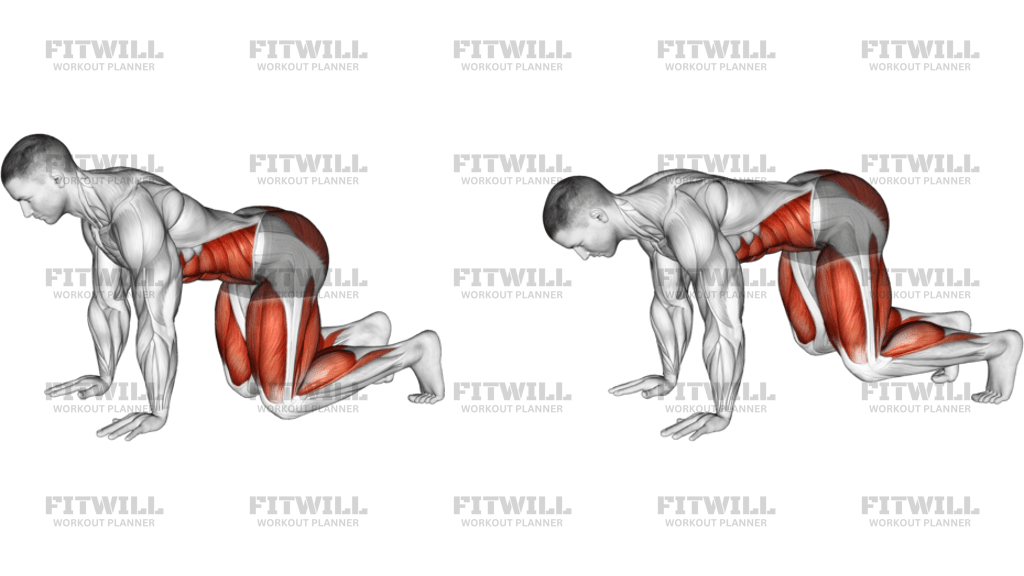
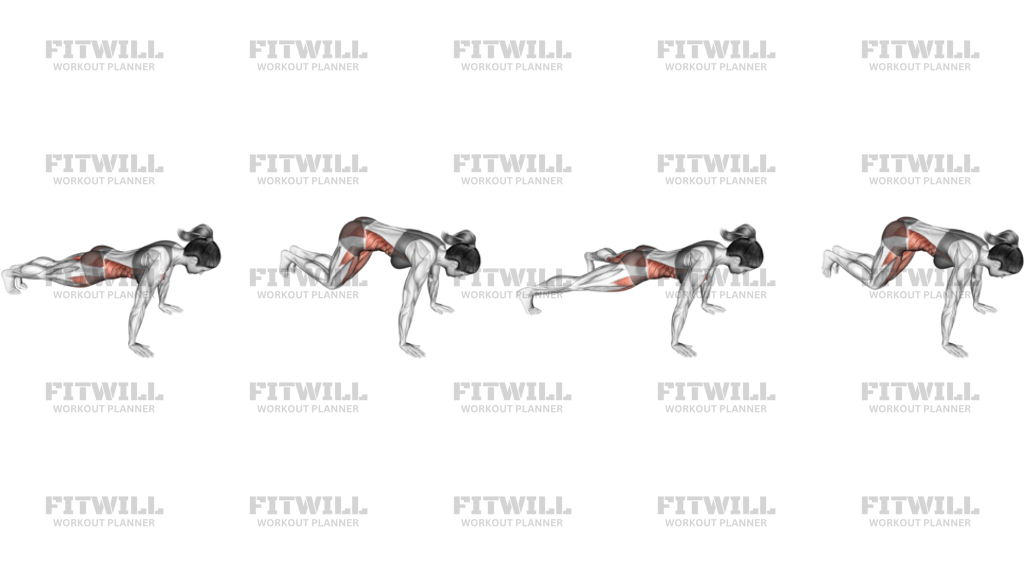
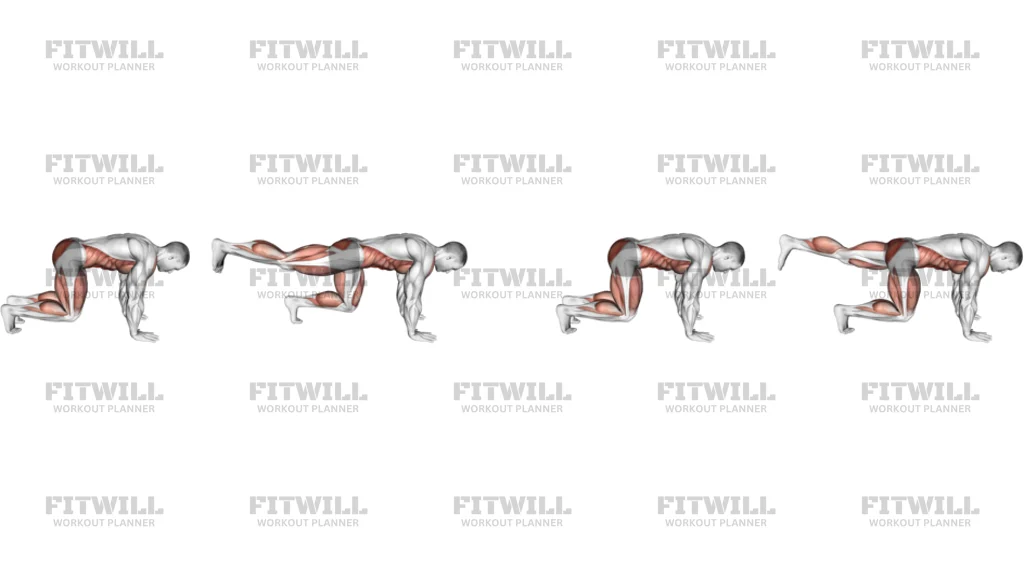
Bear Plank Kickback is a bodyweight floor exercise done from a hovering bear-plank position, with the hands under the shoulders, knees lifted off the floor, and the trunk held steady while one leg drives straight back behind the body. It is a small but demanding movement that trains the glutes, core, shoulders, and hip stabilizers together, so the pelvis stays level while the leg moves.
The bear-plank setup matters because the kickback is only useful when the torso stays quiet. If the ribs flare, the lower back arches, or the hips rotate open, the set turns into momentum instead of hip extension. A good rep keeps pressure through both hands and the support knee while the working leg reaches long without changing the shape of the spine.
This exercise is often used as a warm-up drill, glute activation movement, or accessory core exercise. The goal is not a huge leg swing. The goal is a controlled kickback that comes from the hip, with the glute finishing the rep and the abs preventing the body from rocking side to side.
To perform it well, set the shoulders directly over the wrists, lift the knees only a few inches, and keep the neck long. Extend one leg back with control, pause when the pelvis starts to want to twist, then bring the knee back under the hip without dropping the hover. Breathe out as the leg extends and inhale on the return.
Because the movement is joint-control focused, the cleanest reps usually come from a slower tempo and a shorter range. If the shoulder position feels unstable or the low back starts to take over, reduce the kickback height and keep the hover smaller until the glutes and trunk can stay organized for the full set.
[ Workout Log & Planner ]
Put your next workout in Fitwill
Keep your plan and training log ready when you are.


Instructions
- Start on your hands and knees with your palms under your shoulders and your knees under your hips.
- Tuck your toes, then lift both knees a few inches so you are hovering in a bear-plank position.
- Stack your ribs over your pelvis, brace your abs, and keep your neck long and neutral.
- Shift your weight evenly into both hands and the support knee before you move.
- Exhale and drive one leg straight back behind you, keeping the thigh in line with your torso.
- Keep the hips square to the floor and avoid letting the lower back arch as the leg reaches long.
- Pause briefly at the top of the kickback and squeeze the working glute without twisting.
- Inhale and return the knee under the hip to the hover, then repeat for the planned reps before switching sides.
Tips & Tricks
- Keep your shoulders directly over your wrists so the press into the floor stays vertical instead of drifting forward.
- Think of pushing the heel back from the hip, not swinging the leg from the low back.
- The hover only needs to be a few inches off the floor; a higher knee lift usually makes the torso sway.
- If your pelvis opens to one side, shorten the kickback and keep both hip points facing the floor.
- Press the floor away with both hands to keep the shoulder girdle active and the upper back steady.
- A slower return usually reveals more control than a fast snap back into the hover.
- Stop the rep when the glute stops working and the lower back starts to arch.
- For a harder set, add a one-second pause at full extension instead of forcing a bigger range.
Frequently Asked Questions
What does Bear Plank Kickback work most?
It mainly works the glutes, while the core and shoulders work hard to keep the bear-plank hover steady.
Is the bear-plank hover supposed to stay off the floor the whole time?
Yes, the knees stay lifted throughout the set. If that is too hard, reduce the hover height before you worry about the kickback.
How high should the kicking leg go?
Only as high as you can keep the hips square and the low back quiet. The rep is better when it is smaller and cleaner.
Should I alternate sides or finish one side at a time?
Either works. Alternating keeps the body balanced, while finishing one side first can make the support side and glute work feel more focused.
Why do my shoulders burn during this exercise?
That is normal because the shoulders are holding the bear-plank position while the leg moves. If they fail first, shorten the set or reduce the hover.
What is the most common form mistake?
The most common mistake is letting the lower back arch and the hips rotate open when the leg reaches back.
Is this the same as a donkey kick?
It is similar, but the bear-plank version uses a hovering all-fours position, which puts much more demand on the core and shoulders.
Can beginners do Bear Plank Kickback?
Yes. Beginners usually do best with a very small hover, a short kickback range, and a slower tempo.