Lever Bent-Over Single-Arm Wide-Grip Row With Chest Support
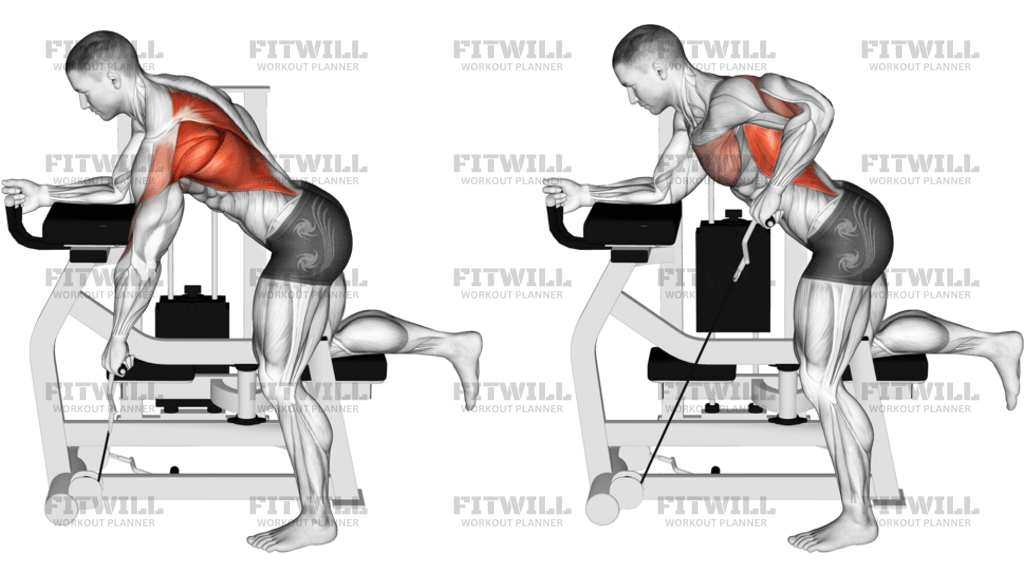
Lever Bent-Over Single-Arm Wide-Grip Row With Chest Support is a supported machine row that trains the back with the torso fixed against the pad. The chest support matters here because it keeps the upper body from turning the rep into a lower-back endurance test, letting you focus on the elbow drive, shoulder blade control, and the squeeze at the top of each pull.
The wide-grip setup changes the line of pull compared with a narrow row. Instead of tucking the elbow tight to the side, you row with the elbow slightly out from the torso, which shifts more work toward the upper back, rear delts, rhomboids, and mid traps while the lats still contribute strongly. Because the movement is one arm at a time, it is also useful for exposing side-to-side differences in strength, range, and shoulder control.
A good setup starts with the chest pad, foot position, and handle height. Lean into the support so your sternum and upper torso stay anchored, then stand or stagger your feet so you can reach the handle without shrugging. The working arm should start in a long, controlled reach, but the shoulder should still feel packed and ready to pull rather than hanging loose at the bottom.
On each repetition, brace your midsection, pull the shoulder blade back and down, and drive the handle toward the lower ribs or upper waist. Keep the wrist stacked, keep the free hand braced on the machine, and avoid twisting your ribs to fake extra range. Lower the handle with control until the arm is long again, then repeat with the same path and tempo. This is a strong choice for back hypertrophy, unilateral balance work, and strict accessory pulling when you want tension without loading the spine heavily.
Use the exercise when you want clean, repeatable back work instead of momentum. It suits lifters who need a supported row variation for higher quality reps, but it still rewards careful loading and disciplined positioning. If the chest leaves the pad, the shoulder hikes toward the ear, or the torso starts rotating to finish the rep, the set has moved beyond the useful range.
Fitwill
Log Workouts, Track Progress & Build Strength.
Achieve more with Fitwill: explore over 9600 exercises with images and videos, access built-in and custom workouts, perfect for both gym and home sessions, and see real results.
Start your journey. Download today!




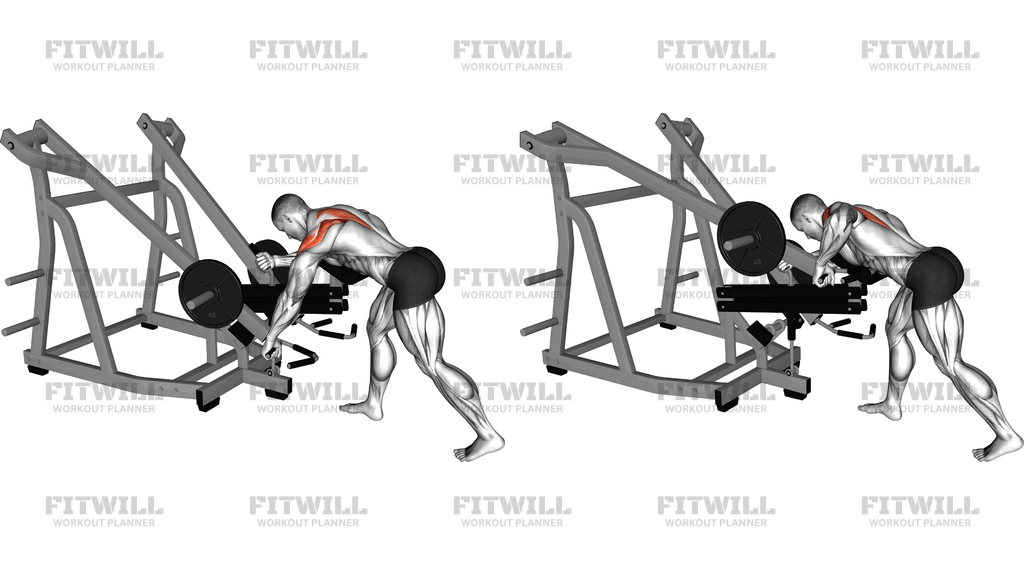
Instructions
- Set the chest pad so it supports your sternum and upper torso, and adjust the handle so your working arm can reach the start without shrugging.
- Lean your chest into the pad, hinge slightly at the hips, and place your free hand on the machine frame or support handle for balance.
- Stand with a staggered or split stance so your body stays stable while the working arm moves through the row.
- Grip the handle with a firm wide grip and keep the wrist straight before the first pull.
- Let the shoulder reach forward at the bottom until you feel a long stretch, but keep the torso pressed into the support.
- Brace your midsection, then start the pull by drawing the shoulder blade back and down.
- Row the handle toward your lower ribs or upper waist, keeping the elbow slightly out from the body rather than pinned tightly to your side.
- Squeeze briefly at the top without twisting your torso or lifting the chest off the pad, then lower the handle under control and repeat.
Tips & Tricks
- Keep the chest pad doing the stabilizing work so the lower back does not become the limiting factor.
- A slightly wider elbow path will usually feel more upper-back and rear-delt dominant than a tucked row.
- If the handle reaches your ribs too high, lower the finish slightly and keep the forearm aligned with the pull.
- Do not rotate the ribcage to cheat the handle farther back; the machine should move, not your torso.
- Use a weight that lets you pause at the top without losing shoulder position.
- Let the shoulder blade travel forward at the bottom instead of locking the shoulder back the whole time.
- Keep the wrist stacked over the forearm so the hand does not take over the pull.
- Stop the set if the free shoulder collapses forward or the chest leaves the support pad.
Frequently Asked Questions
What muscles does this supported row train most?
It mainly works the lats, rhomboids, mid traps, and rear delts, with the biceps helping on every pull.
Why does the chest support matter on this row?
The pad keeps your torso fixed so you can focus on the pulling muscles instead of turning the set into a cheat row.
Should my elbow stay close to my side?
Not in this wide-grip version. Let the elbow travel slightly out from the torso so the upper back and rear delts do more of the work.
Where should I pull the handle to?
A good finish point is around the lower ribs or upper waist on the working side, with the shoulder still controlled.
Can beginners use this machine row?
Yes. The support makes it beginner-friendly as long as the load is light enough to keep the torso still and the pull smooth.
What is the most common mistake on this movement?
Twisting the torso to fake extra range or shrugging the shoulder at the start of the pull.
How should I breathe during the reps?
Exhale as you row the handle in and inhale as you lower it back to the stretch position.
Is this better for strength or muscle growth?
It works well for both, but the strict, supported path makes it especially useful for controlled hypertrophy work.