Push-Up Pull
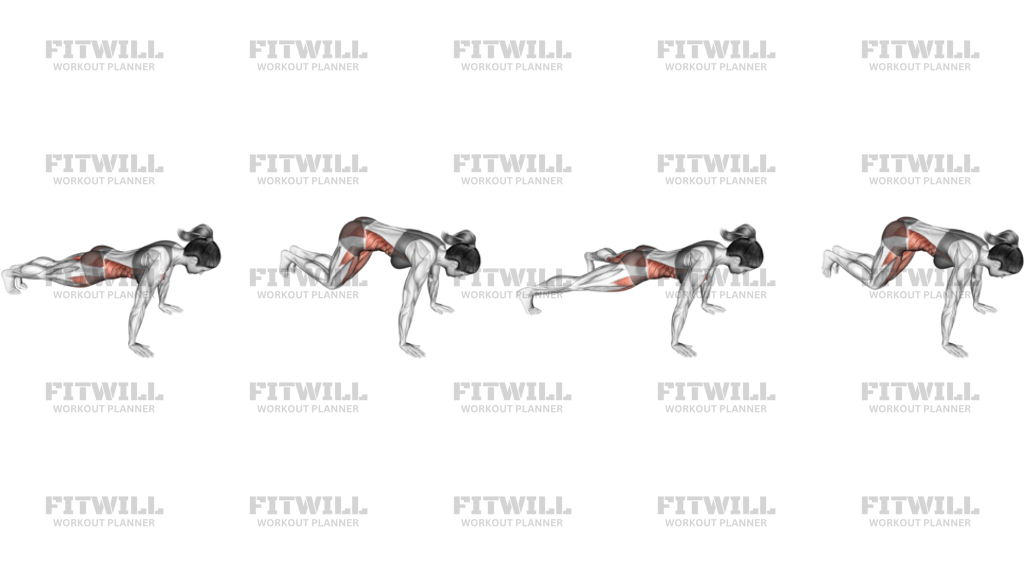
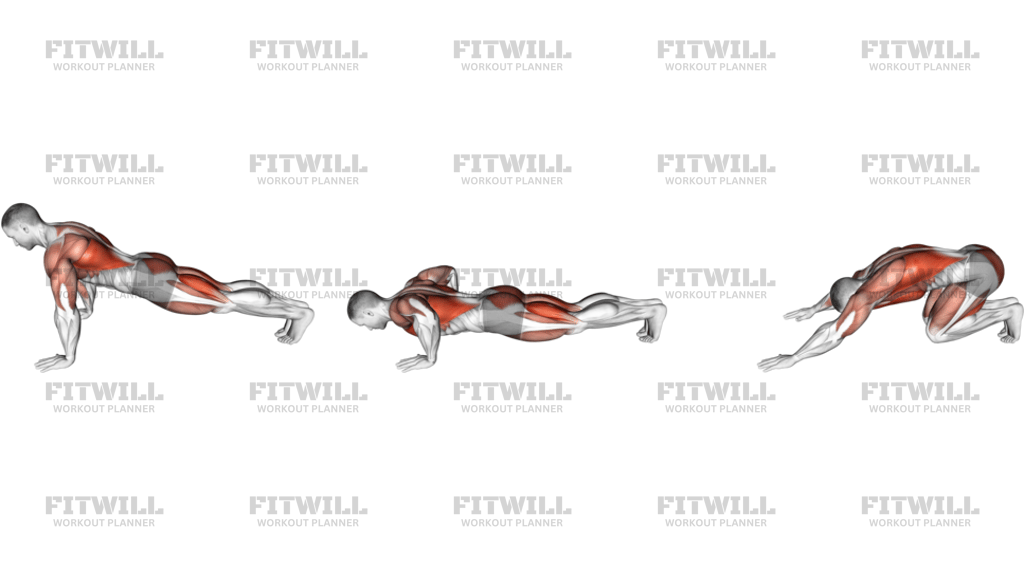
Push-Up Pull is a bodyweight pressing drill that combines a strict push-up with an active pull-through or reach-under phase. It is built to train the chest, shoulders, triceps, and trunk together, so the upper body has to produce force while the midsection stops the torso from twisting. The movement is simple to look at, but the useful part is how much control it asks for on the floor.
That setup matters because the position of your hands, feet, and ribs decides whether the rep feels clean or sloppy. Start in a firm high plank, keep the shoulders stacked over the hands, and keep enough pressure through the floor that your body stays long from head to heel. When the push-up portion is done well, the pull-through or reach phase should feel like a controlled shift, not a collapse into one side.
The push-up portion should lower the chest with the elbows traveling back at a moderate angle instead of flaring hard to the sides. After the press, one arm reaches or pulls across the floor while the rest of the body stays organized, which makes the core and shoulder stabilizers work harder than they would in a standard push-up. That combination is why Push-Up Pull is useful for calisthenics sessions, upper-body endurance work, and shoulder control drills.
Use a smaller range or a wider foot stance if your hips swing open during the pull phase. The goal is not to race through reps; it is to keep the chest, shoulders, and trunk working together while the movement stays smooth from the first rep to the last. If you lose your plank shape, the exercise stops being a clean pressing drill and turns into a momentum exercise.
Push-Up Pull fits well as accessory work, a warm-up drill, or a conditioning finisher when you want pressing volume without a bench or machine. It is a good option for beginners who can already hold a solid plank and perform a controlled push-up, and it can be made more challenging by slowing the tempo or tightening the stance. The best reps look calm, symmetrical, and deliberate even though the body is moving through a dynamic pattern.
[ Workout Log & Planner ]
Put your next workout in Fitwill
Keep your plan and training log ready when you are.


Instructions
- Start in a high plank with your hands under your shoulders, feet slightly wider than hip-width, and your body in one straight line from head to heels.
- Press your palms firmly into the floor, tuck your ribs down, and squeeze your glutes so your lower back stays flat before you begin.
- Lower your chest between your hands with your elbows angled back about 30 to 45 degrees, stopping when your chest is just above the floor.
- Press back up to a strong plank without letting your hips sag or pike as you finish the push-up.
- At the top, shift your weight slightly onto one hand and slide or reach the free hand under your torso toward the opposite side.
- Keep your hips as square as you can while the reaching arm moves across the floor, and avoid rotating open to chase extra range.
- Return that hand to the floor under the shoulder, re-stack your plank, and reset your brace before the next rep.
- Alternate sides on each repetition or follow the programmed side sequence, breathing out on the press and pull-through and breathing in on the lower and reach.
- When the set is done, bring your knees to the floor under control and step back out of the plank safely.
Tips & Tricks
- Widen your feet a little if your hips twist every time you reach one arm through.
- Keep the reaching hand close to the floor instead of lifting high; the goal is a controlled pull across, not a big torso rotation.
- Stop the chest lower with the elbows at a moderate angle if your shoulders pinch when you flare the arms wide.
- Squeeze the glutes before every rep so the lower back does not take over when the body shifts side to side.
- Use a slower lowering phase than pressing phase if you want more chest tension and less bouncing off the floor.
- If your shoulders shrug toward your ears during the pull-through, shorten the reach and keep the neck long.
- A hand slightly wider than shoulder width usually gives more room for the pull phase without crowding the chest.
- Choose a rep speed that lets you reset the plank between sides; rushing the reach usually makes the torso twist.
- If full floor push-ups are still messy, elevate the hands on a bench or box before adding the pull-through pattern.
Frequently Asked Questions
What muscles does Push-Up Pull work most?
It primarily targets the chest, with strong help from the shoulders, triceps, and deep core muscles that keep the torso from rotating.
Do I need to reach far across the floor in Push-Up Pull?
No. The reach or pull-through should be smooth and controlled, and it is better to keep it short than to let your hips open up for extra range.
How wide should my hands be for Push-Up Pull?
Hands just outside shoulder width usually work well because they leave room for the pull-through while still keeping enough chest tension.
Why do my hips twist during the reach phase?
That usually means your stance is too narrow or the reach is too aggressive. Widen your feet and shorten the hand travel until the plank stays square.
Can beginners do Push-Up Pull?
Yes, if they can hold a strong plank and perform a controlled push-up. Start with fewer reps or elevate the hands if the floor version is too demanding.
Should Push-Up Pull feel more like chest work or core work?
Both matter, but the chest should still drive the press while the core keeps you from rolling from side to side during the pull-through.
What is the most common mistake in Push-Up Pull?
The most common mistake is rushing the hand reach and letting the torso swing open, which turns a controlled pressing drill into a twisting cheat rep.
Can I make Push-Up Pull easier or harder?
Yes. Make it easier by elevating the hands or shortening the reach, and make it harder by slowing the tempo or using a tighter foot stance.