Incline Push-Up On A Smith Bar
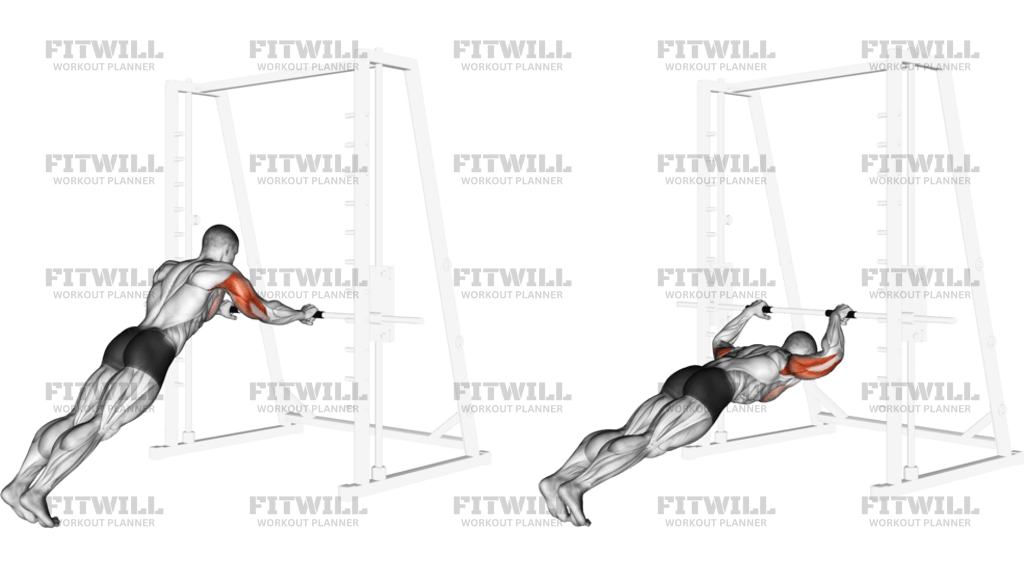
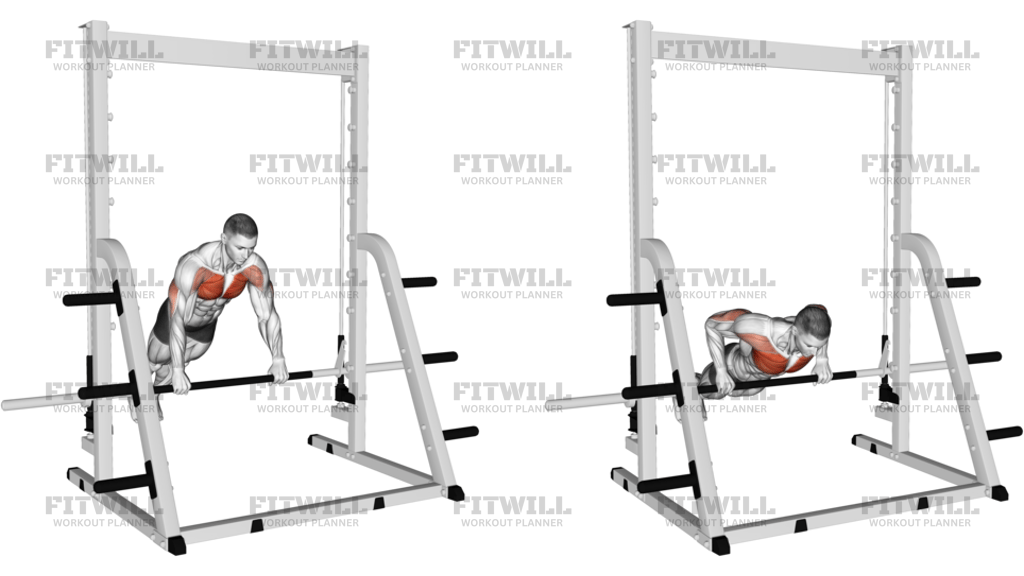
Incline Push-Up On A Smith Bar is a chest-focused pressing variation that uses the fixed bar of a Smith machine as an elevated hand support. It shifts part of your bodyweight onto the bar, so the movement is easier than a floor push-up while still training the chest, triceps, and front shoulders through a strong horizontal pressing pattern.
The height of the bar changes the demand more than most people expect. A higher bar shortens the lever and makes the set more approachable for beginners, higher-rep work, or a warm-up before bench pressing. Lowering the bar increases the load on the upper body and makes body control more important, so the setup should match the level of challenge you actually want.
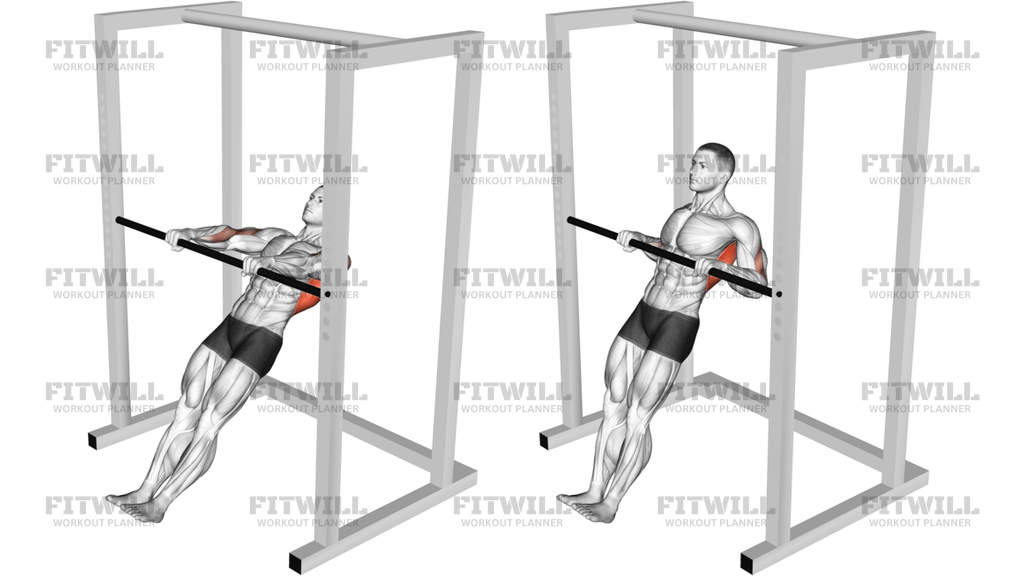
Set your hands slightly wider than shoulder width and place them firmly on the bar with your wrists stacked underneath. Walk your feet back until your body forms one straight line from head to heels, then keep your heels grounded, ribs down, and glutes lightly squeezed so the torso does not sag when you start lowering. That rigid line is what makes the exercise feel like a real press instead of a bent-hip lean.
As you lower, let your elbows bend naturally at about a 30-45 degree angle from your torso and bring your chest toward the bar under control. Touch or nearly touch the bar with the chest, then press the bar away until the elbows straighten and your body returns to the same long line. Breathe in on the way down and exhale as you drive up so the repetition stays smooth and predictable.
Incline Push-Up On A Smith Bar works well as a beginner progression, a volume-building accessory, or a shoulder-friendly way to groove pressing mechanics without getting down on the floor. It is also useful when you want a clear range of motion and stable hand placement before heavier pressing work. The main mistakes are letting the hips drop, flaring the elbows too wide, or setting the bar so high that the set becomes more of a standing lean than a real push-up.
[ Workout Log & Planner ]
Put your next workout in Fitwill
Keep your plan and training log ready when you are.


Instructions
- Set the Smith bar at about hip to chest height, with higher settings making the push-up easier and lower settings making it harder.
- Stand facing the bar and place your hands slightly wider than shoulder width, gripping the fixed bar firmly.
- Walk your feet back until your body is in a straight line from head to heels, with your feet about hip-width apart.
- Brace your abs and lightly squeeze your glutes so your ribs stay down and your hips do not sag.
- Start with your chest high between your hands and your neck long, not craned forward.
- Lower your chest toward the bar under control, letting your elbows bend at roughly a 30-45 degree angle from your torso.
- Bring your chest to the bar or as close as you can without collapsing your shoulders forward.
- Press the bar away until your elbows are straight and your body returns to the same rigid line.
- Inhale on the way down, exhale as you press up, and avoid bouncing off the bar.
- Step forward and rack the bar safely when the set is finished.
Tips & Tricks
- Use a higher Smith bar when you are learning the groove; lowering the bar is the simplest way to progress the exercise.
- Keep your wrists stacked under the bar instead of letting them fold back, especially on longer sets.
- If your shoulders feel pinchy, take a slightly wider hand position and stop the descent a little higher.
- Think about bringing your chest to the bar, not your chin, so the neck does not lead the rep.
- Keep the glutes lightly squeezed the whole set so the hips do not turn the movement into a sagging plank.
- A slow 2-3 second lowering phase makes the bar feel more challenging without needing more reps.
- Drive through the whole hand, especially the base of the index finger and thumb, instead of hanging on the fingertips.
- If your feet creep forward and the set feels too easy, walk them farther back to increase the load.
- Stop the set when your torso stops moving as one line and the hips start to pike or drop.
Frequently Asked Questions
What muscles does Incline Push-Up On A Smith Bar work?
It primarily trains the chest, with the triceps and front shoulders assisting through the press. Your core and glutes also work to keep the body in one straight line.
How high should the Smith bar be for Incline Push-Up On A Smith Bar?
A bar around hip to chest height is a practical starting point. Higher bars are easier, while lower bars make the press more demanding.
Is Incline Push-Up On A Smith Bar easier than a floor push-up?
Yes. Elevating the hands reduces how much bodyweight you have to press, which makes it a useful regression or volume option.
Should my chest touch the Smith bar?
A light chest touch is fine if you can keep your shoulders controlled and your torso rigid. Do not collapse into the bar or bounce off it.
What is the most common mistake with Incline Push-Up On A Smith Bar?
Letting the hips sag or pike is the biggest issue. The movement should look like one straight plank lowering and pressing together.
Can beginners use Incline Push-Up On A Smith Bar?
Yes. It is a good beginner option because the Smith bar gives a stable hand position and the incline reduces the load.
How do I make Incline Push-Up On A Smith Bar harder?
Lower the bar, walk your feet farther back, or slow the lowering phase. All three increase how much pressing strength and body control the set demands.
Can I use Incline Push-Up On A Smith Bar as a warm-up for bench press?
Yes. It can work well as a pressing warm-up because it grooves chest, triceps, and shoulder engagement without needing heavy external load.