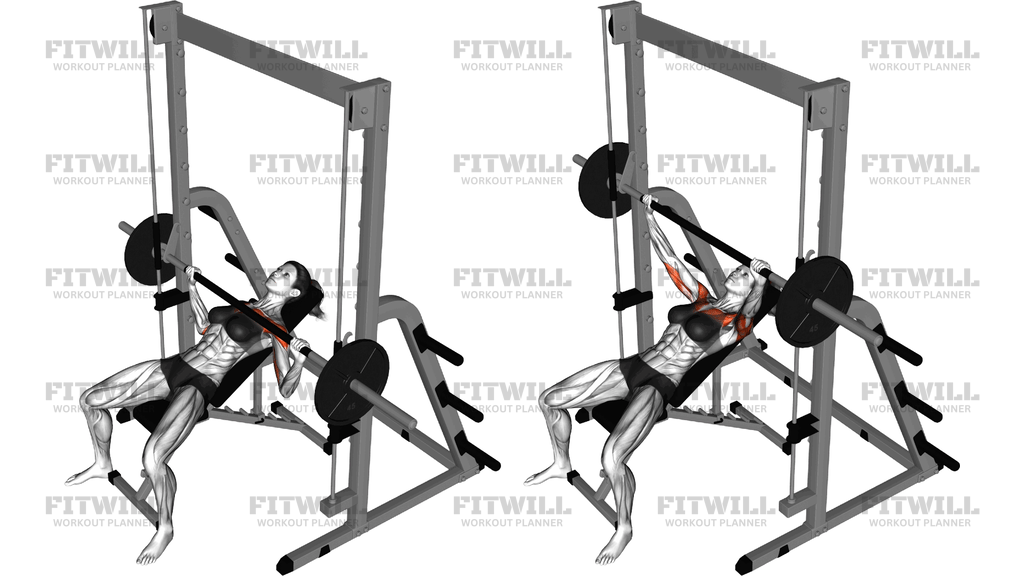
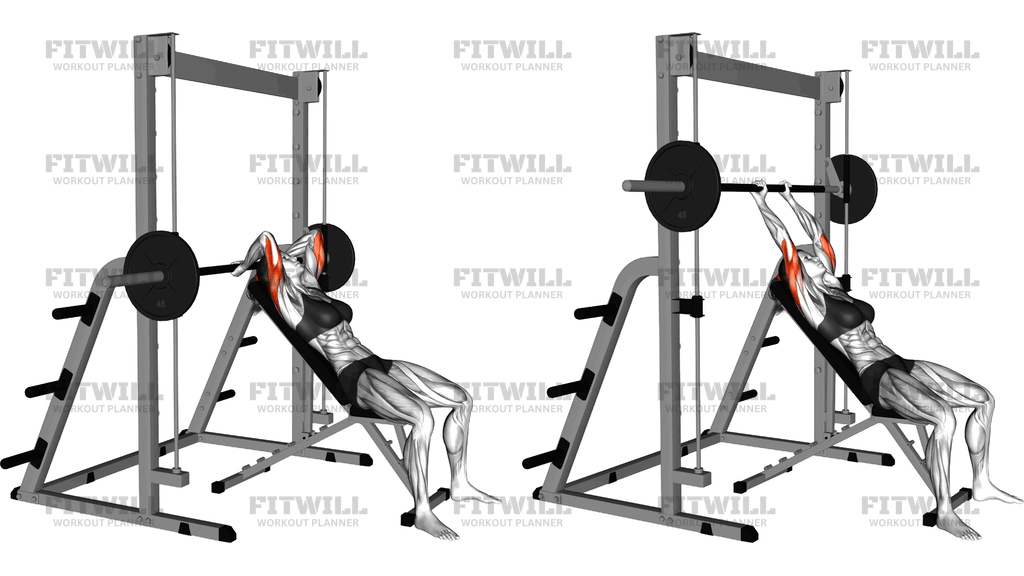
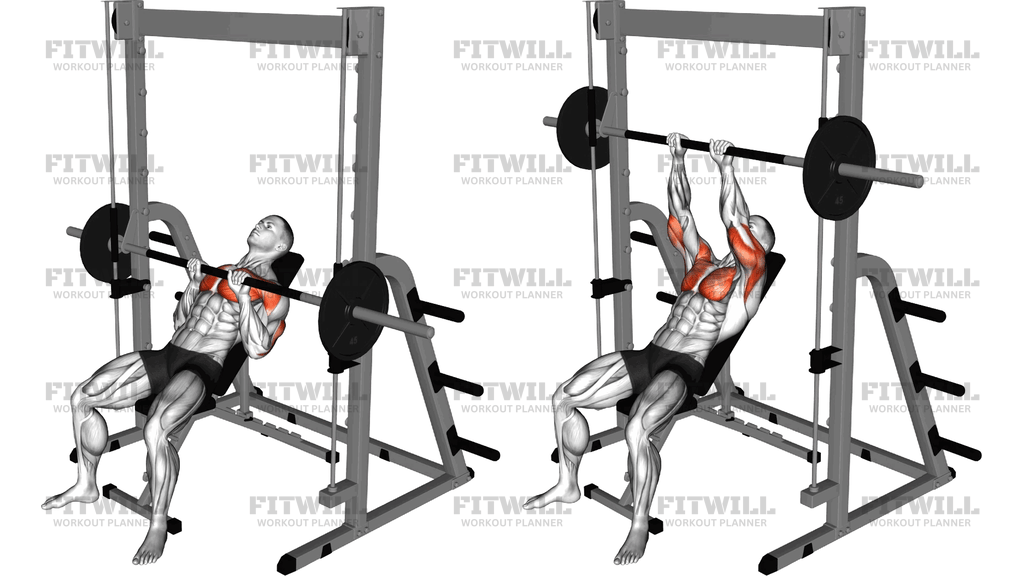
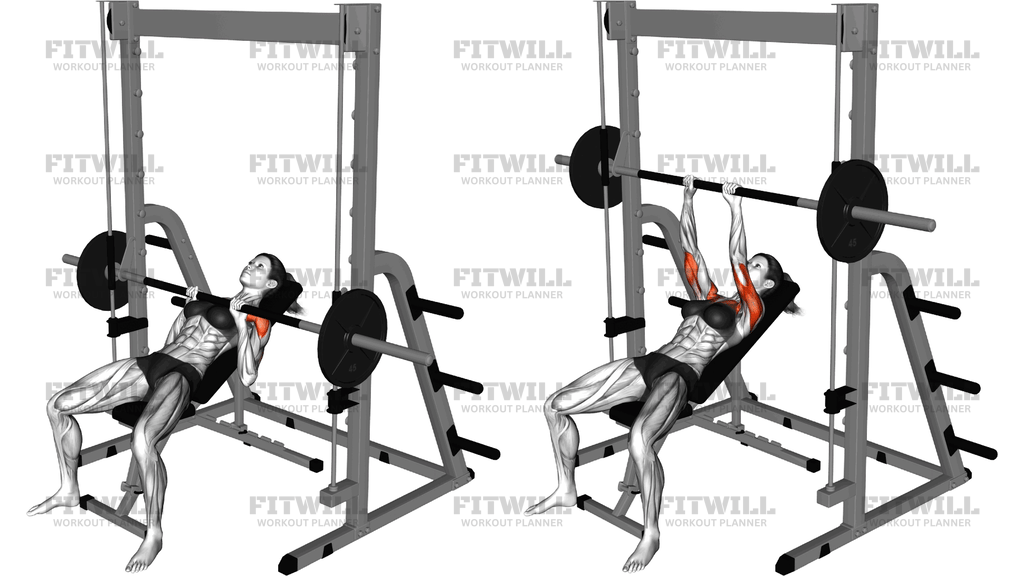
Smith Machine Incline Tricep Extension
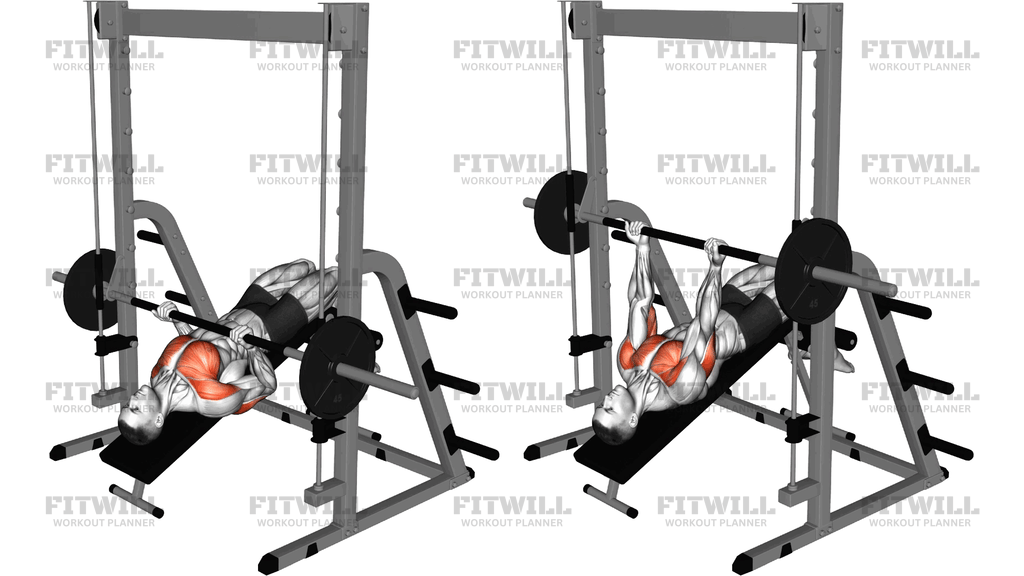
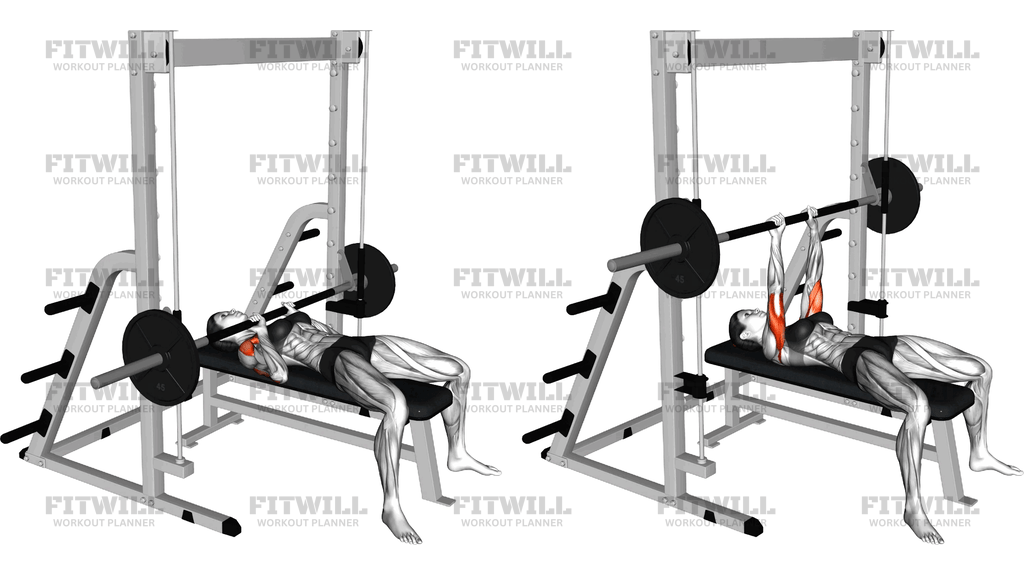
Smith Machine Incline Tricep Extension is a lying triceps isolation exercise performed on an incline bench under a fixed Smith bar. It places the upper arms in a slightly angled overhead position, which lets the elbows move through a controlled extension pattern while the bench and bar path keep the setup stable. The main training effect is direct triceps loading with some help from the forearms, front shoulders, and midsection to keep the body organized on the bench.
This variation is useful when you want the triceps to work hard without having to stabilize a free barbell. The incline bench changes the line of pull compared with a flat skull crusher, so the long head of the triceps is challenged through a deeper stretch when the elbows bend and a strong lockout when the arms straighten. Because the Smith bar moves in a fixed track, the bench position matters: if you are too far forward or too far back, the wrists and elbows can feel awkward and the bar path can drift away from the natural groove of the rep.
A good set starts with the bench centered under the bar, the feet planted, and the shoulder blades set firmly into the pad. Lower the bar by bending only at the elbows and keep the upper arms steady rather than letting them swing. The bar should travel toward the forehead or slightly behind it depending on your bench angle and arm length. Press the bar back up by extending the elbows until the arms are straight without snapping the joints hard at the top.
Use this exercise as accessory triceps work, pressing support, or an arm-focused finisher when you want steady tension and repeatable reps. It is especially useful for lifters who want the overhead-like triceps stretch of an extension movement but prefer the security of a guided bar path. Keep the load moderate enough that the elbows stay comfortable and the rep stays smooth. If elbow comfort drops, shorten the range slightly or adjust the bench position before forcing more weight.
[ Workout Log & Planner ]
Put your next workout in Fitwill
Keep your plan and training log ready when you are.


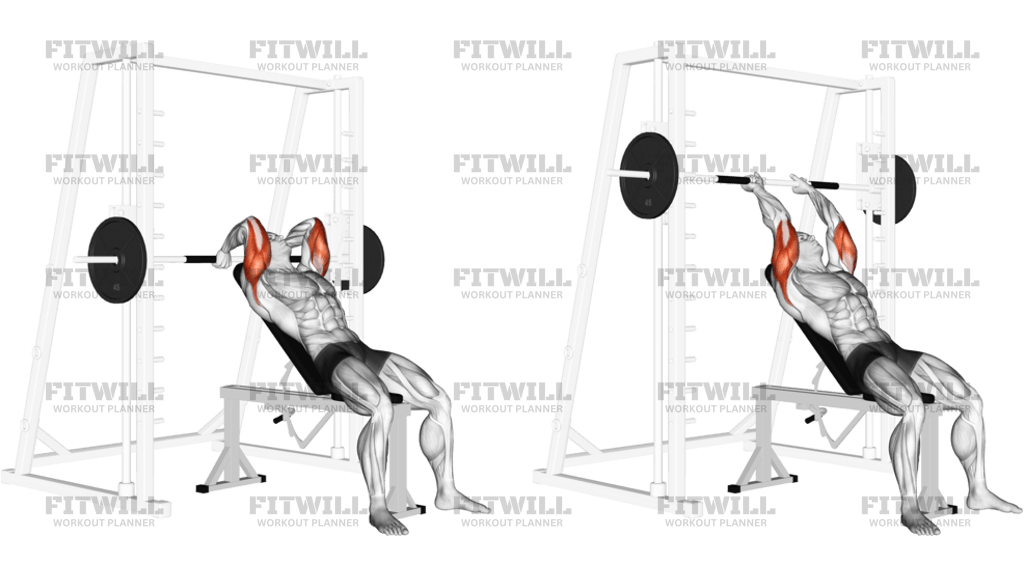
Instructions
- Set an incline bench under the Smith bar and adjust it so your head, shoulders, and upper back can lie flat with the bar over your face or upper chest line.
- Sit on the bench, grip the bar with a shoulder-width overhand grip, then lie back with your feet planted and your shoulder blades pulled down into the pad.
- Unrack the bar to straight arms and position your upper arms so the elbows point up and slightly back rather than flaring wide.
- Bend only at the elbows to lower the bar in a smooth arc toward your forehead or just behind it, keeping the upper arms mostly fixed.
- Stop when the triceps are stretched and the forearms are close to your upper arms without letting the shoulders roll forward.
- Press the bar back up by straightening the elbows until the arms are fully extended and the triceps finish the rep.
- Keep your wrists stacked over your elbows, breathe in on the lowering phase, and exhale as you extend the bar to the top.
- Rack the bar carefully after the final rep and keep the bench position stable until the hooks are fully engaged.
Tips & Tricks
- Center the bench so the Smith bar starts over the line you want the bar to travel on; a small bench shift can change elbow comfort a lot.
- Keep the upper arms quiet. If they drift toward your face or chest on the way down, the movement turns into a shoulder exercise instead of a triceps extension.
- Let the bar travel only as far as your elbows and wrists stay stacked; forcing it too deep can make the wrists collapse backward.
- Use a grip that is narrow enough to bias the triceps but not so narrow that your wrists twist inward at the bottom.
- Keep the elbows pointed mostly up, not straight out to the sides, so the long head of the triceps gets loaded through the stretch.
- Lower under control for a clear eccentric, especially because the fixed bar path can make a fast descent feel harsher on the elbows.
- Stop short of bouncing the bar near the forehead. The bottom position should feel controlled, not like a quick touch-and-go skull crusher.
- Choose a lighter load if the Smith bar path does not match your arm length or bench angle; better alignment matters more than chasing weight here.
Frequently Asked Questions
What muscle does Smith Machine Incline Tricep Extension target most?
The triceps are the primary target, especially when you keep the upper arms fixed and let the elbows do the work.
Where should the Smith bar go during the lowering phase?
Lower it toward the forehead or slightly behind it, depending on your bench angle and arm length, while keeping the upper arms mostly still.
How do I set up the incline bench under the Smith machine?
Place the bench so your head, shoulders, and upper back are supported and the bar can move cleanly over your face without forcing your wrists backward.
Can beginners use this exercise?
Yes, if they start light and focus on elbow-only movement. The guided bar path makes it easier to learn than a free-weight version.
Why do my elbows feel it more than my triceps?
Usually the load is too heavy, the range is too deep, or the elbows are drifting out of position on the descent.
Should my upper arms move during the rep?
They should stay almost fixed. A little drift is normal, but big shoulder movement reduces triceps tension.
What grip works best on the Smith bar?
A shoulder-width overhand grip is usually the safest starting point. Narrower can work, but too narrow often irritates the wrists.
What is the biggest mistake to avoid?
Dropping the bar too fast and letting the elbows flare or the shoulders roll forward at the bottom.