Balance Board Version 2
Balance Board Version 2 is a standing balance drill that challenges the hips, glutes, ankles, and core to keep the platform controlled while your body stays upright. It is less about moving a heavy load and more about holding alignment while the board rocks under you. That makes it useful for coordination, proprioception, and lower-body stability work.
The setup matters because the board and roller decide how quickly the platform shifts. Stand on the board with one foot near each end, feet about hip-width apart, and keep your weight centered over the middle of the board. A soft bend in the knees helps you absorb the side-to-side motion instead of locking out and getting thrown off balance.
During each repetition, guide the board only as far as you can control, then bring it back through center before it tips too far. The movement should come from small shifts at the ankles, hips, and feet rather than from your shoulders or a big lean at the waist. Keep your chest tall, your ribs stacked over your pelvis, and your eyes fixed on one spot so the board does not wobble faster than your posture can catch it.
This exercise is often used as a warmup, balance primer, or accessory drill before heavier lower-body training. It can also be a good option for people who need to rebuild confidence on unstable surfaces, as long as they start with a slow tempo and a safe setup near a wall or rack. The goal is steady control, not forcing the board into a bigger tilt than your position can support.
Balance Board Version 2 should leave your legs and trunk working together, but your form should still feel organized from start to finish. If the board slaps down, your knees lock, or your upper body starts drifting side to side, the range is too large or the tempo is too fast. Keep the motion smooth, repeatable, and quiet enough that you can own every change in balance before you add more challenge.
Fitwill
Log Workouts, Track Progress & Build Strength.
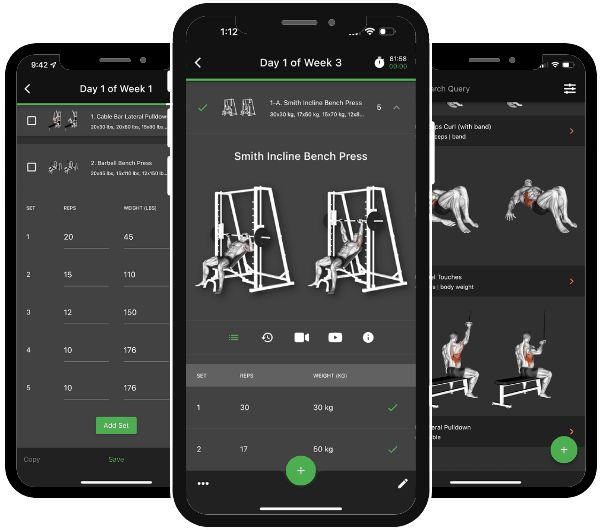
Achieve more with Fitwill: explore over 5000 exercises with images and videos, access built-in and custom workouts, perfect for both gym and home sessions, and see real results.
Start your journey. Download today!


Instructions
- Place the balance board on a flat, non-slip surface and step onto it with one foot near each end of the board.
- Set your feet about hip-width apart, keep your knees softly bent, and center your weight over the middle of the board.
- Let your arms hover slightly away from your sides so they can help with balance without swinging.
- Brace your midsection and keep your chest tall before the board starts to tip.
- Shift pressure to one foot until the board tilts only as far as you can control, then keep the landing smooth.
- Guide the board back through center and toward the opposite side without locking your knees or snapping your hips.
- Keep your eyes on one fixed point and breathe steadily while you hold the board under control.
- Continue for the planned time or repetitions, maintaining the same small, quiet range on each side.
- Step off carefully and reset if the board starts to slam, the roller drifts, or your balance becomes too unstable.
Tips & Tricks
- Keep the movement small at first; the goal is to control the board, not chase a dramatic tilt.
- If the roller is moving too fast, slow the tempo and reduce how far you shift to each side.
- Press through the whole foot, especially the big toe and heel, so your ankles do not collapse inward.
- A slight knee bend usually feels steadier than locked legs, because it gives your hips room to absorb the wobble.
- Hold your hands a little out from your body for balance, but avoid windmilling them to save a bad rep.
- If your torso starts leaning with the board, reset your ribs over your pelvis and keep the chest stacked.
- Use a wall, rack, or sturdy support nearby when you are learning the movement or increasing the range.
- Choose a slower, quieter rep if the board slaps down at the end of each shift.
- Stop the set once your feet begin to slide or you can no longer control the roller through the center.
Frequently Asked Questions
What does Balance Board Version 2 train most?
It mainly trains balance, ankle control, and hip stability, with the core helping you keep the board centered and the torso upright.
Is Balance Board Version 2 good for beginners?
Yes, if the board is set up on a non-slip surface and you keep the range very small at first. Beginners usually do best near a wall or rack until they can control the side-to-side shift.
How should my feet sit on the board?
Place one foot near each end of the board with a hip-width stance, then keep your weight centered over the middle. If your stance is too narrow, the board usually feels twitchier and harder to control.
What is the most common mistake on Balance Board Version 2?
People usually tilt too far and let the board slam from side to side. Keep the motion small enough that you can reverse it smoothly through center.
Should I feel this in my legs or my core?
You should feel a mix of both, especially around the glutes, hips, calves, and deep core stabilizers. If the effort shifts mostly into your shoulders, you are probably overusing your arms to balance.
Do I need shoes for this exercise?
Stable training shoes can help if the board surface is slippery, but a firm barefoot setup can also work if you can keep your feet from sliding. The key is traction and control, not a specific shoe style.
How long should I hold or repeat Balance Board Version 2?
Short sets of controlled time or repetitions work best, because balance quality usually drops before the target muscles are fully fatigued. Stop when the board starts getting noisy, rushed, or unstable.
Can I make Balance Board Version 2 harder?
Yes, but increase difficulty by slowing the control, narrowing the margin of error, or extending the hold only after your basic side-to-side control is solid. A bigger wobble or faster tempo should come later, not first.