Resistance Band Standing Balance Hip Abduction
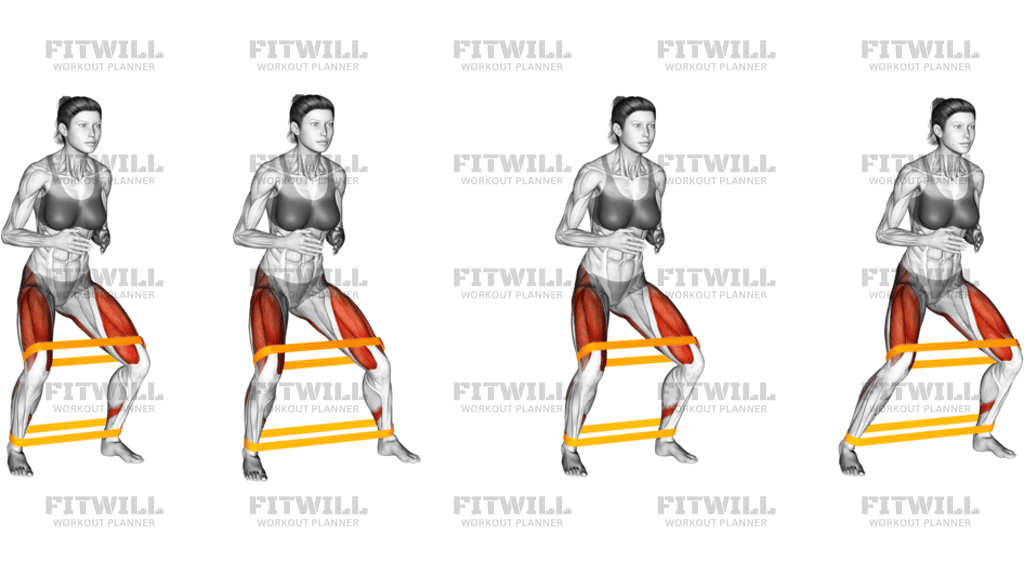
Resistance Band Standing Balance Hip Abduction is a standing single-leg hip stability drill that trains the hip abductors, especially the glute medius, to control the pelvis while the free leg moves out to the side. The band adds tension through the lift, so the exercise rewards a quiet torso, level hips, and a deliberate path rather than a big swing. It is useful when you want lateral hip work that also challenges balance and ankle-to-hip control.
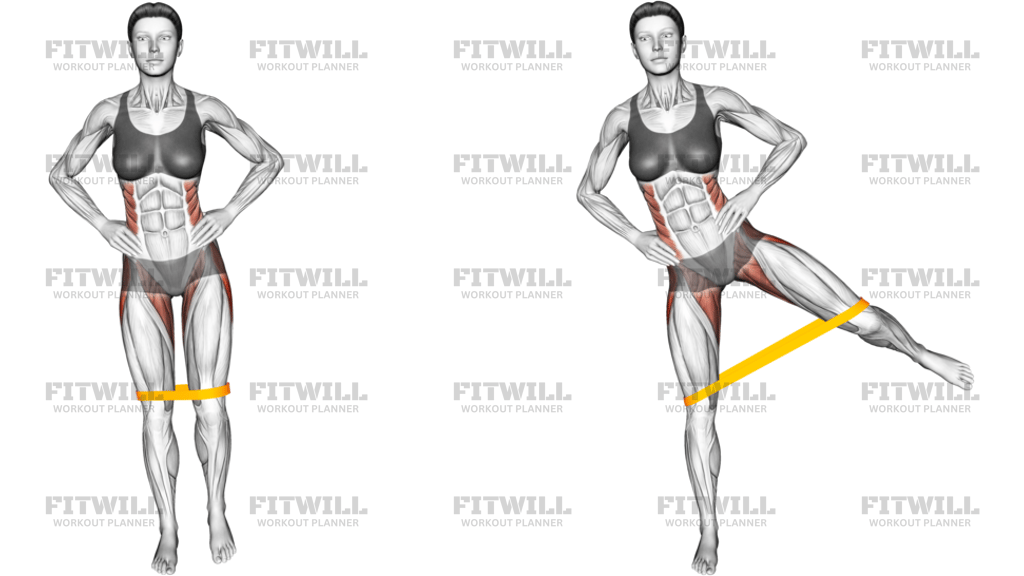
The setup matters because the standing leg must do most of the stabilization before the moving leg ever leaves the floor. Place the band around the ankles, stand tall on one leg, and keep the planted foot rooted with the toes pointed forward. Hands on the hips help you feel whether the pelvis stays level. A soft bend in the standing knee is useful, but do not sink into a squat; the goal is to stay stacked and controlled while the working leg abducts.
As the free leg moves away from the body, keep the pelvis from hiking, rotating, or leaning toward the support side. The range should come from the hip joint, not from tipping the trunk or swinging the leg. A smooth pause at the top makes the outer hip work harder and exposes compensation quickly. On the way down, return the leg under control and keep tension in the band instead of letting it snap back.
This exercise fits well in activation work, accessory lower-body training, warmups, and rehab-style conditioning when you need cleaner frontal-plane control. It is especially useful for runners, field athletes, and anyone whose knees cave inward or whose hips feel unstable on single-leg tasks. The standing side still works hard here, because it has to prevent the pelvis from dropping while the opposite leg abducts.
Use light to moderate resistance and treat every repetition like a balance drill, not a speed drill. If the torso starts leaning, the standing heel lifts, or the foot starts spinning out, the set is too hard or too rushed. The best reps look quiet from the waist up, with the working leg moving smoothly and the standing leg holding the body in one stable line.
Fitwill
Log Workouts, Track Progress & Build Strength.
Achieve more with Fitwill: explore over 9600 exercises with images and videos, access built-in and custom workouts, perfect for both gym and home sessions, and see real results.
Start your journey. Download today!




Instructions
- Loop a resistance band around both ankles and stand tall beside a clear space for the moving leg.
- Shift your weight onto one leg and root that foot into the floor with your toes pointing straight ahead.
- Place your hands on your hips and keep your pelvis level before the first rep.
- Slightly bend the standing knee, brace your trunk, and keep your chest stacked over the planted foot.
- Lift the free leg out to the side against the band without leaning your torso or hiking the hip.
- Raise the leg only as far as you can keep the pelvis square and the standing foot flat.
- Pause briefly at the top, then lower the leg back to the start in a slow, controlled line.
- Keep steady breathing throughout the set and reset your balance before the next repetition.
- Switch sides after completing the planned repetitions.
Tips & Tricks
- Keep the standing foot tripod-downed through the big toe, little toe, and heel so balance does not drift to the outside edge.
- Use a very light band first; if the pelvis rocks, the resistance is already too high for this drill.
- Think about moving the thigh out from the hip socket instead of swinging the whole leg.
- Do not let the standing knee collapse inward as the working leg lifts.
- A small pause at the top is more useful than a bigger swing with poor control.
- Keep the toes of the moving leg pointed forward or only slightly turned out so the hip abducts cleanly.
- If you feel the low back taking over, shorten the range and re-stack the ribs over the pelvis.
- Use a slow lowering phase to keep the outer hip engaged and avoid snapping the band back.
- Stop the set when the standing hip starts dropping or the trunk begins to lean.
Frequently Asked Questions
What muscles does Resistance Band Standing Balance Hip Abduction work most?
It mainly trains the hip abductors, especially the glute medius, while the standing leg and core work hard to keep the pelvis level.
Should I keep both feet on the floor?
No. The image shows a single-leg balance position, so one foot stays planted while the other leg moves out to the side against the band.
Where should the band sit?
Around the ankles, as shown, so the band pulls the moving leg outward while the standing leg has to stabilize the pelvis.
Why does my torso lean during the rep?
That usually means the band is too heavy or the leg is lifting too high. Shorten the range and keep the chest stacked over the standing foot.
Is this more of a strength exercise or a balance exercise?
It is both. The hip on the moving side works against the band, and the standing side has to control balance and pelvis position.
Can I use this as a warm-up?
Yes. It works well before lower-body training or running when you want to wake up the outer hips and improve single-leg control.
What should the standing foot be doing?
Keep the whole foot rooted and the arch active so the ankle and hip can stabilize the body without wobbling.
How do I make the exercise harder without losing form?
Use a slightly stronger band, add a brief pause at the top, or slow the lowering phase before you increase the leg height.