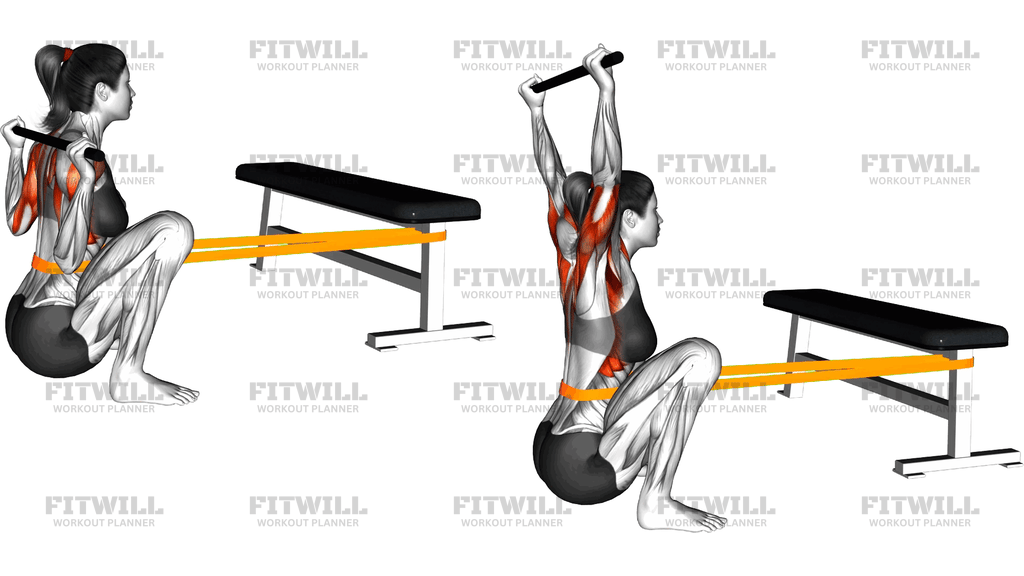
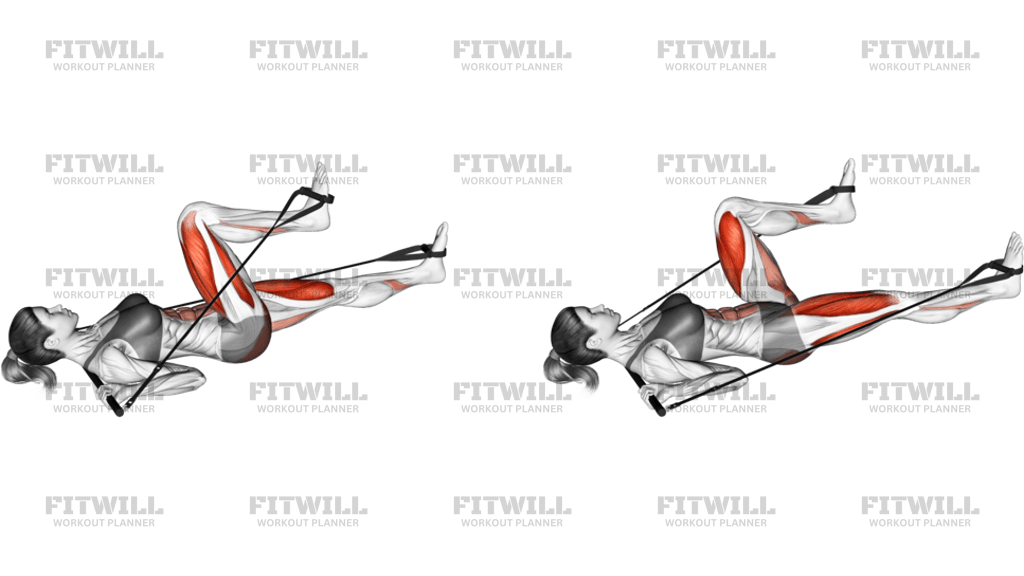
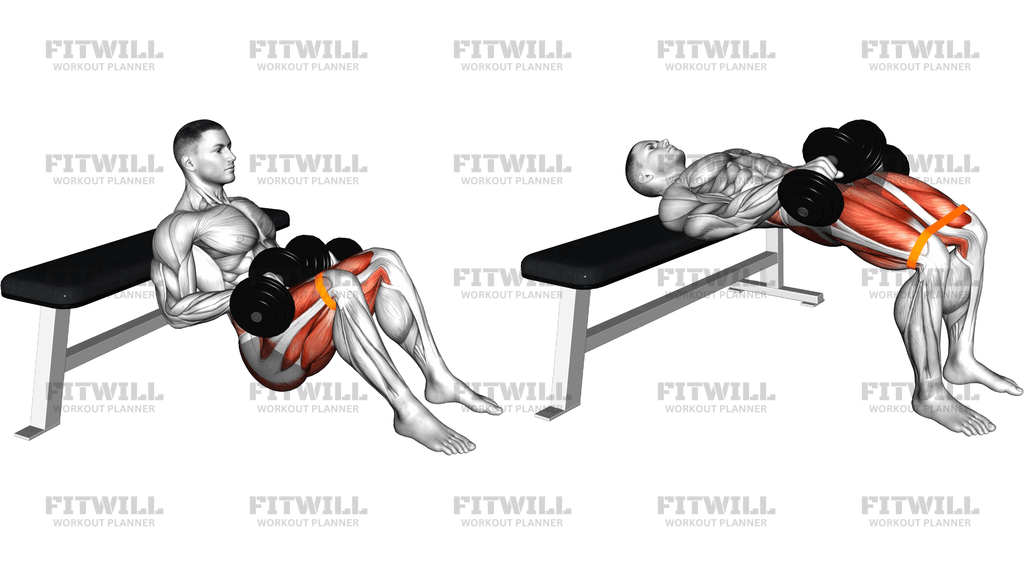
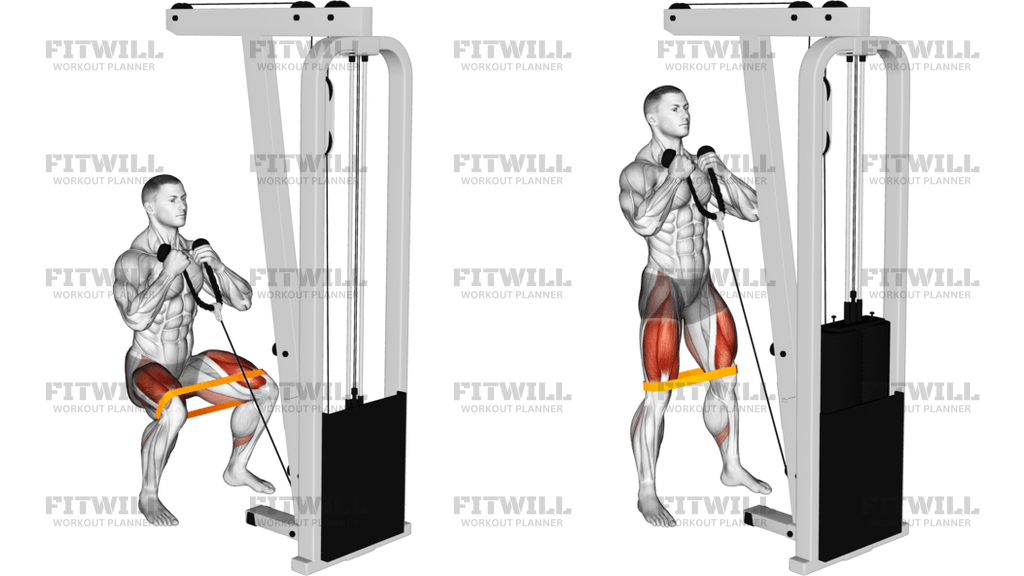
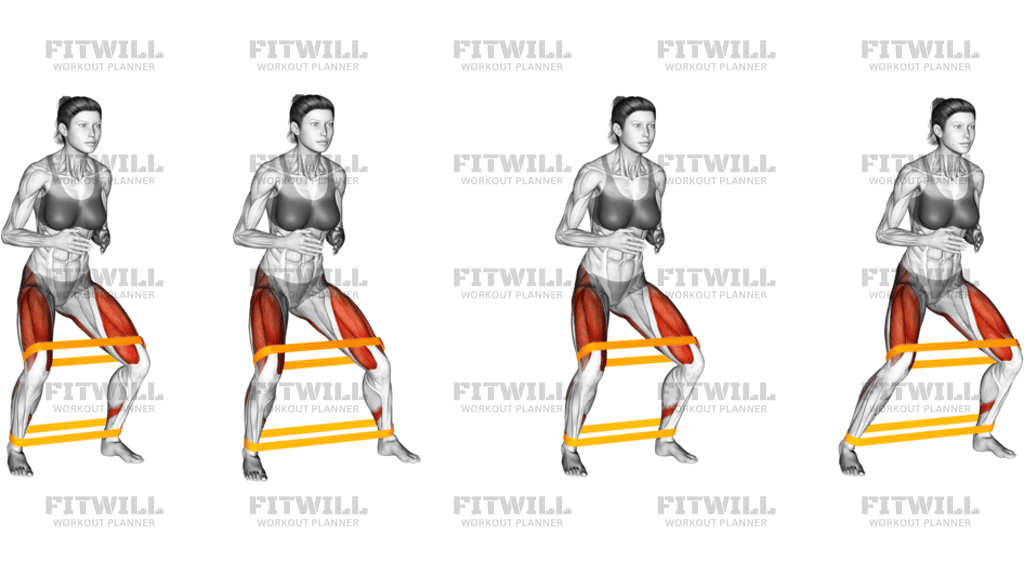
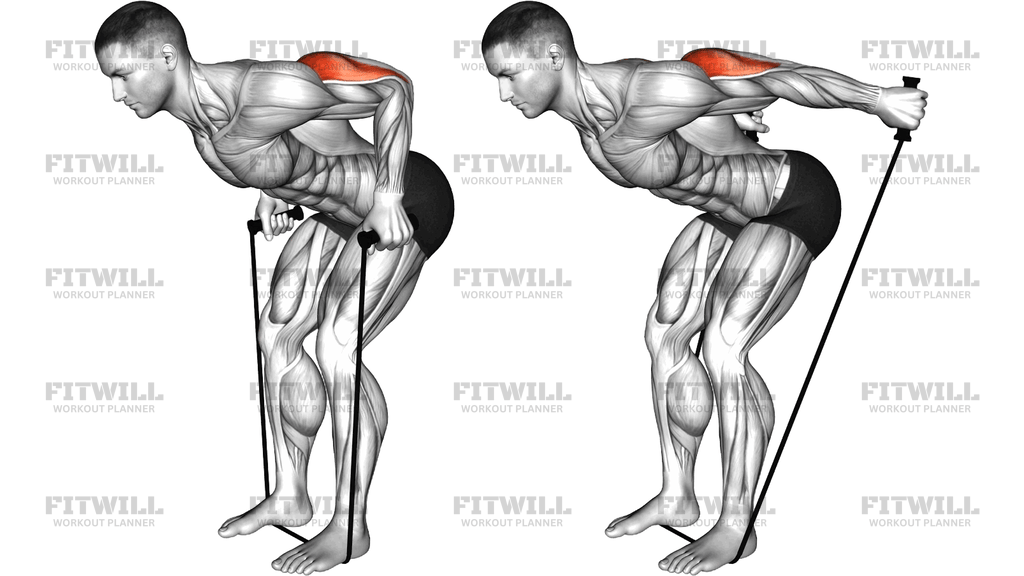
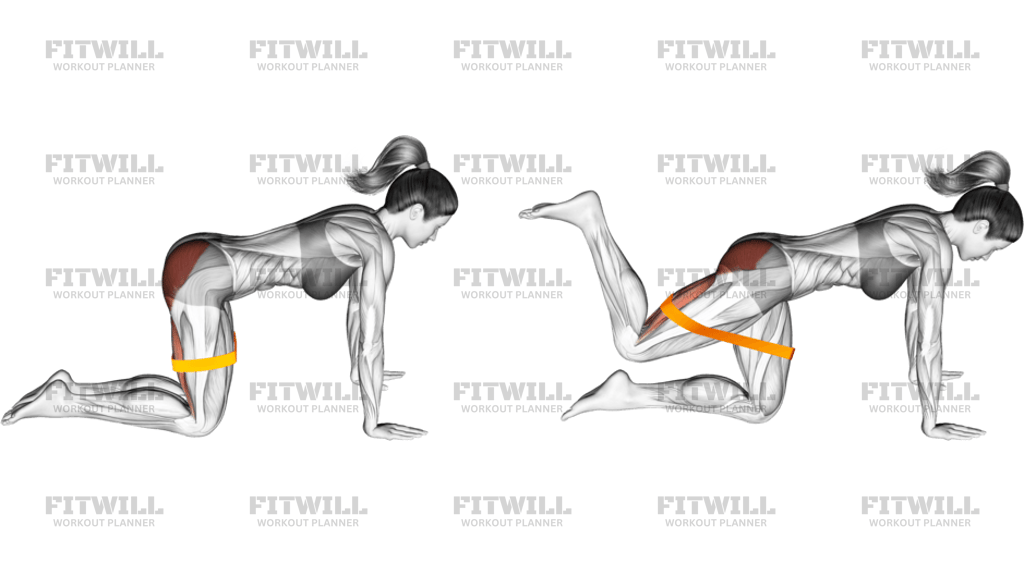
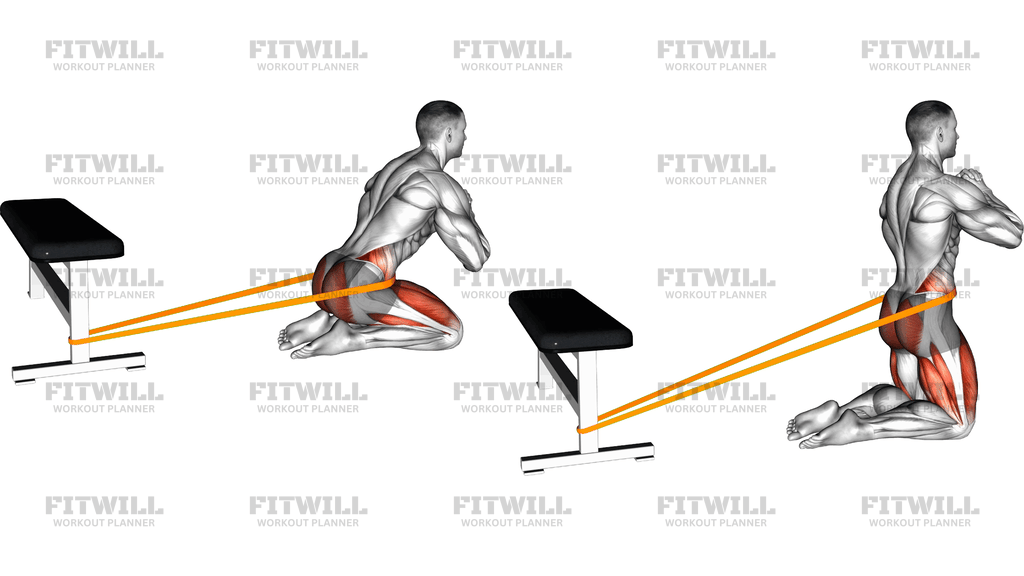
Resistance Band Reverse Hyper With Stability Ball On Flat Bench
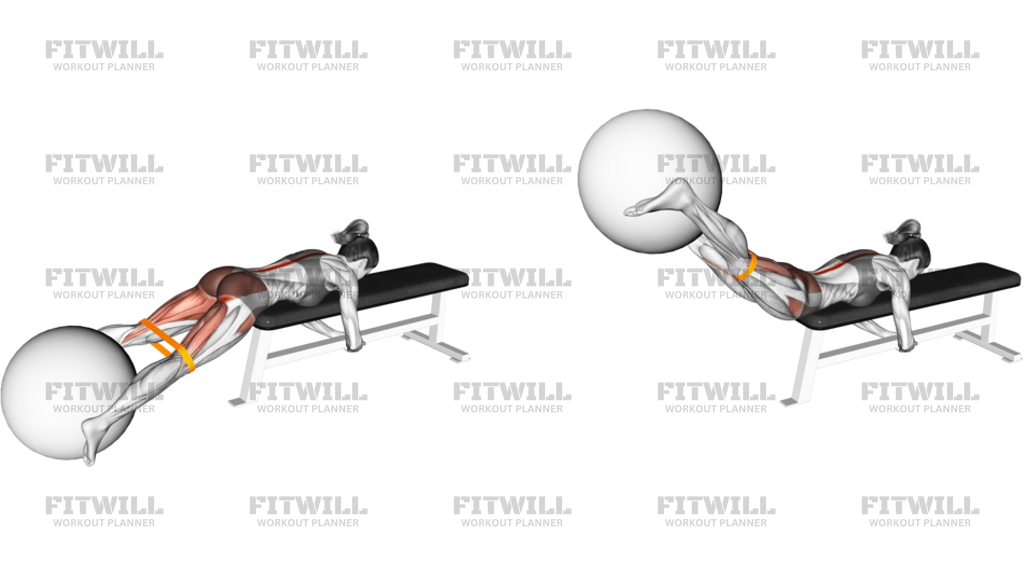
Resistance Band Reverse Hyper With Stability Ball On Flat Bench is a prone posterior-chain drill built around hip extension. Your torso stays supported on a flat bench while your legs hang free behind it, and the stability ball adds a control challenge at the feet as you lift and lower. The exercise is useful when you want glutes, hamstrings, and spinal support muscles working together without loading the spine like a heavy barbell movement.
The setup matters because the edge of the bench should leave enough room for the hips to move freely. If you slide too far forward, the lift becomes awkward and your low back takes over; if you stay too far back, you lose the clean hanging path that makes reverse hyper work well. Keep the chest and hands anchored on the bench, keep the pelvis square, and let the legs travel in a smooth arc instead of kicking them upward.
During each rep, think about driving the thighs up with the glutes rather than swinging the feet for height. A small bend in the knees is fine, but the body should stay long and controlled, with the ball held steady between the feet and the band tension kept under control. Lift until the legs line up with the torso or just slightly above it, then pause long enough to feel the hips finish the rep.
Lower under control until the legs are hanging again and the glutes stay loaded. The movement should feel like a deliberate hip extension pattern, not a lower-back hyperextension or a momentum exercise. Breathing should stay steady: brace before the lift, exhale through the effort, and inhale as you return to the bottom.
This variation works well as accessory work on glute, hamstring, or posterior-chain days, and it can also fit as a lighter technique drill when you want to groove hip extension with less spinal compression. Start with a setup that lets you keep the ball secure and the bench stable, then add resistance only when you can repeat the same path rep after rep. If the ball shifts, the band pulls you out of alignment, or you feel the low back doing most of the work, shorten the range and clean up the position first.
[ Workout Log & Planner ]
Put your next workout in Fitwill
Keep your plan and training log ready when you are.


Instructions
- Set a flat bench so you can lie face down with your hips right at the edge, place the stability ball between your feet or ankles, and loop the resistance band around the lower legs or feet if that is how your setup is arranged.
- Lie prone with your chest and stomach supported on the bench, grip the bench edges with both hands, and let your legs hang straight off the back.
- Keep your pelvis square, feet together around the ball, and your knees softly straight so the movement comes from the hips.
- Brace your abs and set your shoulders down so your torso stays glued to the bench.
- Exhale as you squeeze your glutes and raise both legs in a smooth arc behind you.
- Lift until your legs reach bench height or just above it, keeping the ball controlled and the band from twisting your feet.
- Pause briefly at the top, then lower the legs slowly until they are hanging again without letting the weight drop.
- Reset the brace before the next rep and repeat for the planned reps, then set the legs down under control.
Tips & Tricks
- Place your hips at the bench edge so the legs can swing freely without your waist pinching.
- Keep the ball squeezed between the feet; if it slips, reduce range before adding resistance.
- Let the glutes start the lift instead of kicking the feet upward.
- Stop the rep when the low back starts to arch harder than the hips extend.
- A small knee bend is fine, but don't turn the movement into a hamstring curl.
- Slow the lowering phase so the band and ball do not jerk your legs out of line.
- If the band is too aggressive, use a lighter band or shorten the lever with bent knees.
- Keep your hands pressing into the bench so the torso stays still while the legs move.
Frequently Asked Questions
What muscles does Resistance Band Reverse Hyper With Stability Ball On Flat Bench work?
It mainly trains the glutes and hamstrings, with the lower back and core helping stabilize your torso on the bench.
Where should my body rest on the bench?
Your chest and stomach stay supported on the flat bench while your hips sit right near the edge so your legs can move freely behind you.
How do I keep the stability ball from falling out?
Pin it between your feet or ankles, keep light pressure on it throughout the set, and use a smaller range if it starts to slide.
Should I keep my knees straight?
Keep them mostly straight with only a soft bend. Too much knee bend turns the exercise into a different hip and knee pattern and reduces the reverse hyper effect.
How high should I lift my legs?
Lift until your legs are roughly in line with your torso or slightly higher if you can do it without arching your low back.
Is Resistance Band Reverse Hyper With Stability Ball On Flat Bench beginner-friendly?
Yes, if you start with no extra load or a very light band and focus on a controlled path, a stable bench position, and a secure ball.
Why do I feel this in my lower back?
You are probably lifting too high or losing the brace at the top. Shorten the range and keep the ribcage and pelvis steady while the glutes drive the motion.
What can I use instead if I do not have a stability ball?
Use a standard bench reverse hyper variation with bodyweight only, or replace it with prone hip extensions on a bench until you can control the ball setup.