Bodyweight Lying Shoulder External Rotation
Bodyweight Lying Shoulder External Rotation is a floor-based rotator cuff drill that uses your own body position to create a small but meaningful external-rotation challenge at the shoulder. It is especially useful as a warm-up or accessory movement when you want cleaner pressing mechanics, better shoulder stability, or more awareness of the back of the shoulder. Because the load is light, the exercise depends on precise positioning rather than effort through momentum.
The movement mainly trains the small muscles that turn the upper arm outward and help center the shoulder in the socket, while the upper back and core keep the torso still. That is why the setup matters so much: if your ribs flare or your elbow wanders, the work shifts away from the shoulder and into compensation. A good repetition feels controlled, narrow, and deliberate, not forced.
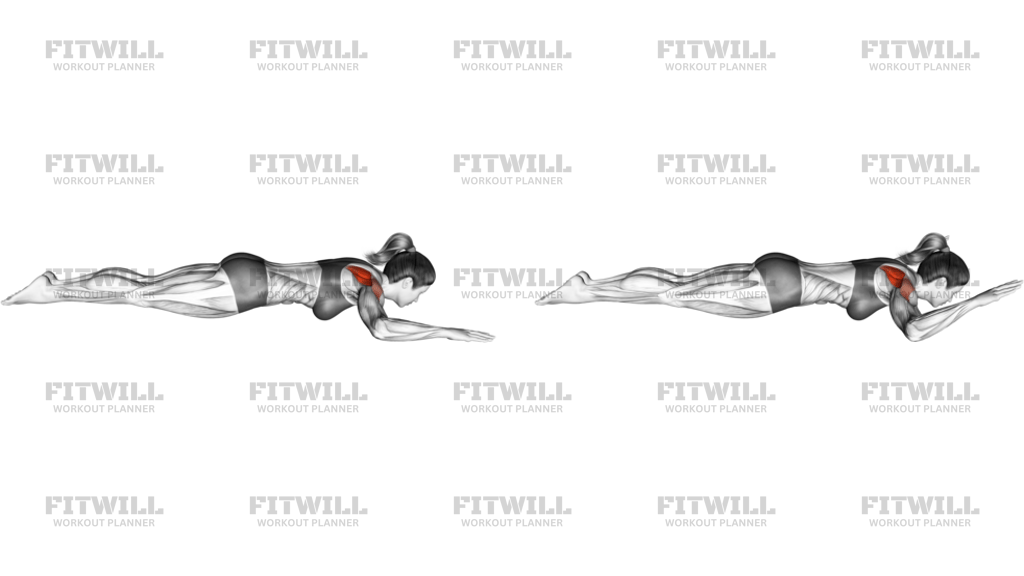
Lie face down on the floor with the working arm bent and the upper arm anchored so the forearm can rotate without the elbow drifting. Keep the chest heavy, the neck long, and the shoulder relaxed away from the ear as you rotate the forearm upward. The motion should come from the shoulder joint, not from a sweep of the whole arm or a twist through the lower back.
Use Bodyweight Lying Shoulder External Rotation before pressing sessions, on rehab-style upper-body days, or anywhere shoulder position tends to drift under fatigue. The range is usually short, so quality matters more than depth or speed. If you feel pinching in the front of the shoulder, shorten the range and slow the lowering phase; the rep should feel clean and local to the shoulder, not unstable through the neck, rib cage, or lower back.
[ Workout Log & Planner ]
Put your next workout in Fitwill
Keep your plan and training log ready when you are.


Instructions
- Lie face down on the floor with one arm bent about 90 degrees and the upper arm anchored so the forearm can rotate freely.
- Square your chest to the floor, turn your head to a comfortable side, and keep your neck long instead of craning upward.
- Set the working shoulder away from the ear and lightly brace your abs so your ribs stay heavy on the floor.
- Start with the forearm near the floor and keep the elbow fixed in place before you begin the rep.
- Exhale and rotate the forearm upward in a smooth arc until it points toward the ceiling or reaches your pain-free end range.
- Pause for a beat at the top without letting the elbow drift or the torso roll.
- Inhale and lower the forearm back down slowly, keeping tension through the shoulder instead of dropping the hand to the floor.
- Complete the planned reps, then set the arm down carefully before switching sides.
Tips & Tricks
- Keep the working elbow pinned where it started; if it slides, reset the setup before continuing.
- Rotate the forearm, not the wrist; the hand should follow the shoulder, not lead the movement.
- Let the chest stay heavy so the lower back does not help lift the arm.
- A smaller range done cleanly is better than forcing the forearm too high and letting the shoulder shrug.
- If the front of the shoulder takes over, move the arm slightly and reduce the range before trying again.
- Use a slower lowering phase than lifting phase to make the rotator cuff do the work.
- Treat this as prep work before pressing, not as a max-effort strength lift.
- If your neck tightens, adjust head position and keep the shoulders away from the ears.
- Stop the set when the hand starts to wobble or the torso begins to twist.
- Breathe quietly into the floor support instead of holding your breath through the whole set.
Frequently Asked Questions
What does Bodyweight Lying Shoulder External Rotation work?
It mainly works the rotator cuff muscles that rotate the upper arm outward, with the upper back and core helping keep the body stable.
Is Bodyweight Lying Shoulder External Rotation good for warm-ups?
Yes. It fits well before pressing, overhead work, or any session where you want better shoulder control before heavier lifts.
Should my elbow move during Bodyweight Lying Shoulder External Rotation?
No. Keep the elbow anchored and let only the forearm rotate so the shoulder does the work instead of the whole arm.
How high should the forearm go?
Lift only until you reach a clean, pain-free top position. For most people that is a short range, not a big swing.
Can beginners do Bodyweight Lying Shoulder External Rotation?
Yes. Start with very small, controlled reps and focus on keeping the chest down and the elbow still.
Why do I feel Bodyweight Lying Shoulder External Rotation in my neck?
Usually the shoulder is shrugging or the head is turned too aggressively. Relax the upper trap, keep the shoulder away from the ear, and reposition your head.
What is the most common mistake with this exercise?
Rolling the torso or letting the ribs pop off the floor. The rep should come from the shoulder, not from body twist.
Can I substitute a band or cable for Bodyweight Lying Shoulder External Rotation?
Yes. A light band or cable can give you the same external-rotation pattern if you need more resistance, but the elbow position and control should stay the same.