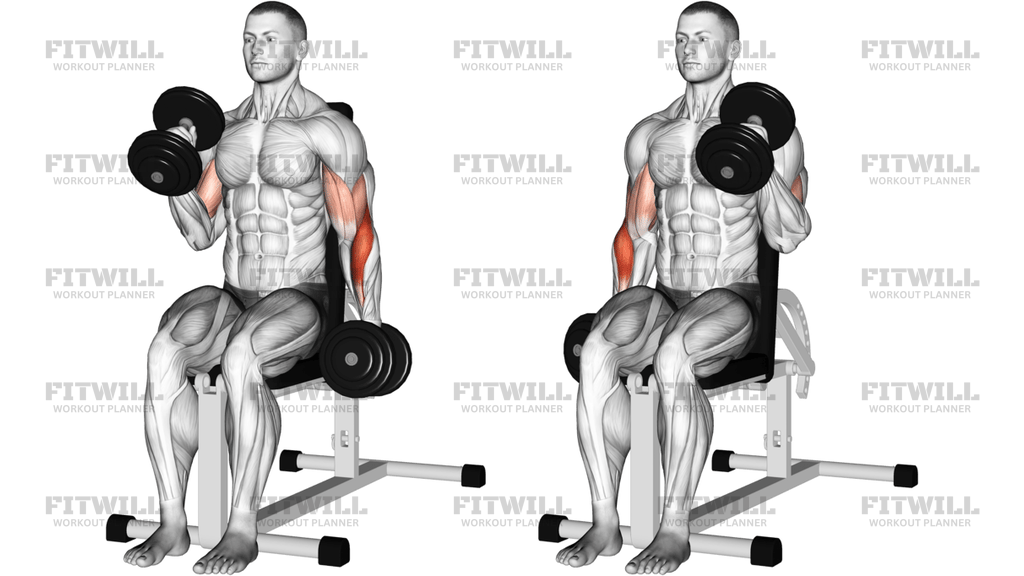
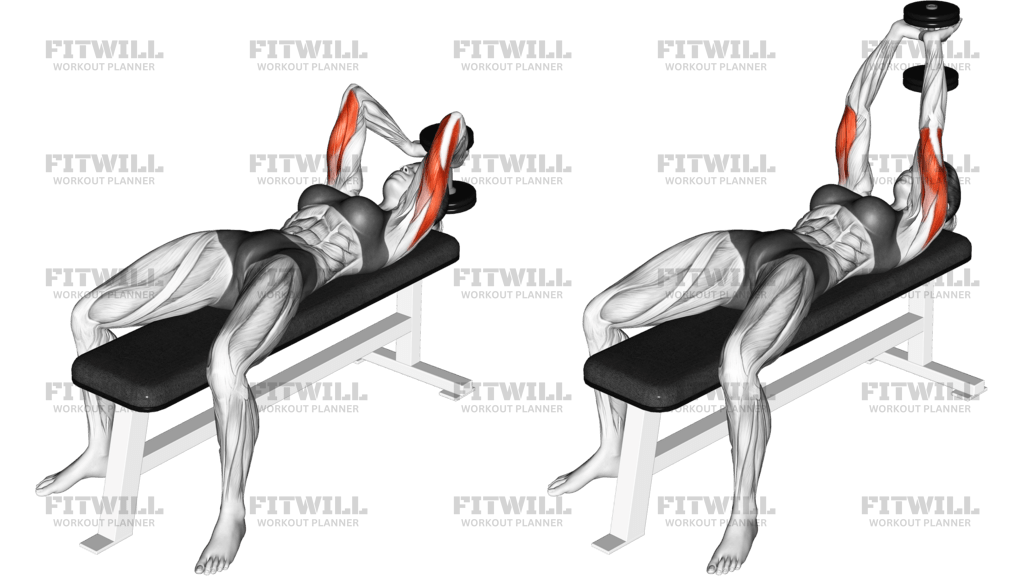
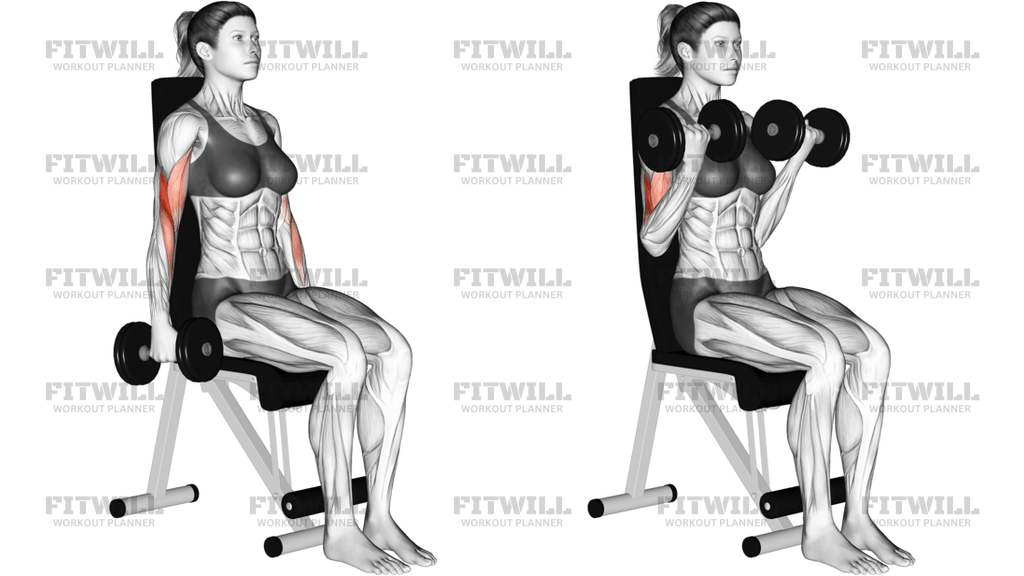
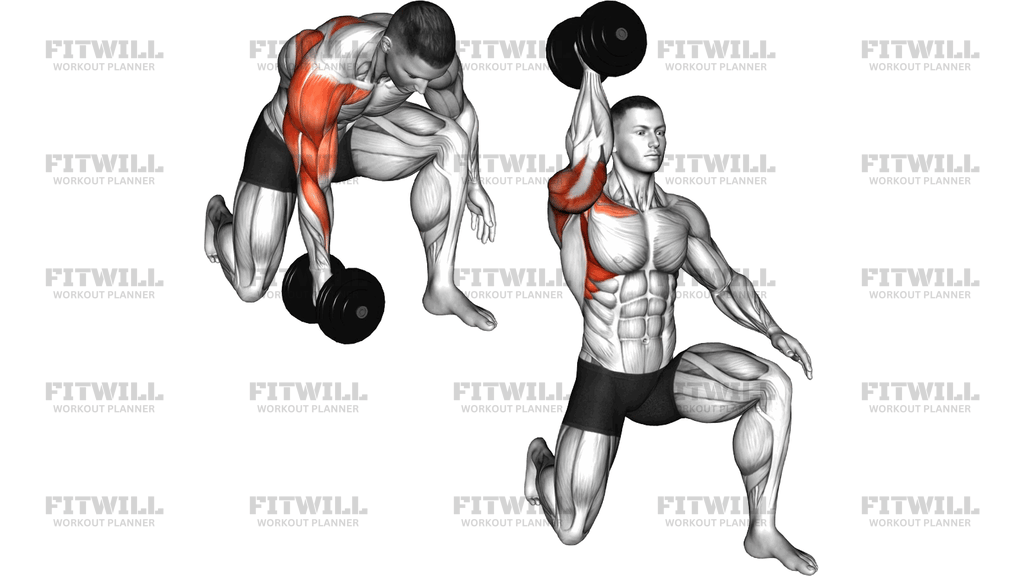
Dumbbell Standing Single-Arm Biceps Curl
Dumbbell Standing Single-Arm Biceps Curl is a straightforward arm exercise that isolates elbow flexion while also asking the rest of the body to stay quiet. It is useful for building biceps size and strength, but it also teaches you how to keep the shoulder, rib cage, and torso from helping when they should not. Because the curl is done standing, every rep also reflects how well you can resist swaying or leaning back to finish the lift.
The main effort comes from the biceps, with help from the brachialis and brachioradialis as the elbow bends and the forearm rotates. Your forearm, grip, and shoulder stabilizers still matter, because they keep the dumbbell lined up and prevent the wrist or upper arm from drifting out of position. That is why the setup matters so much: if the elbow starts floating forward or the shoulder rolls in, the movement quickly stops feeling like a clean curl.
Start with one dumbbell at your side, palm facing the thigh, and a tall stance that keeps the ribs stacked over the pelvis. From there, curl the weight in a smooth arc toward the front of the shoulder while the upper arm stays close to the body. As the dumbbell rises, rotate the hand so the palm finishes facing up, then lower it under control until the arm is long again without letting the shoulder tip forward.
Dumbbell Standing Single-Arm Biceps Curl works well as accessory work after pulling sessions, arm training, or any workout where you want direct biceps work without much setup. The standing position makes cheating easier, which is useful only if you keep it honest and controlled; otherwise the lower back and hips start doing the job. Use a weight that lets you keep the elbow mostly fixed, the wrist straight, and the lowering phase deliberate from the first rep to the last.
Beginners can use Dumbbell Standing Single-Arm Biceps Curl safely with a light dumbbell and a slow tempo, because the movement pattern is simple and easy to learn. More experienced lifters can use it to correct side-to-side differences, add focused volume, or finish a session with strict tension. If your shoulder takes over, your torso swings, or your wrist bends back, the load is too heavy for the quality this exercise is meant to train.
[ Workout Log & Planner ]
Put your next workout in Fitwill
Keep your plan and training log ready when you are.


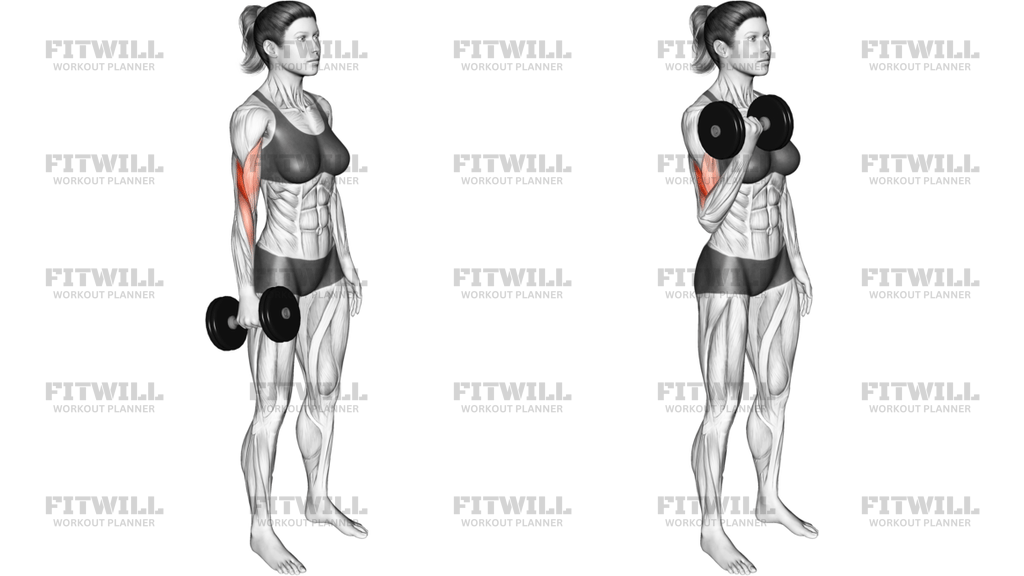
Instructions
- Stand tall with your feet about hip-width apart and let one dumbbell hang by your side with your palm facing your thigh.
- Keep the working elbow close to your rib cage and set the shoulder down so the upper arm stays quiet before you start.
- Stack your ribs over your pelvis and keep your free hand relaxed so your torso does not twist toward the dumbbell.
- Curl the dumbbell up in a smooth arc toward the front of your shoulder while the elbow stays near the same spot.
- Rotate your palm upward as the dumbbell rises and keep your wrist straight instead of letting it bend back.
- Squeeze the biceps briefly at the top without shrugging the shoulder or leaning back to finish the rep.
- Lower the dumbbell slowly until the arm is straight again and the elbow is fully extended under control.
- Breathe out as you curl and inhale as you lower, then reset your shoulder before the next rep or the switch to the other arm.
Tips & Tricks
- If your torso rocks backward, the dumbbell is too heavy for a strict single-arm curl.
- Keep the elbow slightly in front of the hip, not drifting out to the side where the shoulder starts helping.
- Finish each rep with the palm turned up; stopping halfway through the rotation usually shortens the biceps squeeze.
- A straight wrist keeps the load on the elbow flexors, while a bent wrist turns the rep into a grip and forearm fight.
- Lower the weight for two to three seconds so the eccentric phase does real work instead of just dropping the dumbbell.
- Let the non-working hand stay relaxed and still, because clenching or swinging it often starts a body sway.
- If the top of the curl feels crowded in the front shoulder, reduce the load and keep the upper arm more vertical.
- Match reps side to side and start with the weaker arm if one biceps tires out earlier.
Frequently Asked Questions
What muscles does Dumbbell Standing Single-Arm Biceps Curl work?
It primarily targets the biceps, with help from the brachialis, brachioradialis, forearms, and shoulder stabilizers.
Why is Dumbbell Standing Single-Arm Biceps Curl done one arm at a time?
Working one arm at a time makes it easier to notice strength differences and keep the elbow from cheating forward to finish the rep.
Should my palm turn up during Dumbbell Standing Single-Arm Biceps Curl?
Yes. Start with the palm facing your thigh and rotate it to face up as the dumbbell climbs so the biceps finishes the curl strongly.
How close should my elbow stay to my body?
Keep it close to your rib cage and only let it drift a little if needed. Big forward movement usually means the shoulder is taking over.
Can beginners do Dumbbell Standing Single-Arm Biceps Curl?
Yes. A light dumbbell and a slow lowering phase make it easy to learn without swinging or overloading the elbow.
Why does my wrist hurt during the curl?
The wrist is usually bending back or twisting under load. Keep it straight and use a lighter dumbbell if the handle feels hard to control.
Is standing better than seated for this exercise?
Standing adds more demand on posture and control, while seated makes it easier to keep the torso strict if you tend to swing.
How many reps should I use for Dumbbell Standing Single-Arm Biceps Curl?
Most people do well with moderate to higher reps, as long as each rep stays strict and the lowering phase remains controlled.