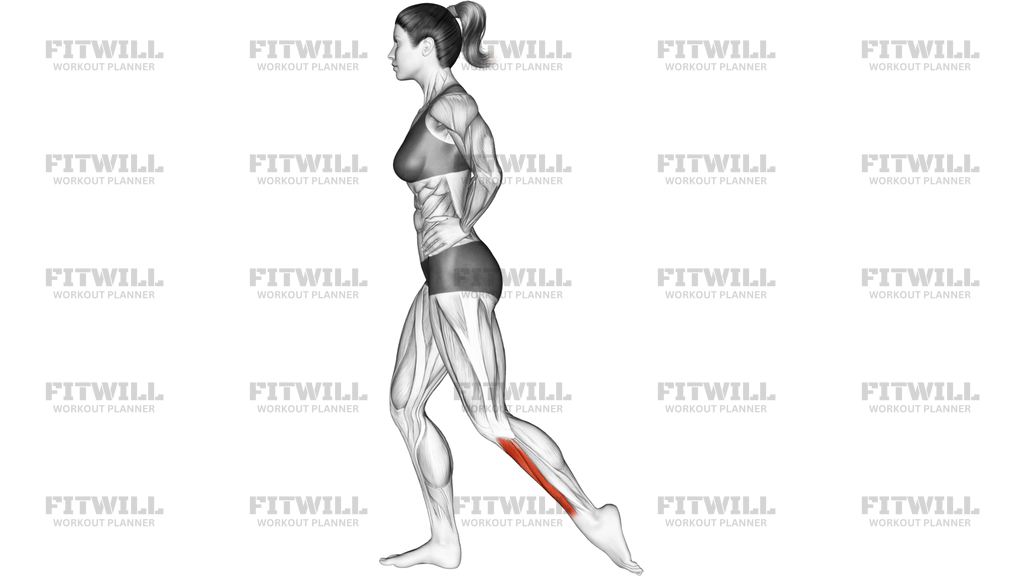
Seated Tibialis Anterior Press
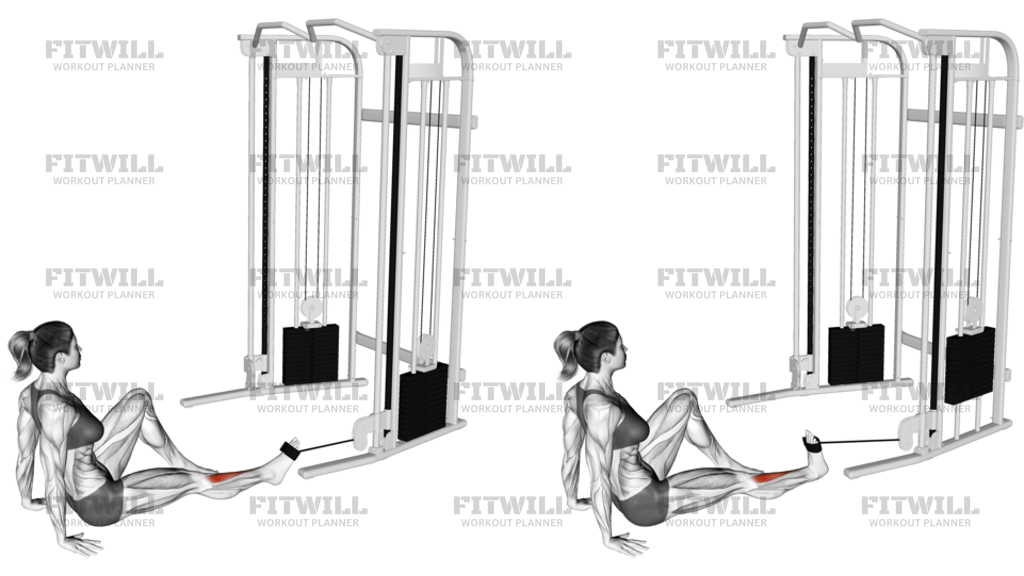
Seated Tibialis Anterior Press is a lower-leg exercise built around ankle dorsiflexion, the action of pulling the foot up toward the shin. In the image, the athlete is seated on the floor beside a low cable setup and uses the forefoot to press against resistance while the heel stays grounded and the knee stays quiet. That makes the movement much more specific than a general calf drill: the work should stay on the front of the shin, not turn into a hip-driven or whole-leg press.
The main training target is the tibialis anterior and the other muscles that help lift and control the foot. Those tissues matter for ankle stability, foot clearance during walking or running, and balanced lower-leg strength. Because the range is small and the joint action is easy to cheat, the setup matters a lot. A good seat position, a clean line of pull from the cable, and a relaxed upper body let the ankle do the work instead of momentum, hip flexion, or toe curling.
To perform it well, start with the leg organized and the foot relaxed enough that the ankle can move freely. Press the forefoot up and back toward the shin, hold the top position briefly, then lower slowly until the ankle opens under control. The movement should feel smooth and repeatable from the first rep to the last. If the cable jerks, the knee bends a lot, or the torso starts rocking, the load is too heavy or the setup is off.
This exercise is useful as accessory work, warm-up prep, or part of a lower-leg conditioning block for runners, court-sport athletes, or anyone who wants stronger, better-controlled ankles. It is also a practical choice when you want shin work without needing a machine dedicated to tibialis raises. Keep the effort strict, use a pain-free range, and stop the set if the front of the ankle starts cramping or the cable stack takes over the motion.
Fitwill
Log Workouts, Track Progress & Build Strength.
Achieve more with Fitwill: explore over 9600 exercises with images and videos, access built-in and custom workouts, perfect for both gym and home sessions, and see real results.
Start your journey. Download today!




Instructions
- Sit on the floor facing a low cable station and position the strap or attachment over the forefoot of the working leg.
- Lean back on your hands for support, extend the working leg, and keep the heel down so the ankle can move freely.
- Square the knee and toes straight ahead before you start, then let the foot rest in the stretched starting position.
- Brace lightly through the trunk and pull the forefoot up toward the shin without lifting the heel or rocking the hips.
- Pause briefly at the top when the ankle is fully dorsiflexed and the tibialis anterior is doing the work.
- Lower the foot slowly until the ankle opens back to the start position, keeping the cable under control.
- Keep the knee as still as possible so the movement comes from the ankle rather than a leg swing.
- Repeat for the planned reps, then reset the foot position before switching sides if you are training one leg at a time.
Tips & Tricks
- Keep the knee pointed straight ahead; if it turns inward or outward, the ankle line of pull is drifting.
- Use a light load first. This movement is small and the front of the shin usually fails before the cable feels heavy.
- Pull the forefoot up, not the toes only. Toe curling can hide weak dorsiflexion and reduce tibialis anterior work.
- Hold the top for a beat so you actually own the dorsiflexed position instead of bouncing through it.
- Lower the foot slowly to build control in the lengthened range, where many people lose ankle control first.
- Keep the heel planted if the setup allows it; heel lift usually means the hip is taking over.
- If the cable jerks the leg backward at the start, move closer to the stack or reduce the load so tension stays smooth.
- Stop the set if the front of the ankle cramps hard or the shin starts feeling sharp instead of just working.
- Match both sides closely. Side-to-side differences in range or control are common in tibialis work.
Frequently Asked Questions
What does Seated Tibialis Anterior Press train?
It mainly trains the tibialis anterior, the muscle on the front of the shin that lifts the foot toward the shin.
Why is this exercise useful for runners or field-sport athletes?
Stronger dorsiflexion helps with foot clearance, ankle control, and lower-leg durability during repetitive impact.
Should my heel stay on the floor during the press?
Yes, in most setups the heel should stay grounded while the forefoot lifts so the ankle does the work.
How bent should my knee be?
Keep the working leg mostly extended or only slightly bent so the shin muscles stay on tension and the hip does not dominate.
What is the most common mistake with the cable setup?
People often rock backward or bend the knee to move the stack instead of pulling the foot up from the ankle.
Can beginners do this exercise?
Yes. Start with very light resistance and focus on a smooth pull up, a brief squeeze, and a slow return.
Do I need a cable machine to do it?
No. A band or tibialis raise machine can work too, but the cable version gives consistent tension through the range.
What should I feel if I am doing it right?
You should feel a focused burn or fatigue along the front and outer part of the shin, not a lot of hip or low-back effort.
How can I make the movement harder without cheating?
Use a slower lowering phase, a longer pause at the top, or a small load increase while keeping the knee and torso still.