Resistance Band Standing Balance Glute Kickback
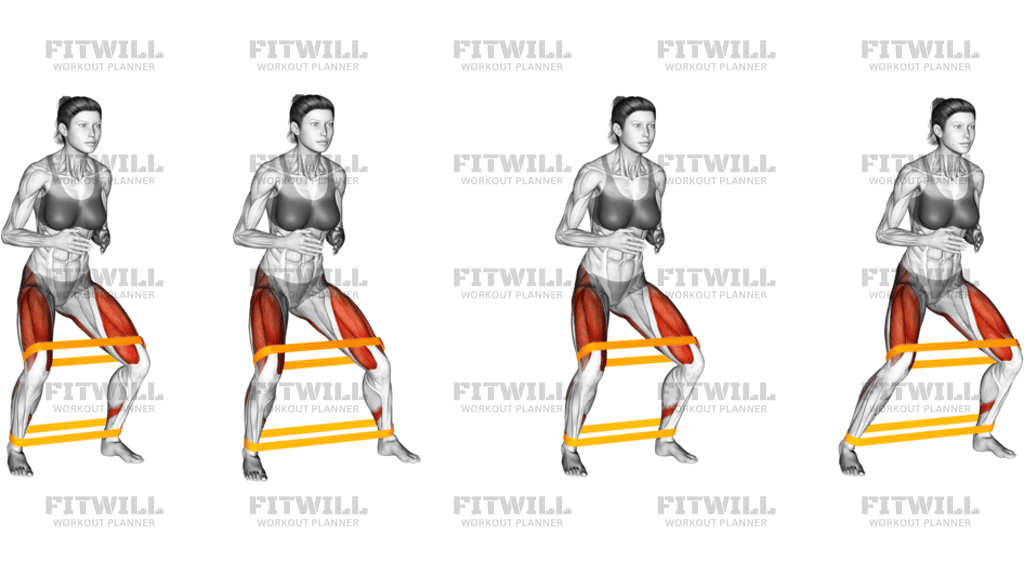
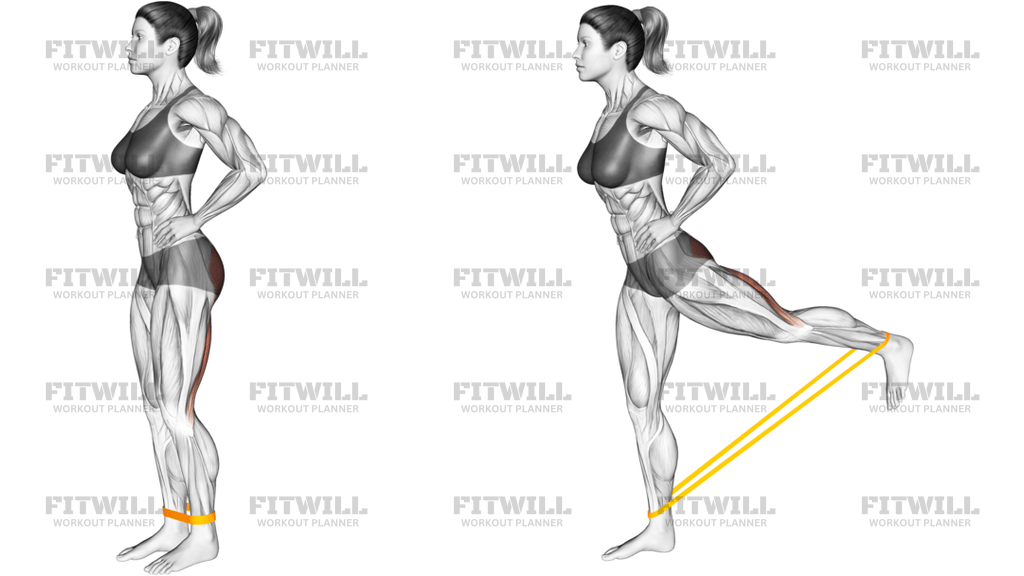
Resistance Band Standing Balance Glute Kickback is a single-leg hip extension exercise that challenges the working-side glute while forcing the standing leg, pelvis, and trunk to stay organized. The image shows the band set low around the ankles, the body upright, and the hands on the hips, which makes this a balance drill as much as a glute exercise.
That setup matters because the band is trying to pull the kicking leg forward while your stance leg has to keep you from tipping, rotating, or leaning. If the pelvis drifts or the ribcage flares, the repetition turns into a low-back compensation pattern instead of a clean hip extension. The best reps look simple from the outside: tall torso, square hips, controlled reach back, and a slow return.
Use a light to moderate band and stand on the support leg with a soft knee, feet pointed forward, and weight centered over the midfoot. Keep the pelvis level and the torso stacked before the leg moves. The working leg should travel back from the hip, not swing from the knee, and the standing side should stay quiet enough that you can keep your balance without gripping through the toes.
As you kick back, think about pressing the heel away behind you while the knee stays mostly straight and the foot stays relaxed. Lift only as far as you can without arching the lower back or opening the hip. Pause briefly when the glute is fully shortened, then return slowly until the band pulls the leg back under control. The return is part of the exercise, so avoid dropping the leg or letting the band snap it forward.
This movement is useful for warmups, glute activation blocks, accessory work, and balance-focused lower-body sessions. It is also a practical option when you want hip extension training without loading the spine heavily. Beginners can do well with a wall or rack nearby for light fingertip support, but the goal is to progressively own the standing balance and the pelvic control. If you cannot keep the hips square, shorten the range or use a lighter band before adding speed or tension.
[ Workout Log & Planner ]
Put your next workout in Fitwill
Keep your plan and training log ready when you are.


Instructions
- Loop a light resistance band around both ankles and stand tall on the support leg, with the working leg slightly behind you and the hands resting on your hips.
- Keep the support knee softly bent, the toes pointing forward, and your weight centered over the midfoot before you start the rep.
- Square the pelvis and stack the ribs over the hips so the trunk stays tall instead of leaning forward or arching back.
- Brace gently, then drive the working heel straight back from the hip as if you are pressing the leg behind you.
- Keep the kicking knee nearly straight and let the leg travel only as far as you can without rotating the pelvis.
- Squeeze the working-side glute at the end of the kickback and hold the top position for a brief pause.
- Lower the leg slowly against the band’s pull until you are back in the starting stance under control.
- Reset your balance before the next repetition, then repeat for the planned number of reps and switch sides.
Tips & Tricks
- Choose a band that lets you keep the pelvis still; if you have to lean or twist to move the leg, the band is too heavy.
- Keep the support foot rooted through the big toe, little toe, and heel so the standing ankle does not wobble every rep.
- Think about reaching the heel back rather than swinging the foot up, which helps keep the work in the hip instead of the low back.
- Do not let the kicking side open outward; the thigh should travel mostly straight behind you.
- A small range with a square pelvis is better than a bigger kickback that forces your torso to rotate.
- Exhale as the leg drives back and keep the abdomen quietly braced so the ribs do not flare.
- If balance is the limiter, lightly touch a wall or rack with one hand instead of turning the set into a hopping drill.
- Lower the leg under control and resist the band on the way back, because the return phase teaches the standing hip to stabilize.
Frequently Asked Questions
What does Resistance Band Standing Balance Glute Kickback work most?
It mainly trains the working-side glute through hip extension, while the standing leg and core work hard to keep you balanced.
Where should the band sit during the kickback?
The image shows the band around the ankles, which keeps the resistance low and makes the balance challenge more obvious.
Should my torso lean forward when I kick back?
No. Keep the chest tall and the ribs stacked over the hips so the movement comes from the hip, not from a back swing.
How high should the leg go in this standing kickback?
Only as high as you can lift it without opening the hip or arching the low back. A smaller clean range is better than forcing height.
Can I hold onto something for balance?
Yes. A light fingertip hold on a wall, rack, or stable post is useful if balance limits the quality of the hip extension.
Is this exercise good for beginners?
Yes, if you start with a light band and keep the movement slow. Beginners usually benefit from the balance demand as long as they do not rush the reps.
What is the most common mistake with the standing leg?
The standing leg often collapses at the ankle or knee. Keep that side softly bent and rooted so the pelvis stays level.
How do I make the exercise harder without losing form?
Use a slightly stronger band, slow the lowering phase, or remove hand support while keeping the hips square and the torso still.