Dumbbell Seated Military Press In Out Leg Raise On Floor
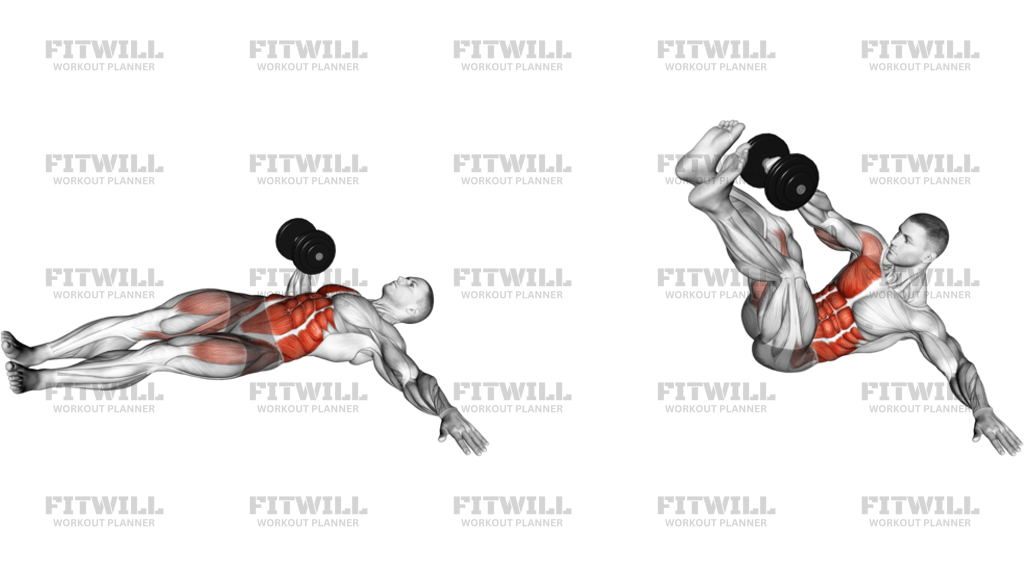
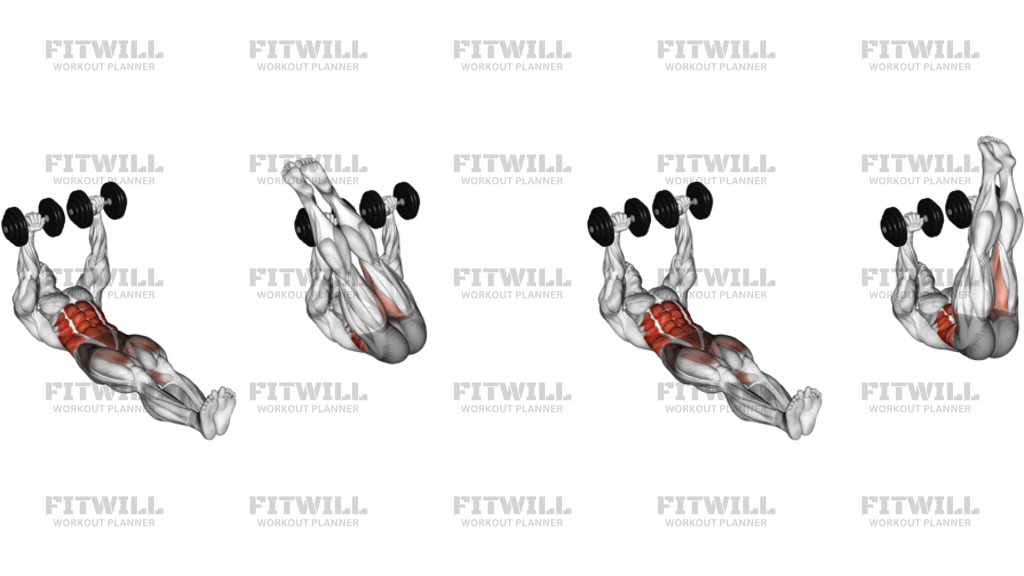
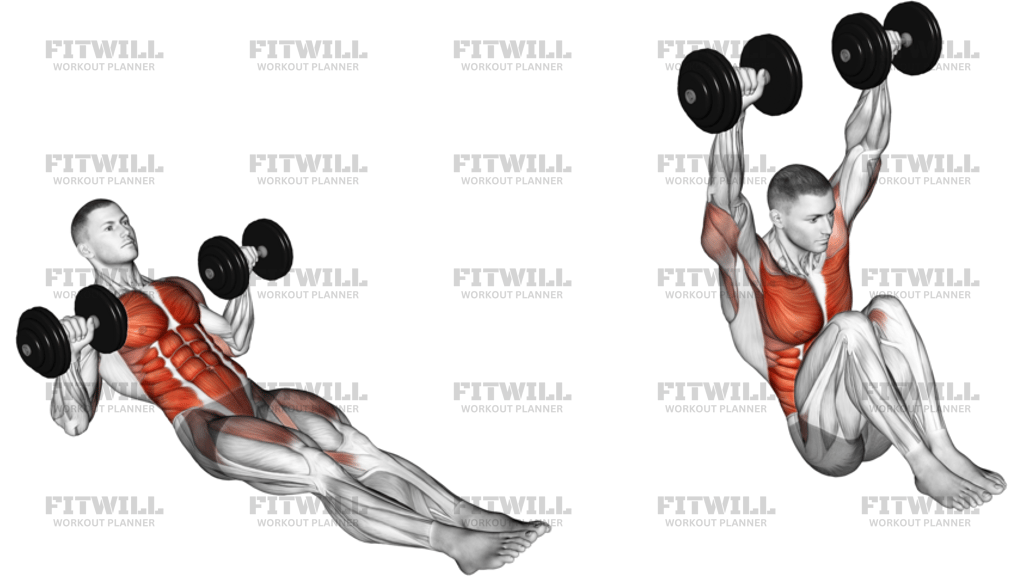
Dumbbell Seated Military Press In Out Leg Raise On Floor is a floor-based coordination exercise that blends an overhead dumbbell press with a seated leg in-and-out motion. In the image, the lifter stays on the floor with the torso reclined, the dumbbells moving from shoulder level to overhead, and the legs changing from a more extended position to a tighter tuck. That combination makes the movement feel like a core-and-shoulder drill rather than a pure press, because the trunk has to stay organized while the arms and legs move together.
The exercise trains shoulder pressing strength, triceps extension, and a lot of bracing work through the abs and hip flexors. The floor position matters because it limits cheating from the lower body and gives you a clear reference point for the torso angle. If you can keep the ribs down, the low back quiet, and the dumbbells stacked over the shoulders, the set becomes a clean repetition of controlled force instead of a swingy sit-up with weights.
Use a moderate or light load and treat the rep as one coordinated pattern. Begin with the dumbbells at shoulder height, sit tall enough to keep the chest open, then press the weights overhead as the legs move through the in-out sequence you can control. The goal is not to fling the knees or arch hard to finish the press. The goal is to keep the torso steady, move the dumbbells on a straight path, and let the legs fold and extend without losing position.
This movement is useful when you want a demanding accessory exercise that links upper-body pressing with trunk control. It fits core circuits, shoulder finishers, or conditioning-style strength work, but it is not the best choice when you need maximal overhead load. Keep the neck relaxed, stop the set if the lower back starts to pop off the floor or the shoulders drift forward, and use a range that stays smooth from the first rep to the last.
[ Workout Log & Planner ]
Put your next workout in Fitwill
Keep your plan and training log ready when you are.


Instructions
- Sit on the floor with one dumbbell in each hand and bring the bells to shoulder height with your elbows slightly in front of your ribs.
- Lean back just enough to engage your abs, then lift your feet and set your legs in the starting position shown by the exercise image.
- Keep your chest open and ribs stacked over your pelvis so the torso stays steady before you press.
- Press both dumbbells overhead on a smooth path while you begin the leg in-out action under control.
- As the weights travel up, draw the knees toward your chest or move the legs into the tucked phase without yanking the lower back off position.
- At the top, stack the dumbbells over your shoulders and keep the neck long instead of shrugging hard.
- Lower the dumbbells back to shoulder height as you extend the legs back out to the starting shape.
- Pause briefly only if you can keep tension in the abs and shoulders without collapsing the torso.
- Repeat for the planned reps, then lower the weights and bring the feet down to reset safely.
Tips & Tricks
- Treat this like a coordinated core-and-shoulder drill, not a heavy overhead press.
- Keep the dumbbells traveling just outside shoulder width so they do not drift behind your head.
- Use a range on the leg movement that you can control without the low back arching away from the floor.
- If the shoulders start to shrug, lower the load before the neck and upper traps take over.
- Exhale as you press and tuck, then inhale as you lower and extend.
- The hardest version is when the press and leg tuck happen together, so slow the rep down if the timing gets messy.
- Stop the set when the torso starts rocking or the knees begin to swing instead of moving smoothly.
- A lighter pair of dumbbells usually gives a better training effect than forcing a grindy rep.
Frequently Asked Questions
What does Dumbbell Seated Military Press In Out Leg Raise On Floor work?
It mainly trains the shoulders and triceps while the abs and hip flexors work hard to keep the floor position controlled.
Why is this done on the floor?
The floor limits body swing and makes it easier to keep the torso from leaning farther back as the dumbbells go overhead.
Do my legs have to stay off the floor the whole time?
They should stay in the air for the working reps if you can control them. If your hip flexors or abs fatigue, shorten the range before letting the legs flop down.
How heavy should the dumbbells be?
Use a load that lets you press overhead without arching hard or losing the leg position. This movement is about control, not max strength.
What is the most common mistake?
The usual problem is turning the rep into a fast sit-up and press. Keep the rib cage down and let the arms and legs move without throwing the torso around.
Can beginners do this exercise?
Yes, but they should start very light and use a smaller leg range until they can keep the low back and shoulders organized.
What if my shoulders feel pinched overhead?
Shorten the press range, lower the weight, and keep the elbows slightly in front of the body instead of flaring wide.
How can I make it easier or harder?
Make it easier by using lighter dumbbells or keeping the legs more bent. Make it harder by slowing the lowering phase and keeping the tuck and press perfectly synchronized.