Dumbbell Overhead Sit-Up With Legs On Bench
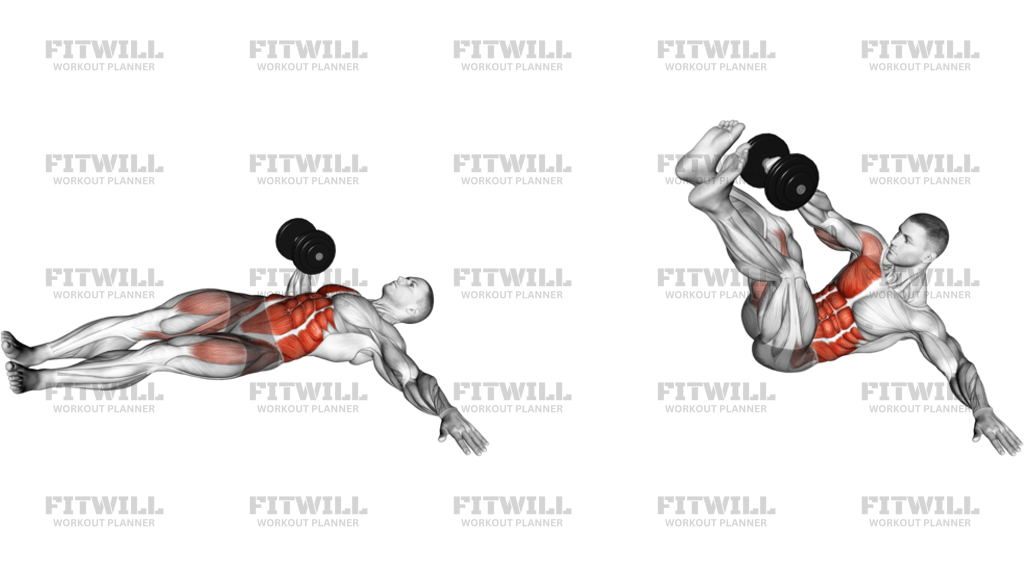
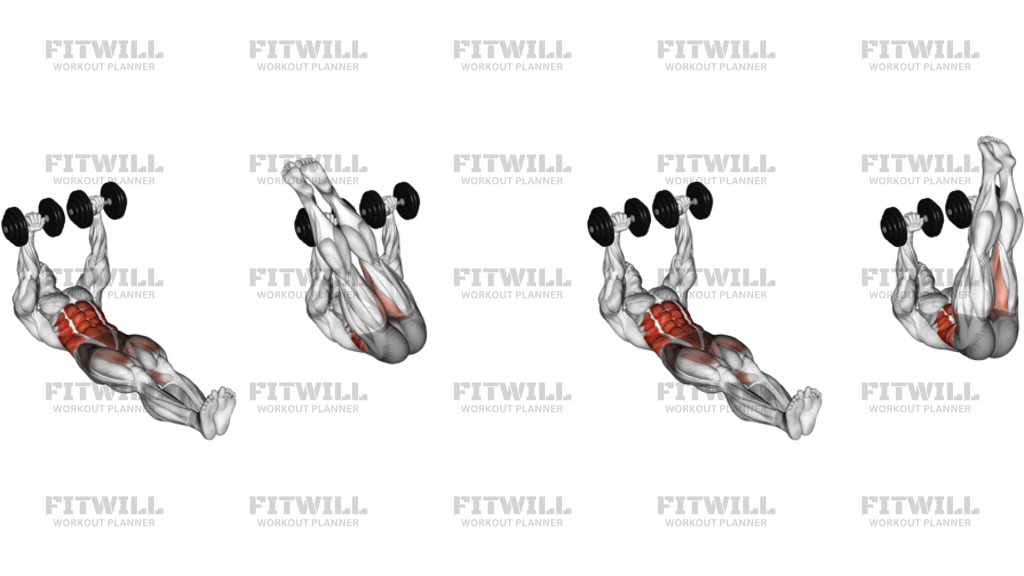
Dumbbell Overhead Sit-Up With Legs On Bench is a loaded sit-up variation that asks the trunk to flex while the arms stay fixed overhead and the legs are supported on a bench. That combination makes the exercise more specific than a standard floor sit-up: the torso has to do the work while the long lever created by the dumbbell challenges shoulder position, rib control, and midline stability.
The bench support changes the feel of the rep by limiting how much you can cheat through the lower body. With the legs elevated on the bench, the pelvis stays easier to organize and the abdominals can stay more involved through the full sit-up. The overhead hold also raises the demand on the upper body, so even though the name includes dumbbells, the exercise is not a pressing movement. The weight should stay fixed above the chest or slightly behind it while the trunk does the moving.
This movement is useful when you want a stronger abdominal contraction with a clear brace-to-flexion pattern. The rep should start from a controlled, stacked position with the ribs down, lower back in contact with the floor, and the dumbbell stable overhead. As you sit up, keep the weight quiet and let the torso rise without yanking the neck or throwing the arms forward. At the top, the trunk should finish tall enough to feel the abs shorten, not so high that the hips or hip flexors take over.
Return the body slowly to the floor and resist the urge to drop through the eccentric phase. A smooth lowering keeps tension on the abdominal wall and protects the lumbar spine from jerky movement. If the shoulders cannot stay controlled overhead, or if the dumbbell drifts behind the head and pulls the ribs open, the load is too heavy or the range is too ambitious.
Use this exercise in accessory core work, athletic conditioning, or any session where you want a sit-up pattern that is more demanding than a bodyweight crunch but still easy to standardize. The best repetitions are deliberate, even, and repeatable. Stop the set when the torso stops moving cleanly or the dumbbell starts to wobble.
[ Workout Log & Planner ]
Put your next workout in Fitwill
Keep your plan and training log ready when you are.


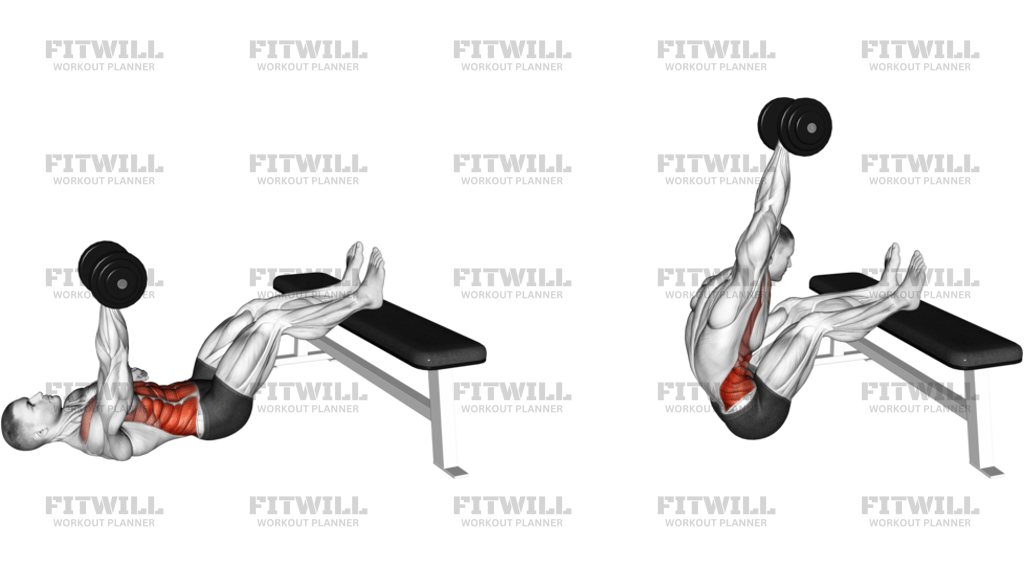
Instructions
- Lie on your back with your legs supported on a bench so your knees and hips are bent and your lower body stays relaxed and stable.
- Hold one dumbbell with both hands and extend it overhead so your arms stay straight and the weight stays centered above your chest.
- Set your ribs down, flatten your lower back lightly into the floor, and keep your chin slightly tucked before you start the first rep.
- Exhale, brace your midsection, and begin the sit-up by curling your head, shoulders, and upper back off the floor.
- Continue rolling up through your spine until your torso reaches a tall seated position without swinging the dumbbell forward.
- Keep the dumbbell fixed overhead or slightly in front of your face as you rise; do not turn the movement into an arm raise.
- Pause briefly at the top, squeeze your abs, and keep your neck long instead of jutting your chin.
- Lower yourself back to the floor under control, letting each segment of your spine touch down smoothly before the next rep.
Tips & Tricks
- Keep the dumbbell light enough that your shoulders can stay locked overhead without shaking or bending the elbows.
- If the weight pulls your ribs up or arches your lower back, shorten the lever by bringing the dumbbell slightly forward.
- Do not yank the sit-up with your hips; the bench should support the legs, not turn the rep into a hip-flexor dominant crunch.
- Think about curling the ribcage toward the pelvis instead of throwing the chest upward.
- Use a slower lowering phase than the lifting phase so the abs stay under tension the whole way down.
- Keep your feet and legs quiet on the bench; unnecessary leg drive usually means the load is too heavy.
- Stop just short of the point where the dumbbell starts drifting behind the head or the shoulders lose position.
- Exhale on the way up and inhale as you lower, but never lose the brace while breathing.
Frequently Asked Questions
What muscle does Dumbbell Overhead Sit-Up With Legs On Bench target most?
It mainly trains the abdominal wall, especially the rectus abdominis, with help from the obliques and deep core stabilizers.
Why are the legs placed on a bench instead of on the floor?
The bench supports the legs and reduces the temptation to use leg drive, which helps keep the sit-up focused on the trunk.
Where should I hold the dumbbell during the rep?
Hold it overhead with straight arms and stable shoulders, or slightly forward of the face if that feels more controlled.
What is the most common mistake with this sit-up?
Most people either swing the dumbbell or use momentum to fling the torso up instead of curling through the spine.
Should my lower back stay flat on the floor?
Yes, set it down with control on the way back and start each rep from a braced, organized position.
Is this exercise okay for beginners?
Yes, if the dumbbell is very light and the range stays strict; otherwise a bodyweight sit-up or crunch is a better first step.
What should I do if my shoulders fatigue before my abs do?
Lower the load or bring the dumbbell slightly forward so the shoulders can stay stable while the trunk does the work.
How can I make the exercise harder without adding much weight?
Slow the lowering phase, pause at the top, and keep the dumbbell perfectly still overhead through every rep.