Barbell Bench Press Side POV
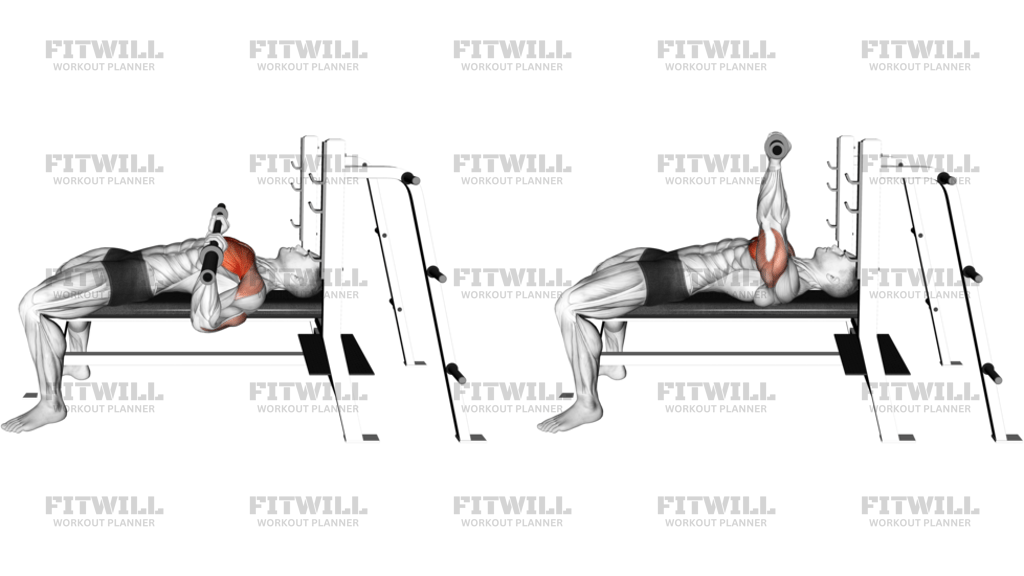
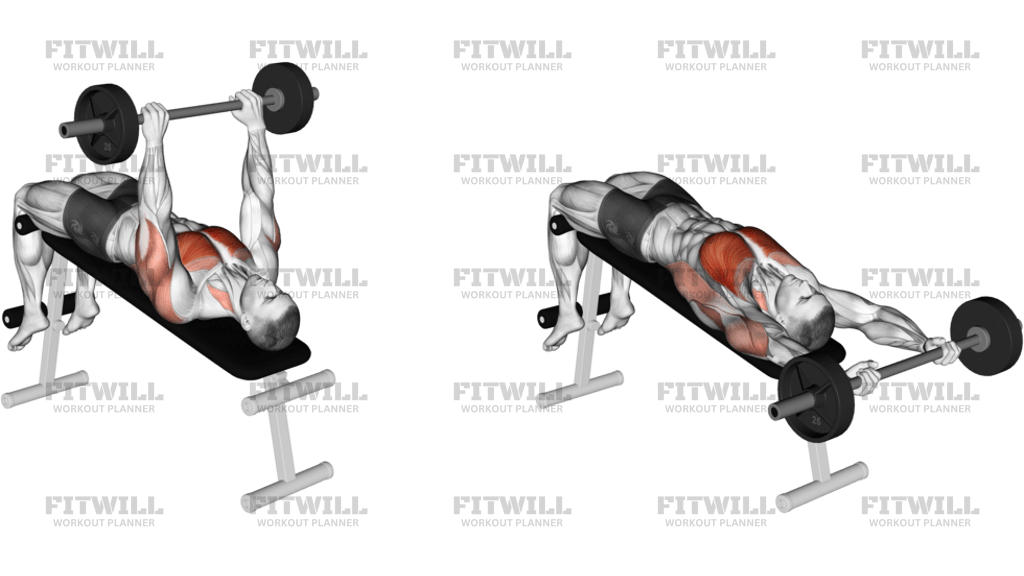
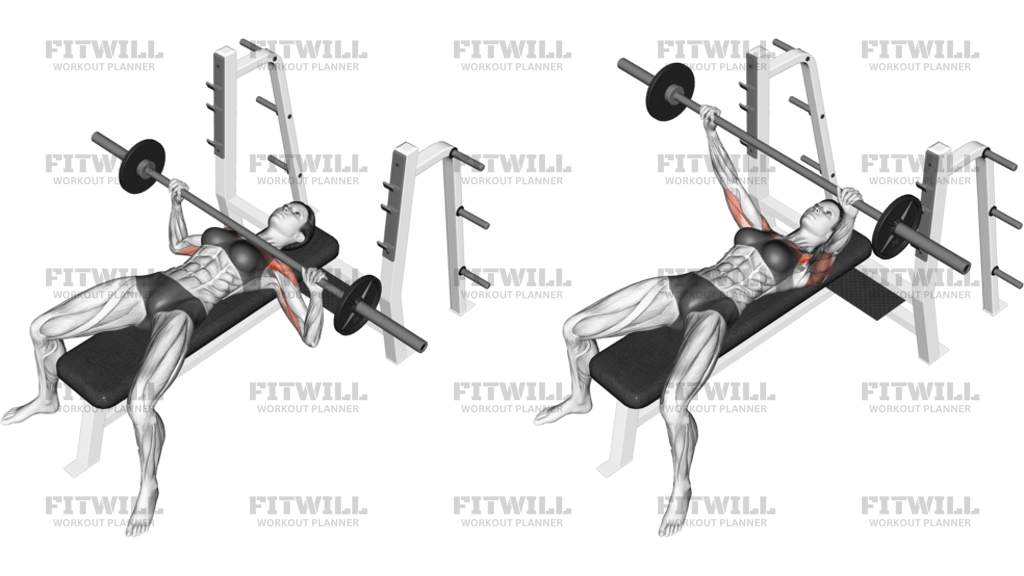
Barbell Bench Press Side POV is a barbell pressing exercise performed lying on a flat bench with the feet planted and the bar lowered from arm's length to the chest, then pressed back to lockout. Seen from the side, the setup makes the main path easy to judge: the bar should travel in a controlled arc from above the shoulders to the lower chest or sternum area and back over the shoulder joint at the top.
This movement is a classic upper-body strength builder for the chest, triceps, and front shoulders, with the upper back, lats, and trunk working hard to keep the torso stable on the bench. The side view matters because bench press quality depends on repeatable setup details: shoulder blades stay pulled back and down, the ribcage is set without overextending the low back, and the bar path stays consistent rep to rep.
A good bench press starts before the first rep. Lie with your eyes under or just behind the bar, feet rooted, glutes in contact with the bench, and a firm upper-back arch that comes from retraction rather than flaring the ribs. Grip the bar evenly, unrack it with straight wrists, and take the weight over the shoulder line before lowering under control. The descent should be smooth, the touch point predictable, and the press driven back toward the start without bouncing off the chest.
Use this version when you want a clear, heavy horizontal press pattern or when you need to build technique for stronger pressing. It works well in strength blocks, hypertrophy work, and general upper-body training, but only if the rep stays disciplined. If the shoulders lose position, the bar drifts too high, or the lower back takes over, the set is too heavy or the setup needs correction.
Keep the rep honest: breathe and brace before the descent, hold pressure through the bottom, and exhale as the bar clears the sticking point. The goal is not just pressing the bar up, but pressing it with a stable base, a repeatable touch point, and control from the unrack to the rack.
[ Workout Log & Planner ]
Put your next workout in Fitwill
Keep your plan and training log ready when you are.


Instructions
- Lie flat on the bench with your eyes under the bar, feet planted, and your upper back set firmly into the pad.
- Grip the bar a little wider than shoulder width so your wrists stack over your elbows at the bottom.
- Pull your shoulder blades back and down, keep your chest lifted, and create a stable upper-back arch without overextending your lower back.
- Unrack the bar to straight arms and position it above the shoulder line before starting the first rep.
- Lower the bar in a controlled path toward the lower chest or sternum area, keeping your forearms close to vertical.
- Touch the chest lightly or stop just above it if that is your chosen range, then keep the bar still for a brief moment.
- Press the bar back up and slightly back toward the rack so it finishes over the shoulders with locked-out elbows.
- Reset your breath and upper-back tension before each repetition, then re-rack the bar with control after the final rep.
Tips & Tricks
- Keep your wrist stacked over the bar instead of letting it bend far backward, especially at the bottom of the rep.
- Touch the same point on your chest each time; an inconsistent touch point usually means the bar path is drifting.
- Press back toward the rack, not straight up, so the bar finishes over the shoulder joint instead of in front of it.
- Keep your shoulder blades pinned to the bench for the entire set; losing upper-back tension usually makes the press unstable.
- Use leg drive to keep your body tight on the bench, not to lift your hips or bounce the bar.
- Lower the bar under control for about two seconds or as needed to keep the descent smooth and repeatable.
- Choose a grip width that lets your forearms stay nearly vertical at the bottom; too wide often stresses the shoulders.
- If the bar stalls halfway up, reduce the load and rebuild the groove before chasing heavier weight.
- Stop the set when the bar starts touching too high on the chest, because that usually shortens the press and irritates the shoulders.
Frequently Asked Questions
What muscles does Barbell Bench Press Side POV work most?
It mainly trains the chest, with strong help from the triceps and front shoulders.
Why does the side view matter on this bench press?
The side angle makes it easier to see whether the bar is lowering to the correct chest point and pressing back over the shoulders.
Where should the bar touch on the chest?
Most lifters should touch the lower chest or sternum area, depending on arm length and grip width.
How far should my elbows flare out?
Keep them tucked enough that your forearms stay close to vertical at the bottom, usually around a moderate 45-degree angle from the torso.
Can beginners use the barbell bench press?
Yes, but they should start light, learn the setup first, and use a spotter or safeties when possible.
What is the most common technique mistake?
Bouncing the bar off the chest or losing shoulder-blade tension are two of the biggest problems.
Should my lower back stay flat on the bench?
A small natural arch is normal, but the movement should come from the shoulders and chest, not from excessive low-back extension.
How do I know if the weight is too heavy?
If the bar drifts, the touch point changes, or you lose tightness in the upper back, the load is too heavy for clean reps.